The Catholic cardinal says opposition leaders must put aside personal ambitions, agree on a credible candidate and give Nigerians a clear alternative in the next presidential election.
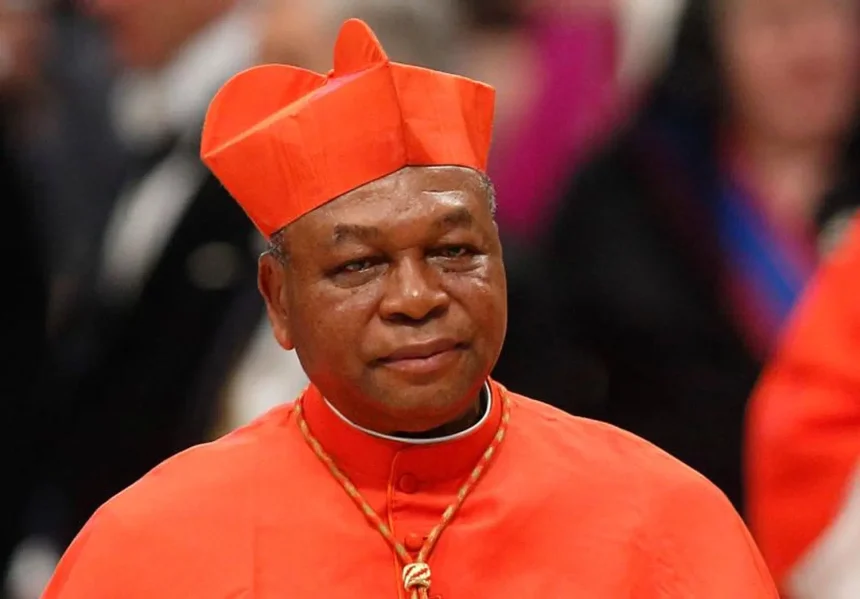
Cardinal John Onaiyekan has urged opposition leaders seeking to challenge President Bola Ahmed Tinubu in the 2027 presidential election to unite behind a common candidate, warning that divisions within their ranks could weaken their collective chances.
The former Catholic Archbishop of Abuja said opposition politicians risk helping the ruling party retain power if they contest separately and split votes among themselves, even when some voters are dissatisfied with the incumbent administration.
Onaiyekan made the remarks during an appearance on the Naija Unfiltered Podcast, where he discussed the political challenges facing Nigeria ahead of the 2027 general election.
According to the cardinal, opposition leaders must recognise that individual ambitions could undermine their shared objective if they fail to agree on a candidate capable of presenting a credible alternative to the ruling party.
More Read

“Five people saying this government is not good, and each one says it’s me who will rule. They don’t know arithmetic,” he said.
He argued that when several opposition candidates compete against one incumbent, votes that might otherwise be consolidated behind a single challenger could become divided among multiple contenders.
“If five of you are opposing one man, and you are telling all of us to scatter our votes among you, don’t you know that by simple arithmetic, the status quo will simply win by default?” he asked.
More Read
Onaiyekan Admits He Has a Preferred Candidate
The cardinal acknowledged that he has a preferred candidate among the opposition figures preparing to challenge Tinubu in 2027. However, he stressed that personal preferences alone would not resolve the problem of political fragmentation.
“It’s not as if, among the so many of them, I don’t have my preference, but I’m not happy if I vote my preference. You vote your own, and they vote their own,” Onaiyekan said.
His remarks underscored the challenge facing opposition parties and political figures as they consider possible alliances, negotiations and strategies ahead of the next presidential election.
Onaiyekan maintained that opposition leaders needed to move beyond competing individual ambitions and find common ground on a candidate who could attract broader support.
He also suggested that presenting an alternative to the incumbent government requires more than criticism of its performance. According to him, Nigerians need a clear choice that gives them confidence in the direction the country could take under a different administration.
Nigerians Urged to Use Their Votes
Beyond the question of opposition unity, Onaiyekan called on Nigerians dissatisfied with the performance of elected officials to exercise their voting rights and use elections as an opportunity to hold political leaders accountable.
More Read

He said elections provide citizens with an important opportunity to assess those entrusted with public office and determine whether they deserve another term.
The cardinal cautioned against losing faith in the electoral process, arguing that Nigeria was not ready to return to military rule.
His comments highlighted the importance of democratic participation and the need for citizens to remain engaged in determining the country’s political leadership.
For Onaiyekan, the debate ahead of 2027 should therefore focus not only on opposition unity but also on ensuring that voters have credible alternatives and the freedom to choose their preferred leaders.
Opposition Unity Remains a Key Question Ahead of 2027
The 2027 presidential election is expected to draw attention to the strategies of political parties and opposition figures seeking to challenge Tinubu’s administration.
Onaiyekan’s intervention adds to the ongoing debate over whether opposition leaders can overcome their differences and establish a common platform or candidate capable of competing with the ruling party.
His warning raises a central question for the opposition: can political figures with different ambitions and interests reach an agreement that gives voters a unified alternative?
While the cardinal did not publicly identify his preferred opposition candidate in the remarks cited, he made clear that his personal preference would not resolve the wider challenge if opposition supporters remained divided.
As political activities ahead of the election continue, the extent to which opposition groups pursue alliances and agree on a common direction will remain an important issue in Nigeria’s evolving political landscape.
For voters, the central consideration will be the opportunity to evaluate the candidates, their proposals and their records before making an informed choice at the ballot box.