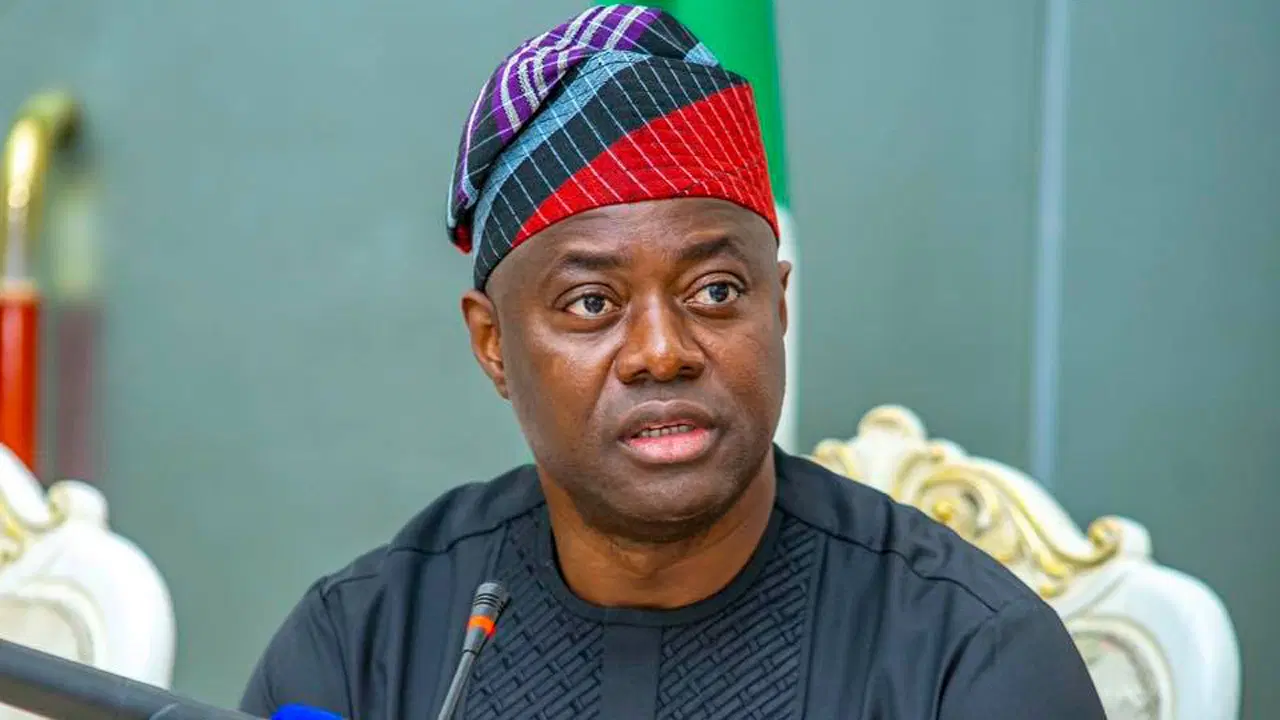
YOLA, Adamawa State — The presidential candidate of the Allied Peoples Movement (APM), Governor Seyi Makinde of Oyo State, has declared that the 2027 general election will mark the end of what he described as the politics of lies and deceit in Nigeria, promising a more transparent, inclusive and people-centred government if elected president.
Makinde made the declaration at a town hall meeting organized by his campaign organization for stakeholders and residents of the North-East geopolitical zone in Yola, Adamawa State.
The governor said his proposed administration would prioritize honesty, national unity and practical solutions to the country’s economic and social challenges, insisting that Nigerians deserve truthful communication and accountable leadership.
He also pledged to establish a transitional Government of National Unity that would serve for a maximum of four years, with the aim of promoting inclusivity and preventing the concentration of political power in one part of the country.
More Read

Makinde Accuses Tinubu Government of Broken Promises
During the engagement, Makinde criticized President Bola Tinubu’s administration, alleging that it had failed to fulfil several promises made to Nigerians during the 2023 election campaign.
He cited electricity supply, the adoption of compressed natural gas (CNG) and electric vehicles, and the naira-for-crude initiative as examples of policies he said had failed to deliver their expected benefits.
According to him, Nigerians were promised solutions to longstanding national challenges, but many citizens continued to struggle with economic hardship and rising living costs.
More Read

Makinde argued that political leaders must be held accountable for their promises and urged Nigerians to carefully assess the performance of those seeking public office ahead of the 2027 presidential election.
Calls for Transparency in Petroleum Pricing
The APM presidential candidate also challenged the Federal Government to publish its petroleum pricing template to enable citizens to understand how the prices of petroleum products are determined.
He said the government should make its calculations available to the public so that independent experts and interested Nigerians could examine the figures and offer alternative solutions where necessary.
“We do not want too much grammar; we just want relief for Nigerians,” Makinde said, stressing that the primary concern of citizens was finding practical ways to ease the economic burden facing households and businesses.
He maintained that occupying the Presidential Villa should not prevent government officials from listening to ideas and recommendations from other Nigerians.
According to him, the country has capable citizens who can contribute meaningfully to national policy discussions, provided the government creates room for open engagement and constructive criticism.
More Read
Makinde further urged the Federal Government to embrace transparency in economic policymaking, arguing that citizens deserve to understand the decisions affecting their daily lives.
‘We Will Tell Nigerians the Truth’
Reaffirming his political message, Makinde promised that his proposed administration would pursue solutions to Nigeria’s challenges without undermining citizens’ rights or using national issues for political advantage.
He said his government would listen to Nigerians across different regions and backgrounds, adding that workable solutions could emerge from any part of the country.
“I want to say to you that 2027 will mark the end of the politics of lies and deceit,” he declared, calling for a national reset built on sincerity, accountability and public participation.
The governor also argued that Nigeria, as the world’s most populous Black nation, should aspire to better living conditions and more effective governance for its citizens.
His remarks placed transparency, economic relief and national reconciliation at the centre of his campaign message to voters in the North-East.
Promises Four-Year Transitional Government of National Unity
Addressing concerns about regional representation and the distribution of political power, Makinde said his proposed government would be structured to accommodate Nigerians from different parts of the country.
He explained that questions had been raised, particularly in northern Nigeria, about how his administration would ensure that no region was marginalized or disadvantaged in the exercise of political authority.
In response, he pledged that a government led by him, if elected, would be inclusive and transitional, with a single four-year term as its stated limit.
“Our government will not last beyond four years. And it will be an all-inclusive government,” Makinde said.
The pledge forms part of his campaign’s broader appeal for national unity and a new approach to governance ahead of the 2027 presidential election.
Economic Relief and National Unity Take Centre Stage
Makinde’s comments come amid continuing public debate over the cost of living, electricity supply, fuel prices, insecurity and the effectiveness of government policies.
His call for the publication of the petroleum pricing template adds to demands for greater transparency in the management of the downstream petroleum sector, while his proposed Government of National Unity seeks to address concerns about regional inclusion and political representation.
However, the success of the proposals would depend on the policies, implementation plans and institutional arrangements that any elected administration ultimately puts in place.
As political activities intensify ahead of the 2027 general election, Makinde’s message presents transparency, economic relief and inclusive governance as key issues for voters to consider.
Whether these commitments translate into tangible improvements for Nigerians will remain a central question as the election approaches.