
US death row inmate Christa Pike has been discharged from hospital and returned to prison following a failed execution attempt that left her in critical condition, raising fresh questions about Tennessee’s use of lethal injection.
Christa Pike, a 50-year-old death row inmate in the United States, has returned to prison after surviving a botched execution attempt in Tennessee, according to a statement released by her legal team on Saturday.
Pike was hospitalized after two attempts to administer the lethal injection drug pentobarbital on September 30 reportedly failed to result in her death. The procedure left her in critical condition, prompting emergency medical intervention and leaving her lawyers uncertain about whether she would survive.
Her return to prison marks a new development in an extraordinary case that has drawn attention to the administration of the death penalty and the medical consequences of failed executions.
According to her lawyers, Pike is continuing to receive medical care following her discharge from hospital. However, details about the nature of the treatment she is now receiving in prison have not been made public.
More Read

In their statement, Pike’s legal team said she was “grateful to the first responders and her medical team for their care in these extraordinary circumstances.”
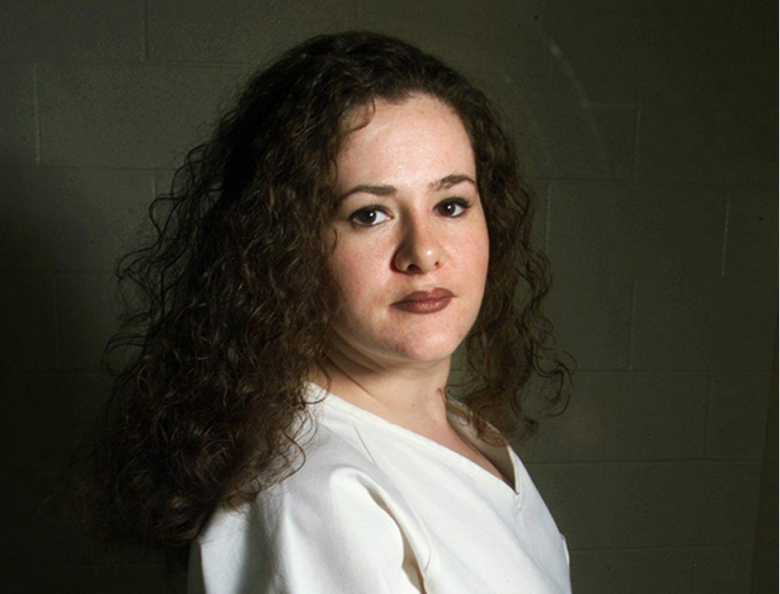
Pike Regains Consciousness After Days of Uncertainty
Pike’s survival followed several days of uncertainty over her condition. After losing consciousness during the failed execution attempt, she was taken to a local hospital for emergency treatment.
More Read

Her lawyers initially feared that she had suffered catastrophic brain damage and believed she might be taken off life support.
However, Pike regained consciousness earlier in the week and began speaking again, surprising members of her legal team and medical staff.
Her lawyer, Randy Spivey, said Pike’s first words after regaining consciousness were reportedly, “Where am I?” and “Who are you?”
At a press conference on Wednesday, her lawyers disclosed that she was experiencing several medical complications, including pneumonia, significant swelling in her arms and difficulty swallowing. They also said she remained shackled to her hospital bed.
Spivey expressed concern about the long-term consequences of the experience, particularly its potential impact on Pike’s mental health. According to her lawyer, she was feeling angry and confused.
Her legal team has warned that recovery could be prolonged, although the full extent of her injuries and the long-term effects of the procedure remain unclear.
More Read

Tennessee Authorities Yet to Explain Failed Execution
The Tennessee Department of Correction has not publicly explained why the execution attempt failed, although it has defended the method used.
The case has now entered uncharted legal territory, with Pike’s lawyers arguing that her survival raises serious questions about the execution process and the state’s responsibility.
During a court hearing on Wednesday, Tennessee Assistant Attorney General Will Ayers told the judge he did not know whether the state intended to make another attempt to execute Pike.
The judge subsequently ordered the state to preserve all evidence relating to the failed injections.
The evidence could prove significant in future legal proceedings, potentially providing the foundation for a lawsuit challenging the circumstances surrounding the execution attempt.
For now, the state’s next steps remain uncertain, as Pike continues her recovery in prison.
Crime That Led to Pike’s Death Sentence
Pike was sentenced to death for her role in the 1995 killing of 19-year-old Colleen Slemmer.
At the time of the crime, Pike was 18 and was involved in a relationship with Tadaryl Shipp. The pair had met Slemmer at a job-training camp for low-income young people before beating, torturing and killing her.
Shipp was not sentenced to death because he was legally a minor when the crime was committed. He remains in prison.
Pike’s case subsequently became one of the most closely watched death penalty cases in Tennessee, with her lawyers spending decades challenging her conviction and sentence.
She was also the first woman scheduled for execution in Tennessee in more than 200 years.
In the days leading up to the scheduled execution, both the United States Supreme Court and Tennessee Governor Bill Lee declined to intervene to stop it.

Lawyers Renew Call for Sentence to Be Commuted
Following Pike’s survival, her legal team has renewed its call for her death sentence to be commuted to life imprisonment without the possibility of parole.
The lawyers’ position comes amid continuing uncertainty about Pike’s medical recovery, the reasons for the failed execution and whether Tennessee authorities will pursue another execution attempt.
The court’s order requiring the preservation of evidence could become a critical part of any subsequent legal challenge.
Pike’s return to prison does not resolve the questions surrounding the failed procedure. Instead, it opens a new chapter in a case that could have significant legal implications for the state’s handling of capital punishment.
As she continues to receive medical care, attention is likely to remain focused on her recovery, the state’s explanation for the failed injections and the future of her death sentence.
For Pike, what began as a scheduled execution has become an unprecedented legal and medical ordeal, with the next steps in her case still uncertain.