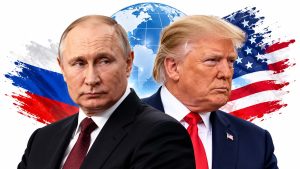
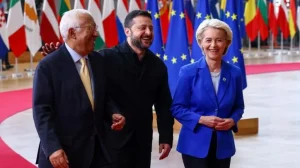
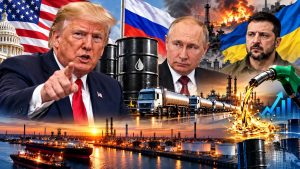
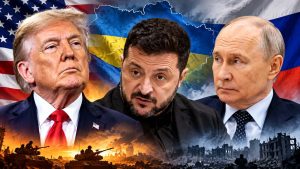
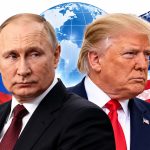
The search for peace in Ukraine continues to expose a fundamental divide between Washington and Moscow: Donald Trump wants a deal he can present as a diplomatic and economic victory, while Vladimir Putin appears determined to secure Russia’s strategic objectives, even at the cost of prolonged war.
That difference in priorities may be the single greatest obstacle to ending the devastating conflict.
From Trump’s perspective, a negotiated settlement should be straightforward. End the fighting, reduce the loss of life, ease economic pressures, lift sanctions where possible and open the door to lucrative commercial relationships between Russia and the United States. In theory, everyone has something to gain.
But international conflicts are rarely resolved by economics alone. And when national ambition, territorial control and political survival are at stake, the promise of financial prosperity may not be enough to persuade a leader to abandon his objectives.
This is where Trump’s approach to Putin faces its greatest challenge.
More Read
The Businessman’s Approach to a Geopolitical Conflict
Trump has consistently presented himself as a dealmaker capable of achieving what traditional diplomacy has failed to deliver. His instinct is to identify what each side wants, bring the parties to the negotiating table and use economic incentives or political pressure to secure an agreement.
That approach may work in business negotiations, where the parties can often calculate their interests in financial terms and compromise when the benefits outweigh the costs.
War, however, operates by a different set of calculations.
More Read

For Putin, the invasion of Ukraine is not simply an expensive military undertaking that can be abandoned in exchange for improved trade relations. It is tied to Russia’s regional influence, its claims over Ukrainian territory, its confrontation with Western security structures and the Kremlin’s broader vision of Russia’s place in the world.
A settlement that leaves these ambitions unfulfilled could be viewed in Moscow as a strategic defeat, regardless of the economic benefits on offer.
Consequently, the assumption that Putin will readily exchange military objectives for commercial opportunities risks misunderstanding the nature of the conflict.
The central question is not whether peace would benefit Russia economically. It is whether Putin considers the available terms of peace compatible with his political and strategic ambitions.
Until that question is answered, the prospect of a quick agreement remains uncertain.
Why Economic Incentives May Not Be Enough
The prospect of renewed trade, reduced sanctions and expanded energy cooperation offers an attractive incentive for Moscow. Russia has faced significant economic pressure since launching its full-scale invasion of Ukraine in February 2022, and access to markets, investment and technology remains strategically important.
More Read
Yet economic incentives can have unintended consequences when they are offered without corresponding commitments.
If the Kremlin believes that Washington is eager to restore commercial relations, it may conclude that patience will bring further concessions. Rather than encouraging compromise, the promise of future profits could strengthen Moscow’s belief that it can achieve its objectives while gradually reducing the economic costs of the war.
This is the strategic danger confronting Trump’s negotiating team.
Every concession that is not tied to a clear, verifiable obligation risks becoming a benefit received without a corresponding movement towards peace.
The issue is not that economic diplomacy has no value. On the contrary, economic cooperation can be an important component of a durable settlement. The problem arises when commercial opportunities are treated as sufficient compensation for abandoning military objectives.
Peace requires more than a profitable agreement. It requires both sides to believe that ending the war is preferable to continuing it.
Putin’s Strategy: Patience, Pressure and Leverage
Putin’s apparent willingness to entertain discussions about energy, fertilisers, data centres and other commercial projects reflects a broader reality of international diplomacy: negotiations are not only about reaching agreements but also about shaping the other side’s expectations.
By keeping economic cooperation on the table, Moscow can encourage Washington to view Russia as a potential business partner rather than solely as an adversary.
That possibility may appeal to Trump’s preference for commercially attractive outcomes. It could also create pressure to relax sanctions or pursue compromises in the hope of unlocking future economic gains.
However, the Kremlin has its own calculations.
If Russian leaders believe that the United States is increasingly focused on domestic economic concerns, fuel prices and political deadlines, they may expect Washington’s willingness to sustain pressure on Moscow to weaken over time.
Such an assessment could encourage Russia to prolong negotiations while maintaining its demands on territory and Ukraine’s future security arrangements.
This is not proof that every Russian proposal is insincere. It is a reminder that diplomatic engagement should be judged by concrete actions and verifiable commitments, not by the atmosphere surrounding a meeting or the promise of future business.
A warm handshake may improve relations between negotiators. It does not necessarily narrow the gap between their governments’ strategic objectives.
Ukraine Cannot Be Treated as a Bargaining Chip
One of the most important questions in any proposed settlement is whether Ukraine’s own interests will remain central to the negotiations.
A deal negotiated primarily around the preferences of Washington and Moscow could prove fragile if Ukrainians believe it sacrifices their sovereignty, territorial integrity or long-term security.
Ukraine is not merely an object of competition between two major powers. It is a sovereign country whose government and people must have a meaningful role in determining the terms of any settlement affecting their future.
A ceasefire imposed without credible security guarantees could give both sides a temporary pause without resolving the underlying conflict. It could also leave Ukraine vulnerable to renewed military pressure if Russia later concludes that the balance of power has shifted in its favour.
For this reason, the success of diplomacy should not be measured simply by whether Trump and Putin announce an agreement.
The more important test is whether the agreement can prevent renewed fighting, protect Ukraine’s ability to determine its future and establish a framework in which commitments are enforceable.
Without those safeguards, a quick deal could become little more than a temporary suspension of hostilities.
The Danger of Mistaking Concessions for Progress
Diplomacy inevitably involves compromise. No serious negotiation can succeed if every participant insists on obtaining everything it wants.
Nevertheless, there is a critical difference between a reciprocal compromise and a unilateral concession.
When one side offers economic relief, political recognition or reduced pressure without securing meaningful commitments in return, the other side may interpret the gesture as evidence that its strategy is working.
That perception can weaken the negotiating position of the party making the concession.
The challenge for Washington is therefore to distinguish between measures that genuinely advance a peace process and those that merely create the appearance of progress.
Sanctions relief, for example, could be incorporated into a settlement through clearly defined stages tied to compliance with agreed conditions. Economic cooperation could expand as verifiable commitments are fulfilled. Violations could trigger predetermined consequences.
Such a framework would make the benefits of peace tangible without allowing either side to collect the rewards while disregarding its obligations.
The principle is straightforward: economic incentives should reinforce a credible peace agreement, not substitute for one.
The Human Cost of Prolonged Miscalculation
Beyond the calculations of presidents and diplomats lies the human cost of a war that has devastated communities, displaced millions and caused enormous military and civilian casualties.
For Ukrainians, the consequences include destroyed homes, damaged infrastructure, disrupted livelihoods and continuing uncertainty about the country’s future. Russian families have also borne the consequences of military losses and the economic and social pressures associated with the conflict.
Every failed negotiation prolongs that suffering.
Yet the urgency of ending the war should not become an excuse for accepting an agreement that merely postpones the next confrontation.
A rushed settlement may produce an immediate diplomatic victory while leaving the fundamental causes of instability unresolved. A durable settlement, by contrast, requires difficult decisions about territory, security, enforcement and the political future of the region.
The international community therefore faces a delicate balance: pursue peace urgently, but do not confuse speed with durability.
The objective should be to stop the killing in a manner that makes renewed war less likely, rather than simply to secure an announcement that fighting has ended.
What Trump Must Understand Before Making a Deal
If Trump wants to succeed where previous diplomatic efforts have struggled, he must recognise that Putin’s calculations cannot be reduced to the prospect of greater trade or improved relations with Washington.
A credible strategy should begin by establishing clear objectives, coordinating closely with Ukraine and European partners, and determining which concessions can realistically support a lasting settlement.
It should also make the consequences of non-compliance clear.
Economic benefits could be offered in stages, with each stage dependent on measurable progress. Security arrangements would need credible monitoring and enforcement mechanisms. Ukraine’s participation would be essential, and any settlement would need to address the risk that a ceasefire could be exploited to prepare for renewed hostilities.
Most importantly, Washington should assess Russian intentions through observable conduct rather than diplomatic language alone.
The willingness to attend a meeting is not the same as the willingness to compromise. An offer of commercial cooperation is not proof of a commitment to peace. And a temporary reduction in hostilities is not necessarily evidence that the conflict’s underlying causes have been resolved.
Trump’s negotiating skills may help bring the parties together. But the ultimate success of his diplomacy will depend on whether he can translate negotiations into a settlement that all relevant parties have sufficient reason to respect.
Conclusion: Peace Must Be More Than a Business Deal
The war in Ukraine presents Trump with a challenge that cannot be solved by dealmaking alone.
Economic incentives can create opportunities for cooperation, and diplomacy remains indispensable to ending the conflict. But neither can guarantee peace when the parties disagree fundamentally over territory, sovereignty and security.
Putin may see renewed economic relations with the United States as desirable, but that does not automatically mean he is prepared to abandon his wider ambitions in Ukraine. Equally, Washington’s desire for a rapid diplomatic success does not guarantee that Moscow will accept the terms required for a sustainable settlement.
The danger is that Trump could mistake the promise of future profits for evidence of strategic agreement.
If Washington offers concessions without securing enforceable commitments, it may inadvertently strengthen the very calculations that have made negotiations so difficult.
Ultimately, peace in Ukraine will require more than a meeting, a handshake or a lucrative commercial proposal. It will require a settlement that addresses the realities of the battlefield, respects Ukraine’s sovereignty, provides credible security arrangements and makes continued aggression less attractive than compliance.
Trump may want a deal that ends the war quickly. Putin may want an outcome that validates Russia’s ambitions. Those objectives are not necessarily compatible.
Until they can be reconciled through meaningful and verifiable commitments, the road to peace will remain difficult.
The lesson is clear: a deal is only a diplomatic victory when it delivers peace that can last.