OSLO, NORWAY — US special envoy Steve Witkoff has arrived in Norway ahead of crucial talks involving Ukrainian President Volodymyr Zelensky and European allies, as tensions between Kyiv and US President Donald Trump deepen over Washington’s approach to the war with Russia.
The meeting, which Norwegian Prime Minister Jonas Gahr Støre said was requested by Zelensky, is aimed at putting relations between Ukraine and the United States on a more constructive path while strengthening cooperation with European partners at a critical moment in the conflict.
Støre said Norway and neighboring Finland had been asked to help organize the discussions, which are expected to bring together representatives from the United States, Ukraine and several European countries.
Speaking to reporters at the Norwegian parliament, the prime minister stressed the importance of ensuring that the war ends through diplomacy and produces a lasting and just peace.
The talks come amid growing uncertainty over US military support for Ukraine, disagreements over intelligence sharing and concerns among European leaders about recent signals from the Trump administration regarding Russia.
More Read

US Rejects Allegations Over Intelligence Sharing
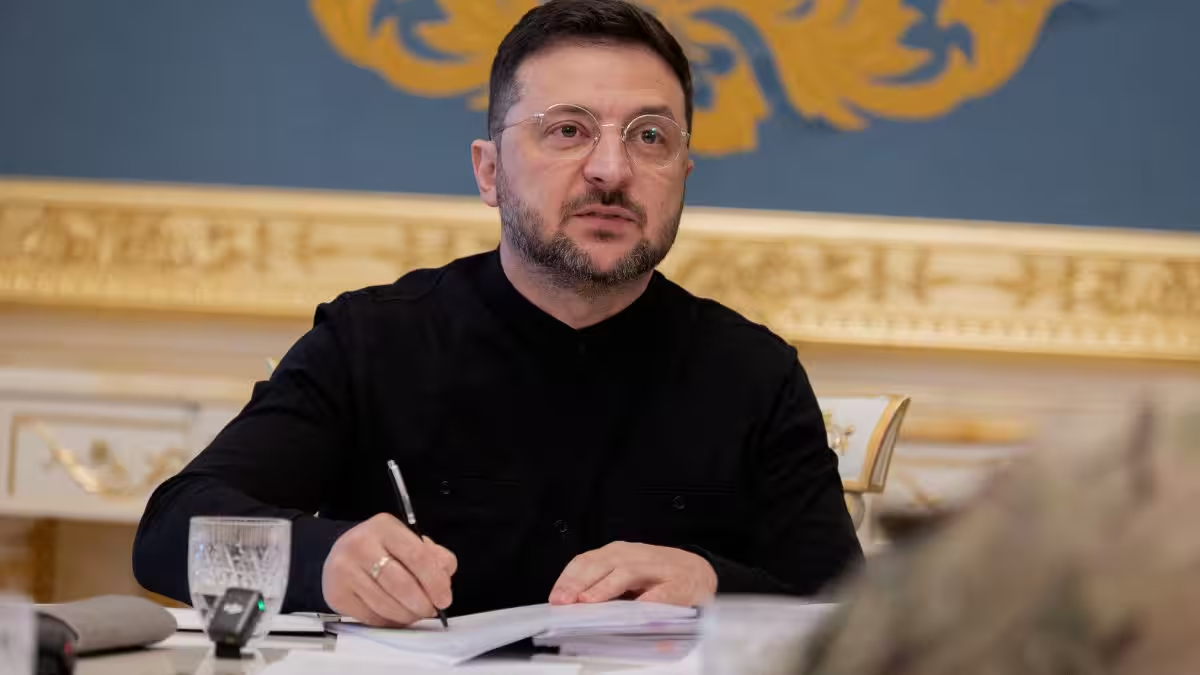
Ahead of the meeting, US Secretary of State Marco Rubio strongly rejected allegations that Washington was withholding intelligence from Ukraine, describing the accusations as “scandalous” and “outrageous”.
His comments followed claims by Serhii “Flash” Beskrestnov, a military technical adviser to Zelensky, that inconsistent access to reliable US warnings had contributed to Ukrainian casualties.
More Read
Beskrestnov told the BBC that Ukraine sometimes received advance information about impending Russian attacks but, on other occasions, did not receive the warnings it needed.
He questioned the inconsistency, suggesting that the absence of reliable intelligence had serious consequences for Ukrainian forces and civilians.
Rubio acknowledged that some concerns surrounding military assistance could be valid but insisted that Washington had not deliberately denied Kyiv support.
He also indicated that reports suggesting additional Patriot missile interceptors had not yet reached Ukraine might be accurate, although he maintained that the United States had not intentionally withheld assistance.
The issue of intelligence sharing is particularly sensitive for Kyiv, which relies on Western information and advanced air-defence systems to detect and counter Russian missile and drone attacks.
Zelensky Seeks Stronger US Support
Zelensky said he had held a constructive discussion with Rubio on the need for improved early-warning information, additional missile interceptors and the continued operation of SpaceX’s Starlink satellite internet network in Ukraine.
More Read

Starlink has played a significant role in Ukraine’s military communications, helping forces maintain connectivity on the battlefield and coordinate operations.
Disruptions to the network have raised concerns about the country’s operational capabilities and its continued dependence on privately operated technology for essential military communications.
Last week, a bipartisan group of US senators called for an urgent investigation into disruptions affecting Starlink in Ukraine.
Meanwhile, reports that the transfer of additional Patriot interceptors had not yet been approved have added to concerns about the pace and reliability of Western military assistance.
The developments underscore the difficult position facing Ukraine as it seeks to maintain its defences while navigating increasingly strained relations with its most influential international supporter.
Trump Calls for New Ukrainian Leadership
Relations between Trump and Zelensky have deteriorated in recent weeks, with the US president suggesting that Ukraine should have a new president and arguing that someone else should negotiate on Kyiv’s behalf.
The remarks have intensified concerns in Ukraine and across Europe about the future direction of American policy towards the conflict.
Washington’s position has become a central issue in diplomatic efforts to end the war, particularly as European governments attempt to maintain support for Ukraine while encouraging negotiations.
Zelensky’s government has continued to seek military assistance and security assurances from its Western partners, while Trump has increasingly emphasized the need to bring the conflict to an end.
The disagreement reflects wider differences over how peace negotiations should proceed, what concessions might be expected from the parties involved and what security arrangements would be necessary to prevent another conflict.
European Leaders Join Diplomatic Efforts
Witkoff is expected to be joined by US President Donald Trump’s son-in-law Jared Kushner through a video link, alongside European representatives from Finland, the United Kingdom, Poland, France and Germany, as well as officials from the European Union and NATO.
Finnish President Alexander Stubb is among those expected to participate.
The involvement of European leaders highlights growing concern about the implications of deteriorating US-Ukrainian relations for the continent’s security.
German Chancellor Friedrich Merz said on Monday that recent American statements about the war had presented “mixed pictures and messages”.
Merz said he was trying to persuade Washington that the conflict needed to be addressed jointly, stressing that European countries remained committed to supporting Ukraine.
He also pointed out that the United States had not been paying for Ukraine’s defence since the beginning of 2025, with Europe and other countries carrying the financial burden.
The German leader acknowledged that continued support was placing considerable pressure on European budgets but insisted that assistance would continue until the war ended.
His comments reflect a broader European effort to maintain Ukraine’s defence capabilities while preparing for the possibility that Washington could further reduce its direct involvement.
Kremlin Welcomes US Mediation
It remains unclear whether Witkoff will travel to Russia after the Norway meetings.
However, Kremlin spokesman Dmitry Peskov said Moscow hoped a meeting with Trump’s special envoy could be arranged in the near future.
Peskov also expressed appreciation for the mediation efforts of American negotiators, signaling Russia’s willingness to continue diplomatic engagement with Washington.
Earlier this month, Russian President Vladimir Putin discussed the war with Trump during a telephone conversation.
Following the discussion, Trump announced that Moscow would immediately supply more than 300,000 tonnes of diesel to the United States and other markets, according to the report.
The announcement was described as bringing an end to American sanctions on Russian diesel exports.
The timing of the development attracted attention because it coincided with a meeting between Witkoff, Kushner and Ukrainian officials in Miami.
Zelensky criticized the apparent arrangement, describing it as a “happy birthday present for Putin”.
The episode has added to concerns in Kyiv and European capitals that Washington’s approach to Moscow could undermine efforts to pressure Russia over its invasion of Ukraine.
Oil Prices and the Iran War Complicate the Crisis
The diplomatic dispute is unfolding against a wider backdrop of global energy market pressures and the approaching US midterm elections.
Trump has blamed Ukrainian attacks on Russian oil refineries for rising fuel prices in the United States, where petrol prices have reportedly reached record highs since the beginning of the US-led war on Iran.
The administration’s position has created another point of disagreement with Kyiv, which has used attacks on Russian energy infrastructure as part of its efforts to weaken Moscow’s war-fighting capacity.
For Ukraine, such operations are intended to disrupt Russian revenue and military logistics. For Washington, however, concerns about energy prices and the broader economic consequences of the conflict have become increasingly prominent.
The competing priorities illustrate how the war in Ukraine is becoming intertwined with wider geopolitical and domestic political calculations.
JD Vance Questions Whether Ukraine Is a US Ally
US Vice-President JD Vance has also offered a pointed assessment of Washington’s relationship with Kyiv.
In a television interview, Vance described Ukraine as a partner in certain respects but said the two countries had diverging interests on some issues, including Ukrainian attacks on Russian energy infrastructure.
He argued that the United States did not have a formal alliance with Ukraine and reiterated his opposition to Ukrainian membership of NATO.
Vance said Washington would continue working with Kyiv on areas of shared interest while acknowledging that the two governments would disagree on others.
His remarks reinforce concerns that the Trump administration may be seeking a more transactional relationship with Ukraine rather than treating the country as a long-term security partner.
A Critical Test for Ukraine’s Western Support
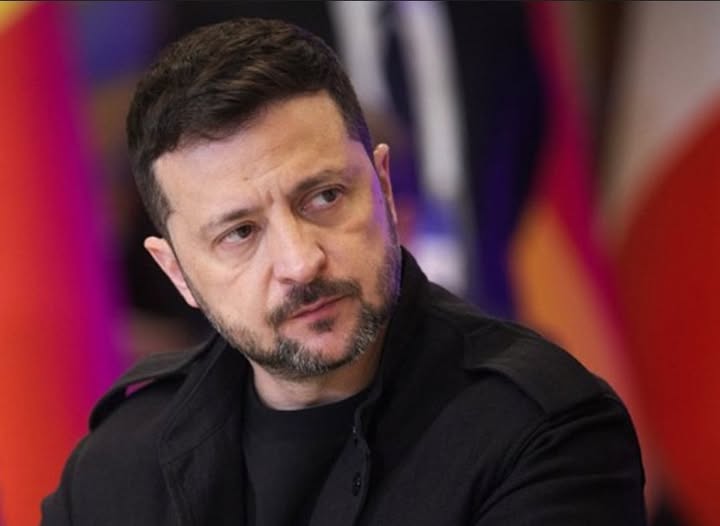
The Norway talks represent an important diplomatic test for Zelensky as he attempts to rebuild confidence with Washington and secure continued support from European allies.
For Ukraine, the immediate priorities include reliable intelligence sharing, additional air-defence ammunition, uninterrupted military communications and a clear understanding of the United States’ long-term commitment.
For European governments, the challenge is to maintain a united position on Ukraine while preparing for the possibility of greater financial and military responsibilities.
Russia, meanwhile, appears willing to continue engaging with Washington through diplomatic channels as questions persist over the future shape of negotiations.
Whether the Oslo meeting can ease tensions remains uncertain. However, its outcome could influence the coordination of Western support for Ukraine and the prospects for a negotiated settlement.
As the war continues, Kyiv faces the dual challenge of defending its territory against Russian attacks and preserving the international partnerships on which much of its military and diplomatic strategy depends.