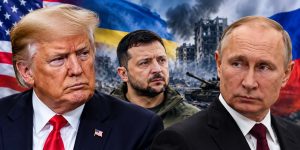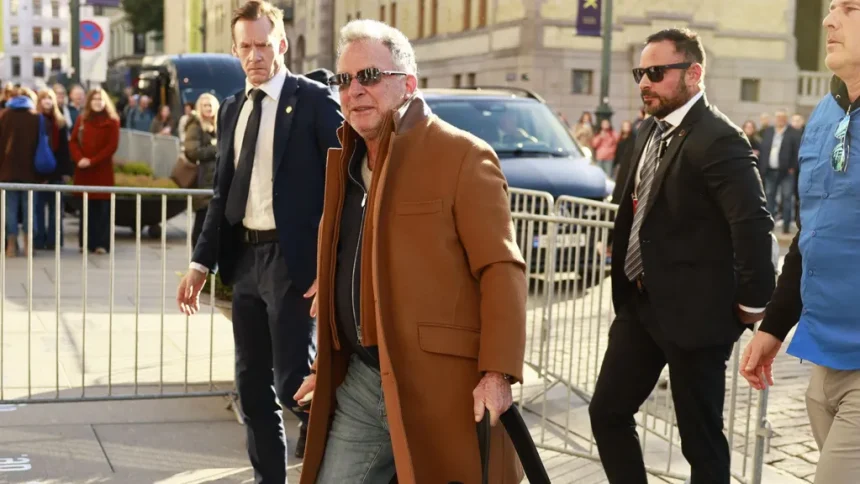
ST PETERSBURG, Russia — US special envoy Steve Witkoff is expected to meet Russian President Vladimir Putin in St Petersburg on Wednesday as diplomatic efforts intensify to end Russia’s ongoing war against Ukraine, following what American and European officials have described as constructive talks with Ukrainian President Volodymyr Zelensky in Oslo, Norway.
The planned meeting comes a day after Witkoff’s discussions with Zelensky and European leaders, where proposals aimed at securing a peaceful resolution to the conflict were reportedly examined. Jared Kushner, US President Donald Trump’s son-in-law and another key figure in the administration’s diplomatic efforts, participated in the Oslo discussions virtually.
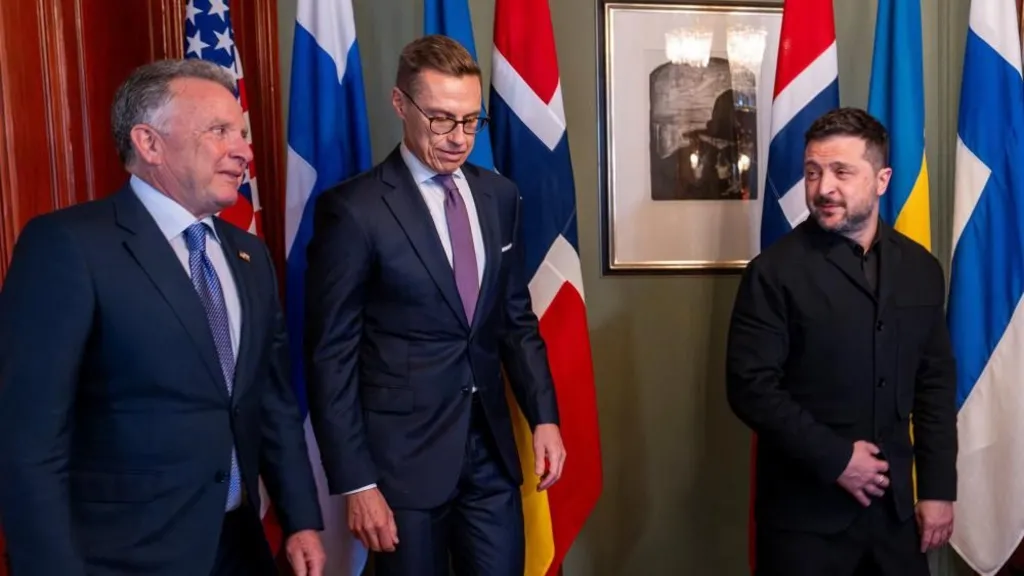
A US official described Tuesday’s meeting as “very productive and constructive,” adding that Washington, Kyiv and European partners had achieved strong alignment at the working level on the next steps towards ending the conflict.
However, details of the proposals remain undisclosed, leaving uncertainty over whether Moscow will accept the terms under consideration.
More Read

Zelensky Says Ukraine Ready for Negotiations
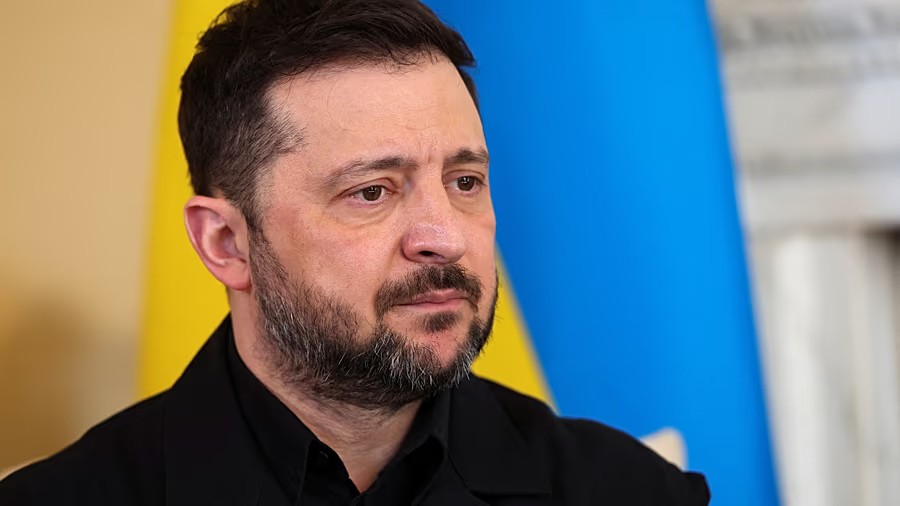
Zelensky said Ukraine was prepared to negotiate an end to the war but stressed that Russia’s continued attacks were costing civilian lives.
“Of course, we are not losing this war, but we are losing people because Russia attacks,” the Ukrainian president said during his remarks in Oslo.
The Ukrainian leader and his European allies have called on Moscow to respond to the proposals during Witkoff’s meeting with Putin, placing renewed attention on the Kremlin’s position as diplomatic efforts gather pace.
More Read
Finnish President Alexander Stubb, who participated in the Oslo talks, said “genuine progress” had been made on proposals for peace. However, he cautioned that patience would be necessary, without providing further details about the discussions.
Norwegian Prime Minister Jonas Gahr Støre also stressed that Europe must be involved in any negotiations aimed at ending the war, arguing that European countries have a direct stake in the outcome and the future security of the continent.
Kremlin Rules Out Political Concessions
Although Putin has yet to publicly respond to the latest diplomatic developments, Russian Foreign Minister Sergei Lavrov said Moscow would listen to the proposals Witkoff presents.
Lavrov, however, ruled out “any political concessions,” highlighting the potential difficulties facing negotiators as they attempt to bridge the differences between Russia and Ukraine.
Moscow currently controls approximately 20 per cent of Ukrainian territory following its full-scale invasion in February 2022. The territorial question, alongside security guarantees and the future relationship between Ukraine and Western military alliances, remains central to the broader peace debate.
More Read

The Kremlin’s response to the proposals could therefore prove decisive in determining whether the latest diplomatic initiative produces tangible progress.
US-Ukraine Relations Face Fresh Strain
The diplomatic push comes amid mounting tensions between Washington and Kyiv.
Relations have deteriorated in recent weeks, with Trump questioning Zelensky’s leadership and suggesting that Ukraine should have someone else negotiating on its behalf.
Trump has repeatedly urged Kyiv to reach an agreement with Moscow, arguing that the war must end. Speaking to reporters at the White House after the Oslo discussions, the US president said Russia wanted to conclude the conflict and insisted that it was time for Ukraine to make a deal.
The disagreements have raised questions about the future of US support for Ukraine, particularly as Kyiv continues to depend on American military assistance, intelligence and advanced air-defence systems.
Trump has also linked rising fuel prices in the United States to Ukrainian attacks on Russian oil refineries, against the backdrop of the US-led war on Iran. His remarks come ahead of next month’s US midterm elections, adding a domestic political dimension to Washington’s approach to the conflict.
US Vice-President JD Vance has similarly described Ukraine as a partner rather than a formal ally, noting that Washington and Kyiv have differing interests on some issues, including Ukrainian strikes against Russian energy infrastructure.
Vance also reiterated that Ukraine is not a member of the North Atlantic Treaty Organization (NATO) and expressed opposition to its membership.
Intelligence Sharing Resumes as Kyiv Seeks More Support
Despite the political disagreements, Zelensky indicated that intelligence cooperation between the United States and Ukraine had improved.
Kyiv had previously accused Washington of withholding critical intelligence, an allegation that American officials strongly rejected. However, speaking after the Oslo talks, Zelensky expressed appreciation for the resumption of intelligence sharing, particularly early warnings about incoming Russian missile attacks.
He said the information was essential for protecting civilians, including children, by allowing people to receive warnings when ballistic missiles were approaching.
Zelensky also expressed hope for a positive outcome regarding Ukraine’s access to SpaceX’s Starlink satellite network, which Ukrainian forces rely on for communications and certain military operations.
Ukrainian military officials had recently reported speed restrictions affecting the platform, raising concerns about its implications for Kyiv’s battlefield capabilities. A bipartisan group of US senators subsequently called for an urgent investigation into the restrictions.
The availability of American-made Patriot interceptor missiles has also emerged as a concern. Reports indicated that the transfer of additional interceptors had not yet been approved, although US Secretary of State Marco Rubio said that no assistance had been deliberately denied to Ukraine.
Patriot systems are among the air-defence capabilities Ukraine uses to counter Russian ballistic missile attacks.
Russian Attacks Continue Despite Peace Efforts
While diplomats pursue a possible settlement, Russian drone and missile attacks have continued to inflict casualties across Ukraine.
Ukrainian officials reported that at least 10 people were killed on Tuesday, including four in Kyiv and the surrounding region, four in the eastern Donetsk region and two in the central city of Dnipro.
A further overnight attack on Wednesday killed two people near Kharkiv, Ukraine’s second-largest city.
The continuing attacks underscore the urgency of the negotiations, even as both sides remain divided over the conditions required to end the war.
For Kyiv, a settlement must address the country’s long-term security and prevent renewed Russian aggression. Zelensky said discussions in Oslo included strong security guarantees for Ukraine, alongside proposals for an energy ceasefire.
European leaders have also expressed concern over what they regard as inconsistent signals from Washington regarding the war and its approach to Russia.
German Chancellor Friedrich Merz recently described the messages coming from the United States as mixed, saying he was working to persuade Washington that resolving the conflict required a coordinated effort.
Merz emphasized the significant financial and political burden European countries have shouldered in supporting Ukraine and maintaining pressure on Moscow.
Putin Meeting Could Shape the Next Phase of the War
Witkoff’s meeting with Putin is expected to provide an important indication of Moscow’s willingness to engage with the latest peace proposals.
Although the Oslo discussions appear to have brought Washington, Kyiv and European partners closer together on possible next steps, substantial obstacles remain. These include territorial disputes, security guarantees, military assistance and the conditions under which a ceasefire could be sustained.
The absence of publicly disclosed details about the proposals also makes it difficult to determine how much common ground has been achieved.
For now, Ukraine and its European allies are waiting for Russia’s response, while Washington continues to press for a negotiated settlement.
Whether the St Petersburg meeting marks a breakthrough or exposes further divisions will depend largely on Putin’s reaction to the proposals and the willingness of all parties to compromise.
With Russian attacks continuing and diplomatic pressure mounting, the coming discussions could prove significant in shaping the next phase of efforts to end the war in Ukraine.