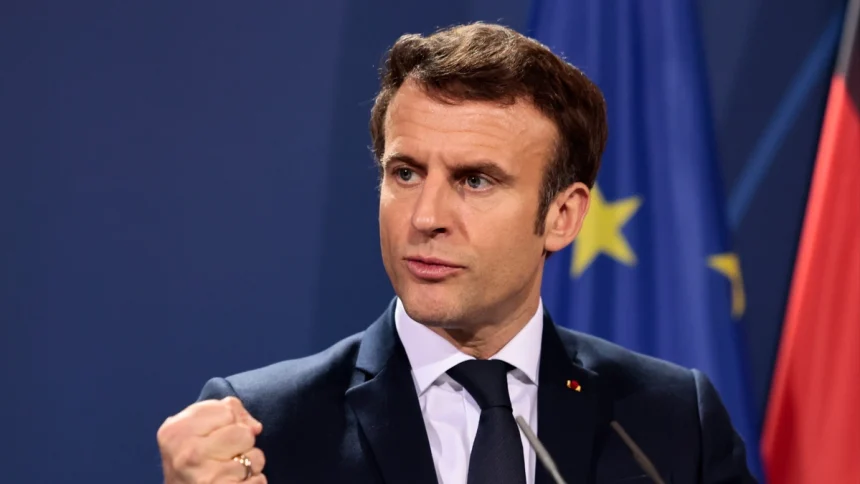
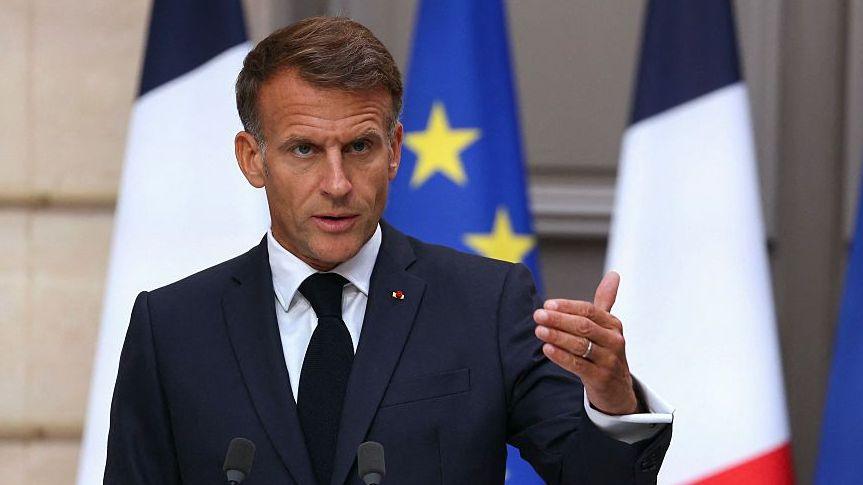
France — French President Emmanuel Macron has criticized US President Donald Trump and other foreign leaders for allegedly exploiting France’s ongoing street unrest for political gain, accusing them of spreading misleading narratives and false information about the violence.
Macron made the remarks during a visit to Doha, Qatar, where he condemned what he described as unacceptable comments from foreign leaders following the recent riots that swept through several French cities.
Although he did not initially mention specific individuals, Macron confirmed that Trump was among those he was referring to when asked by reporters.
“Among others,” the French president replied.
Trump had reportedly blamed the violence in France on migrants, jihadists and communists while campaigning for his Republican Party ahead of the US midterm elections.
More Read

Macron argued that some political leaders were using the unrest to advance their domestic political agendas rather than accurately portraying the situation in France.
He accused them of spreading narratives promoted by certain political groups and warned against the manipulation of information for electoral purposes.
“They are using our country for their own political campaigns,” Macron said, adding that France already had significant challenges to address without outside interference.
More Read

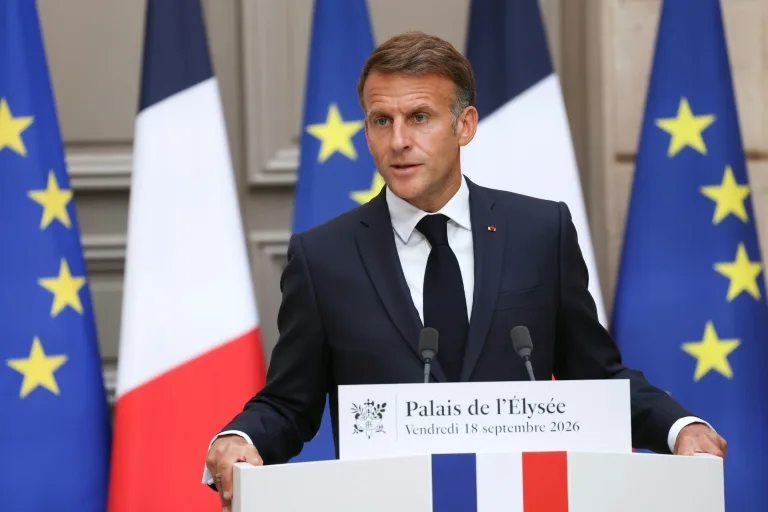
Macron Warns Against AI-Generated False Images
The French president also raised concerns about the circulation of misleading information and artificial intelligence-generated images allegedly depicting events that never occurred.
According to Macron, some online claims portrayed France as having been overwhelmed by large numbers of migrants and Islamists, a characterization he strongly rejected.
His comments come amid growing concerns about the role of misinformation in shaping public perceptions of political unrest and intensifying divisions within society.
Israeli Prime Minister Benjamin Netanyahu has also reportedly described the situation in France as an “invasion of extremist Islam.” The remarks have added to the international political debate surrounding the causes of the demonstrations.
Analysts have disputed claims that migrants were the principal factor behind the protests, pointing instead to the need to examine the broader social and economic circumstances driving public anger.
More Read
French Government Faces Pressure After Widespread Rioting
Macron and his government are facing mounting pressure to restore order as the country grapples with one of its most serious episodes of street unrest in recent months.
The violence erupted after demonstrations over the rising cost of living, with initially peaceful gatherings degenerating into widespread clashes, looting and property destruction.
Paris, Marseille, Lyon and Limoges were among the cities affected. In Limoges, the town hall was set on fire and partially destroyed during the unrest.
The government has acknowledged shortcomings in its initial response, with officials admitting that authorities lost control during parts of Saturday’s disturbances.
The crisis is particularly sensitive for Macron, whose government is confronting mounting political and economic pressures ahead of the presidential election scheduled for next year, when voters will choose his successor.
Paris Announces Restrictions Ahead of Fresh Protests
Authorities in Paris have announced restrictions on demonstrations in several key locations as the capital prepares for further protests.
The reported ban, scheduled to run from 8 a.m. to 8 p.m. on Thursday, covers areas around the Élysée Palace, both chambers of parliament, the Louvre Museum and the Champs-Élysées.
Other restricted locations include Bastille and République squares, as well as the Châtelet-Les Halles shopping district, which was heavily targeted by looters during the weekend violence.
The government has also promised a significantly reinforced security operation to prevent a repeat of the previous disturbances. Additional police personnel and some military deployments are expected to support security efforts.
Partial night-time curfews introduced in areas considered vulnerable to violent protests and looting, including parts of Paris, Marseille and Lille, have reportedly contributed to relative calm.
Officials were expected to consider renewing the restrictions as they worked to prevent further outbreaks of violence.
Yellow Vests and Students Plan Saturday Demonstrations
The government faces another major test on Saturday, when activists associated with the gilets jaunes, or Yellow Vests, movement plan to march through central Paris.
The movement, which gained national prominence in 2018 through protests against rising living costs and declining public services, is seeking to revive its campaign amid renewed economic discontent.
Student groups have also called for demonstrations to demand greater investment in education.
Macron warned that authorities would not allow protesters to cause disorder in city centres.
“Those who want to cause disorder in city centres next Saturday will be prevented from doing so,” he said, stressing the need for firm leadership from the government.
The planned demonstrations have heightened concerns that the unrest could intensify if authorities fail to address the economic and social grievances fuelling public anger.
Unions Demand Political Solutions Rather Than Repression
France’s main trade unions have separately announced a nationwide mobilization for November 5, adding to pressure on the government to respond to public dissatisfaction.
Sophie Binet, head of the General Confederation of Labour (CGT), said the country was experiencing widespread and legitimate anger that could not be resolved through repression alone.
She called for a political response to the crisis, suggesting that the government needed to address the underlying concerns driving the demonstrations.
Union representatives met Prime Minister Sébastien Lecornu on Wednesday, although the meeting reportedly ended without concrete announcements.
Macron, meanwhile, rejected calls for a state of emergency, insisting that France had the necessary means to contain further unrest without resorting to such extraordinary measures.
Arrests and Prosecutions Rise as Economic Concerns Deepen
Justice Minister Gérald Darmanin said approximately 2,500 people had been taken into custody during and after the protests.
Of those, 174 had been jailed, while another 917 had been formally prosecuted, according to figures released by the minister.
The unrest has also begun to affect international travel and financial markets. Several countries have issued travel warnings concerning France, while investors have grown increasingly concerned about the country’s political stability and public finances.
France’s benchmark 10-year government bond yield reportedly climbed above 5% on Wednesday, reaching its highest level since 2002.
The increase comes as the government struggles with budgetary pressures and concerns over its ability to manage public spending and restore economic confidence.
Concerns Grow Over Spread of Protests Across Europe
France is not the only European country experiencing unrest linked to economic frustrations and public dissatisfaction.
Demonstrations and episodes of violence in countries including Italy and Belgium have raised concerns that anger over living standards, public services and government policies could spread further across the continent.
In Italy, the government has ordered the deployment of 500 troops to Milan in an effort to curb street violence and protect businesses following protests that targeted commercial areas.
As France prepares for another weekend of demonstrations, Macron faces the dual challenge of restoring public order and responding to the economic grievances behind the unrest.
His criticism of Trump and other foreign leaders highlights a growing international political dimension to the crisis, with competing narratives about migration, security and economic hardship shaping the debate over what is driving the violence.
Whether the French government can prevent renewed clashes while rebuilding public confidence is likely to remain a central question in the days ahead.