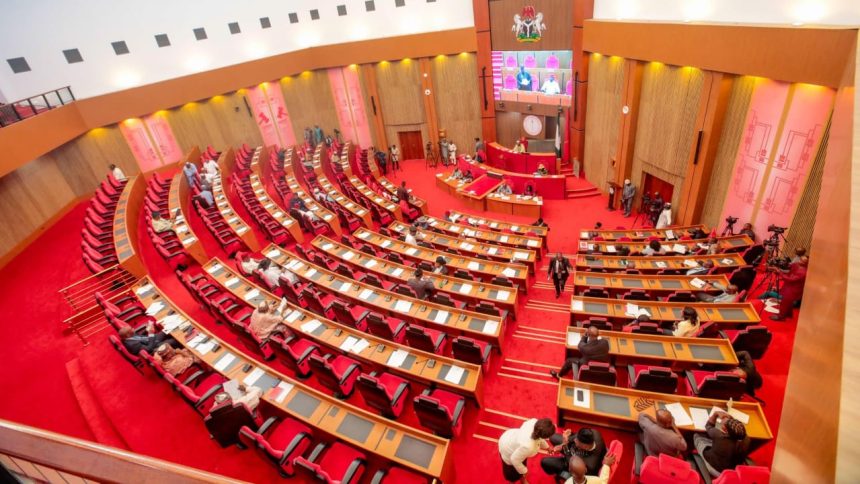
Abuja — The National Assembly has transmitted the Constitution of the Federal Republic of Nigeria, 1999 (Sixth Alteration) Bill, 2026, to the Houses of Assembly of the 36 states for consideration and concurrence.
The transmission marks the commencement of the next phase of the constitutional alteration process, with state legislatures now expected to deliberate on the bill in accordance with their respective legislative procedures and communicate their resolutions to the National Assembly.
The Clerk to the National Assembly, Kamoru Ogunlana, disclosed this on Wednesday in a statement signed by him.
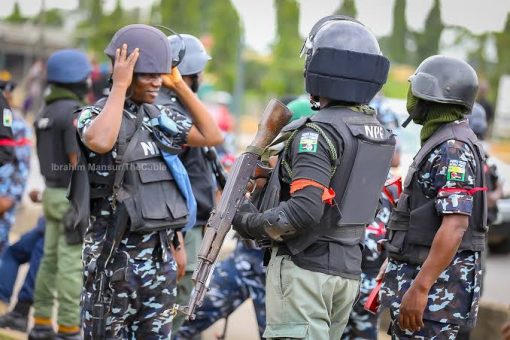
According to Ogunlana, the State Police Establishment Bill is the only constitutional alteration bill that has so far been passed by both chambers of the National Assembly in the current 10th Assembly.

The bill seeks to amend the 1999 Constitution to provide for the establishment of state police.
The Senate considered the executive bill transmitted by President Bola Ahmed Tinubu on June 23, 2026, and passed it for third reading on June 24.
The House of Representatives subsequently considered the same bill and passed it for third reading on July 23, 2026.

With the bill now transmitted to the 36 state Houses of Assembly, the proposed constitutional amendment has entered a crucial stage.
Under Section 9 of the 1999 Constitution, as amended, a bill seeking to alter the Constitution requires the approval of not less than two-thirds of the Houses of Assembly of the states.
This means that at least 24 of the 36 state Houses of Assembly must approve the constitutional alteration before the process can proceed to the next stage, including eventual transmission to the President for assent where required.
The National Assembly, however, stressed that the state legislatures are constitutionally independent and would be allowed to consider the bill without interference.
Ogunlana said the National Assembly recognizes the constitutional responsibility vested in the state Houses of Assembly and respects their independence throughout the process.
He explained that the transmission was intended to facilitate the orderly discharge of the states’ constitutional responsibilities rather than dictate the outcome of their deliberations.
More Read

30-Day Administrative Timeline
Although the Constitution does not prescribe a specific deadline for the state Houses of Assembly to communicate their decisions on constitutional alteration bills, the National Assembly has asked the legislatures to communicate their resolutions within 30 days of receiving the bill.
Ogunlana clarified that the 30-day period is an administrative timeframe and does not amount to a constitutional deadline.
He said:
“It is noted that the Constitution does not prescribe a specific period within which the State Houses of Assembly are required to communicate their resolutions on a constitutional alteration Bill.
“Nevertheless, in the interest of an orderly, coordinated and timely conclusion of the constitutional alteration process, the State Houses of Assembly are expected to consider the Bill and communicate their respective resolutions to the National Assembly within 30 days of receipt.
“For clarity, the 30-day period is an expected administrative timeframe and does not constitute a constitutional deadline.”
The Clerk further assured that the National Assembly would adhere strictly to constitutional requirements and due process throughout the exercise.
According to him, the federal legislature remains committed to institutional cooperation and respect for the legislative responsibilities of all tiers of government.
He said:
“The National Assembly remains committed to ensuring that the constitutional alteration process is conducted in strict compliance with the Constitution and in accordance with the principles of due process, institutional cooperation and respect for the legislative responsibilities of all tiers of the legislature.”
State Assemblies Begin Deliberations
The 36 state Houses of Assembly are now expected to commence their respective legislative consideration of the Sixth Alteration Bill.
Once the resolutions of the state legislatures are received, the National Assembly will determine the next constitutional steps required under Section 9.
Ogunlana said:
“Upon receipt of the resolutions of the State Houses of Assembly, the National Assembly will proceed with the necessary steps in accordance with the provisions of the Constitution.”

The transmission of the bill represents a significant development in the push to establish state police in Nigeria.
The proposed amendment must now secure the constitutionally required level of support among the state legislatures before the National Assembly can advance the process further.
The outcome of the deliberations by the 36 state Houses of Assembly will therefore determine whether the State Police Establishment Bill proceeds to the next stage of the constitutional amendment process.