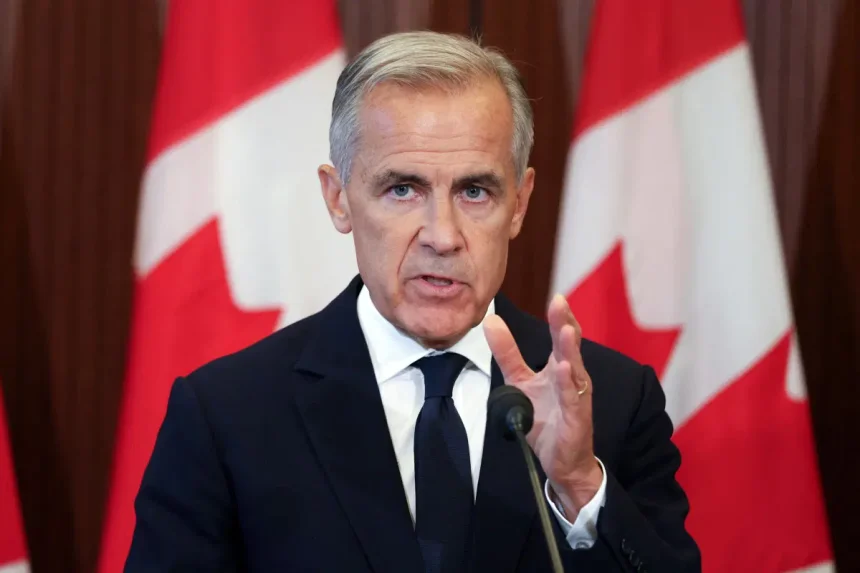
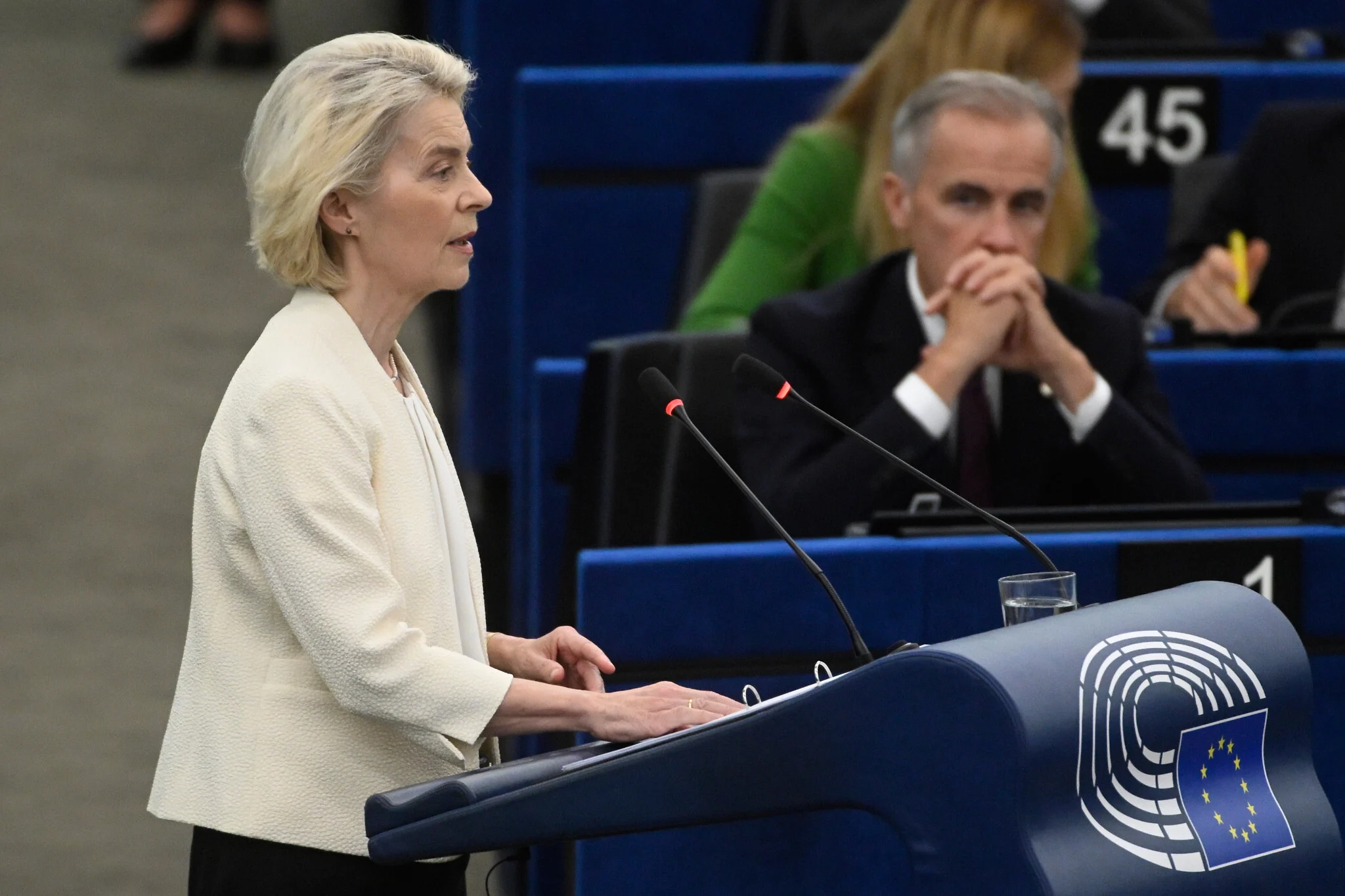
STRASBOURG — European Commission President Ursula von der Leyen has backed proposals for Canada to become the European Union’s first-ever “associate member”, signaling a potentially significant expansion of ties between Ottawa and Brussels.
Addressing the European Parliament in Strasbourg on Wednesday, von der Leyen said she wanted to work towards “opening the door” for Canada to establish closer relations with the 27-member bloc across key economic, technological and security sectors.
Canadian Prime Minister Mark Carney, who attended the address, is expected to address the European Parliament on Thursday. Last week, Carney called for a “unique alliance” with the EU as relations between Canada and the United States continue to face tensions.
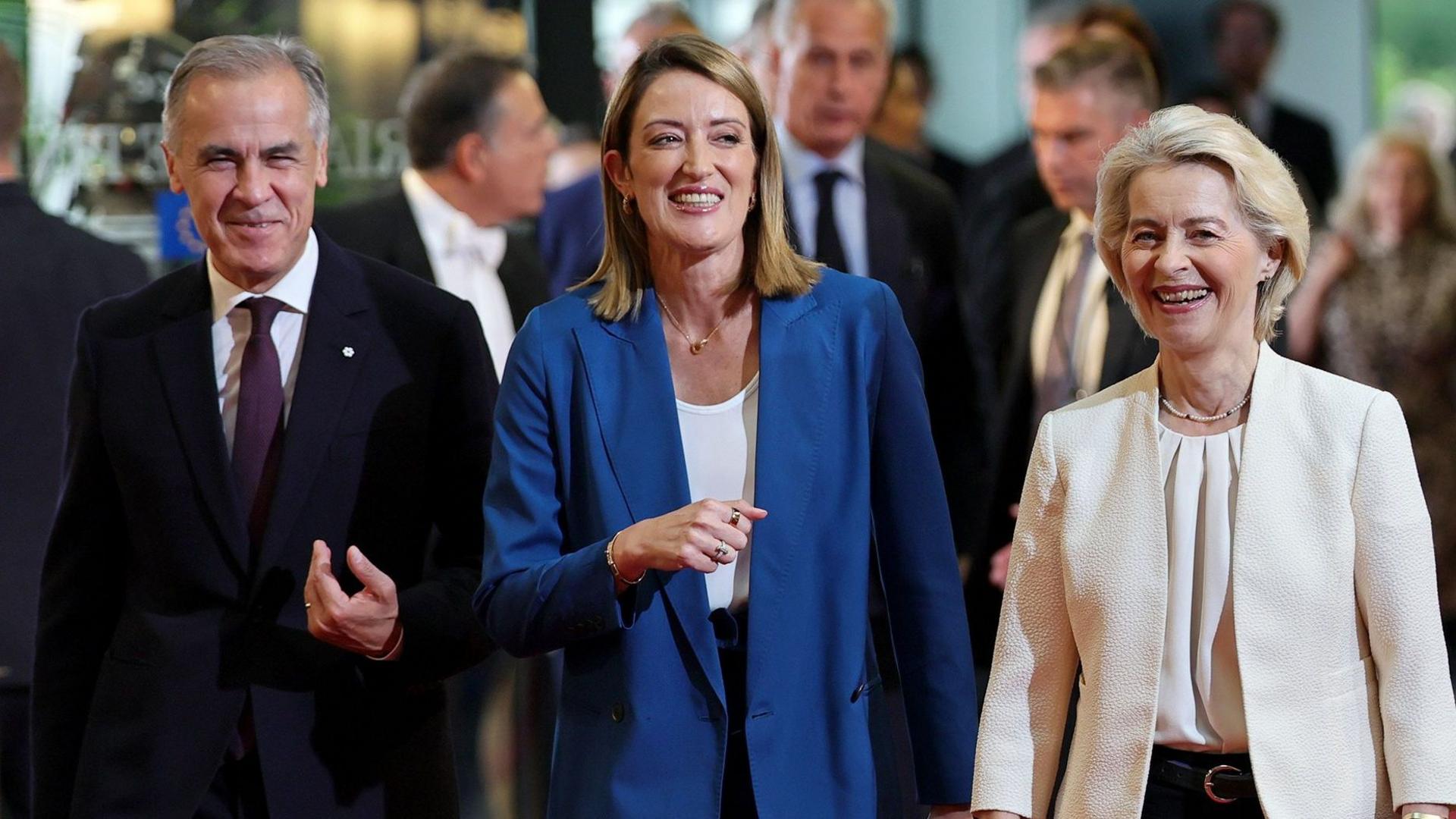
Although von der Leyen did not mention US President Donald Trump by name, she said closer relations with Canada should not be viewed as being directed against another country.
More Read
“Not a partnership against anyone else, but for our common strength,” she said.
Von der Leyen said Canada and Europe shared common positions on issues including artificial intelligence, climate change and geopolitics.
She also highlighted cooperation on Ukraine, defense, raw materials and supply chains, adding that both sides shared a commitment to democracy.
Potential areas for deeper cooperation include manufacturing, technology, artificial intelligence, defence, energy, critical minerals and economic security.
More Read

However, the proposed “associate membership” does not currently exist under EU treaties, meaning the creation of such a status would require significant political and legal negotiations and could take years.
The proposal comes as Canada faces an increasingly difficult relationship with Washington. Trade negotiations between Canada and the United States collapsed last month, followed by new tariff measures. Trump’s repeated remarks about Canada potentially becoming the “51st state” have also contributed to tensions between the two countries.
European leaders have also faced disagreements with the Trump administration over tariffs, defence spending and the future of transatlantic security cooperation.
EU Security Council Proposed
In her address, von der Leyen also proposed creating a European Security Council that would bring together EU countries and key partners, including the United Kingdom, Ukraine and Canada.
She said discussions about a leaders’ forum focused on European security had been underway for some time but had become more urgent because of the scale of current threats.
The proposed council could include a mechanism allowing an emergency meeting to be triggered when a member believes it is under threat, drawing a comparison with Article 4 of NATO, which provides for consultations when the security of a member is threatened.
More Read

Von der Leyen described the proposed body as a mechanism that would “flank” Article 4, while also stressing that the EU intended to strengthen cooperation with NATO.
The proposal comes amid continuing concerns over Russia’s war in Ukraine and wider questions about Europe’s long-term security arrangements.
Other EU Priorities
Beyond foreign policy and defense, von der Leyen used the address to outline proposals covering the European economy, technology, migration and social media.
She said many European families remained concerned about the cost of living, while technological change was creating new challenges for jobs and society.
The European Commission also plans to engage major artificial-intelligence laboratories in discussions about supporting European industry and keeping pace with developments in frontier AI.
Another proposal would seek to reduce bureaucracy for businesses operating within the EU.
Proposed Social Media Restrictions for Children
Von der Leyen also proposed tighter restrictions on children’s access to social media.
Under the proposal, children under 13 could be prohibited from accessing social media platforms, while those aged 13 to 15 would require parental supervision to establish accounts.
The proposal is part of wider European discussions about the impact of social media and technology on children.
Migration Emergency Measures
The EU is also considering a new emergency mechanism to help member states respond to sudden and large-scale migration movements.
The proposal follows the deadly influx of migrants to the Spanish enclave of Ceuta in July.
Von der Leyen said the emergency mechanism would only be activated under strictly defined criteria and for a limited period, while fundamental rights would remain protected.
Human rights organizations have expressed concern that emergency migration measures could result in vulnerable migrants, including women and children, being denied access to protection under international law.
A Potential New Chapter in EU-Canada Relations
For now, Canada’s proposed associate membership remains an idea rather than an established EU status.
Several countries, including Albania, Bosnia and Herzegovina, Montenegro, North Macedonia and Serbia, remain on the path towards full EU membership, while Georgia and Moldova are also seeking closer integration with the bloc.
Meanwhile, existing EU-Canada agreements continue to provide the foundation for bilateral relations, although several EU member states have yet to ratify the bloc’s free-trade agreement with Ottawa.
The proposal for a new form of Canadian association could therefore trigger further debate within Europe over how the EU should build strategic partnerships beyond its borders while strengthening its economic and security position.