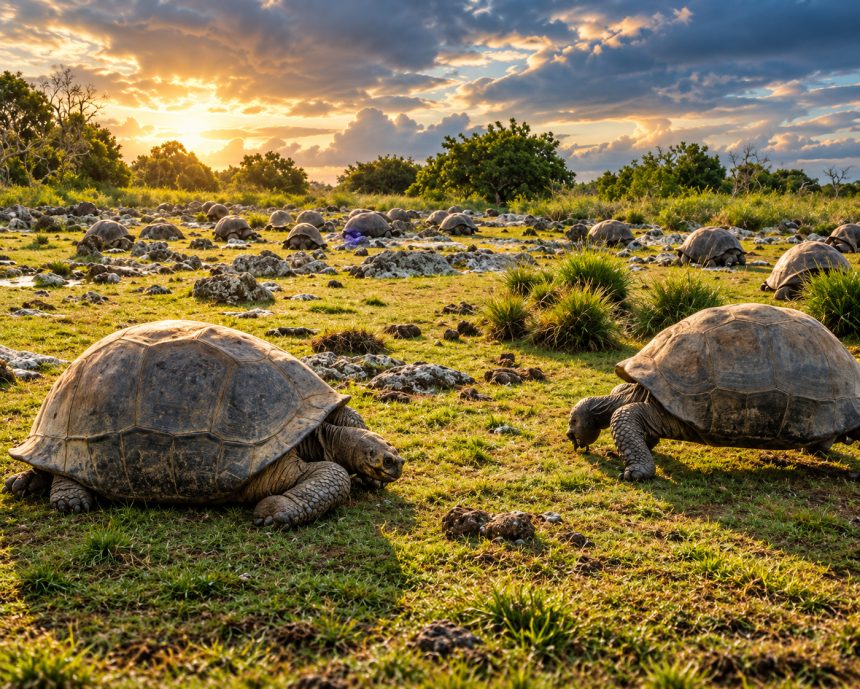
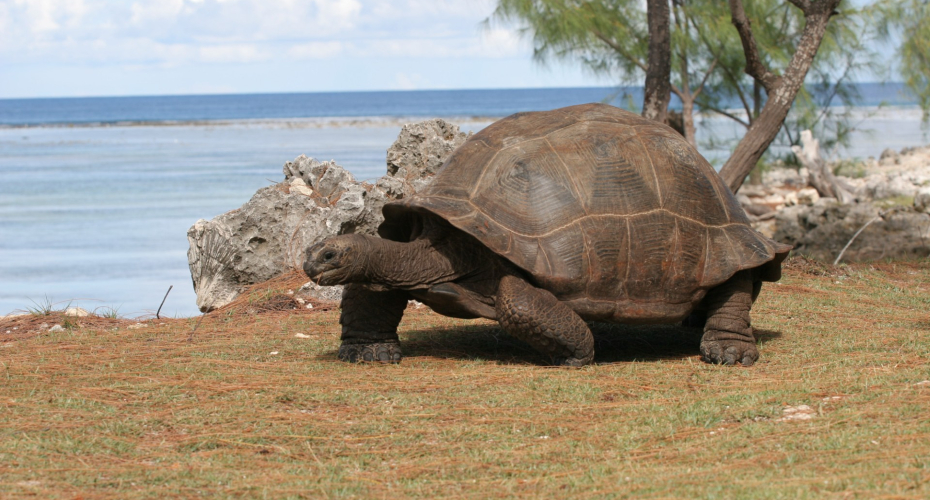
The world’s largest free-roaming population of giant tortoises has reached an estimated 180,000 on Aldabra Atoll in Seychelles, marking a remarkable conservation achievement for a species that was once pushed to the brink of extinction.
A new scientific survey led by the Seychelles Islands Foundation (SIF) and the University of Exeter has revealed that the Aldabra giant tortoise population is thriving, with researchers estimating almost 183,000 adult and sub-adult tortoises living on the remote Indian Ocean atoll.
The findings represent the highest population estimate ever recorded for the species and provide the most comprehensive assessment of its numbers in decades.
The study, published in the scientific journal Ecology and Evolution, analyzed five years of tortoise monitoring data collected between 2018 and 2022. It also provides the first major update to the widely cited estimate of approximately 100,000 tortoises recorded in the late 1990s.
More Read

From Near Extinction to a Conservation Success Story
The discovery highlights the extraordinary recovery of the Aldabra giant tortoise, which suffered severe population declines during the 19th century as a result of exploitation by humans.
Historical accounts indicate that fewer than 1,000 tortoises remained on the island at the height of the population’s decline, raising concerns about the long-term survival of the species.
However, sustained conservation efforts helped transform the island into a protected wildlife sanctuary. Aldabra Atoll became a strict nature reserve in 1981 and was designated a UNESCO World Heritage Site in 1982.
More Read

Decades of protection and monitoring have since helped preserve the tortoises and their fragile natural habitat.
Today, researchers regard the recovery as one of the Indian Ocean’s most significant conservation achievements.
Dr Frauke Fleischer-Dogley, chief executive officer of the Seychelles Islands Foundation, described the latest findings as evidence of what long-term environmental protection can accomplish.
She said the presence of more than 180,000 freely roaming giant tortoises was wonderful news for Seychelles, the world and everyone who had worked to protect Aldabra.
Researchers Establish New Population Baseline
Although the results are encouraging, scientists say counting the giant tortoises is a complex task because of the atoll’s dense vegetation and difficult terrain.
Dr Nancy Bunbury, one of the study’s co-authors, explained that Aldabra’s long-running monitoring programme has faced challenges in accurately determining the number of tortoises living across the island.
More Read

By using statistical modelling to account for animals that could not be observed directly, researchers developed what they described as the most reliable population baseline yet for the iconic Seychelles species.
The new estimate will help conservation managers monitor population changes over the coming decades, identify emerging threats and make informed decisions about future protection measures.
Researchers also found that the population remained relatively stable during the 2018–2022 study period, suggesting that the species has maintained a strong presence in its natural habitat.
Climate Change and Invasive Species Remain Major Threats
Despite the encouraging numbers, scientists have warned that the future of the Aldabra giant tortoise is not guaranteed.
Climate change poses a growing threat to the atoll, with longer and more frequent droughts expected to reduce the availability of food and shade needed by the animals to survive.
Rising sea levels also threaten low-lying areas of Aldabra, potentially putting additional pressure on the tortoises and their habitat.
Invasive mammals, including feral cats and black rats, present another challenge because they prey on tortoise eggs and hatchlings, threatening the survival of younger generations.
According to the study’s authors, eradicating the remaining invasive mammals could remove a major obstacle to further population growth while strengthening the tortoises’ ability to withstand future environmental pressures.
Conservationists believe that sustained monitoring, habitat protection and early intervention will be essential to preserving the gains achieved over several decades.
Scientists Urge Continued Conservation Efforts
Dr Dave Hudson, a postdoctoral research associate at the University of Exeter’s Cornwall campus, described the findings as excellent news for the tortoises and a testament to the dedication of conservation teams working in the field.
However, he cautioned that the new figures should be viewed as a starting point for future monitoring rather than the conclusion of conservation efforts.
He expressed hope that the findings would provide conservation managers with the evidence needed to identify future population changes early and respond effectively to the growing pressures of climate change, drought and invasive species.
A Global Lesson in Wildlife Conservation
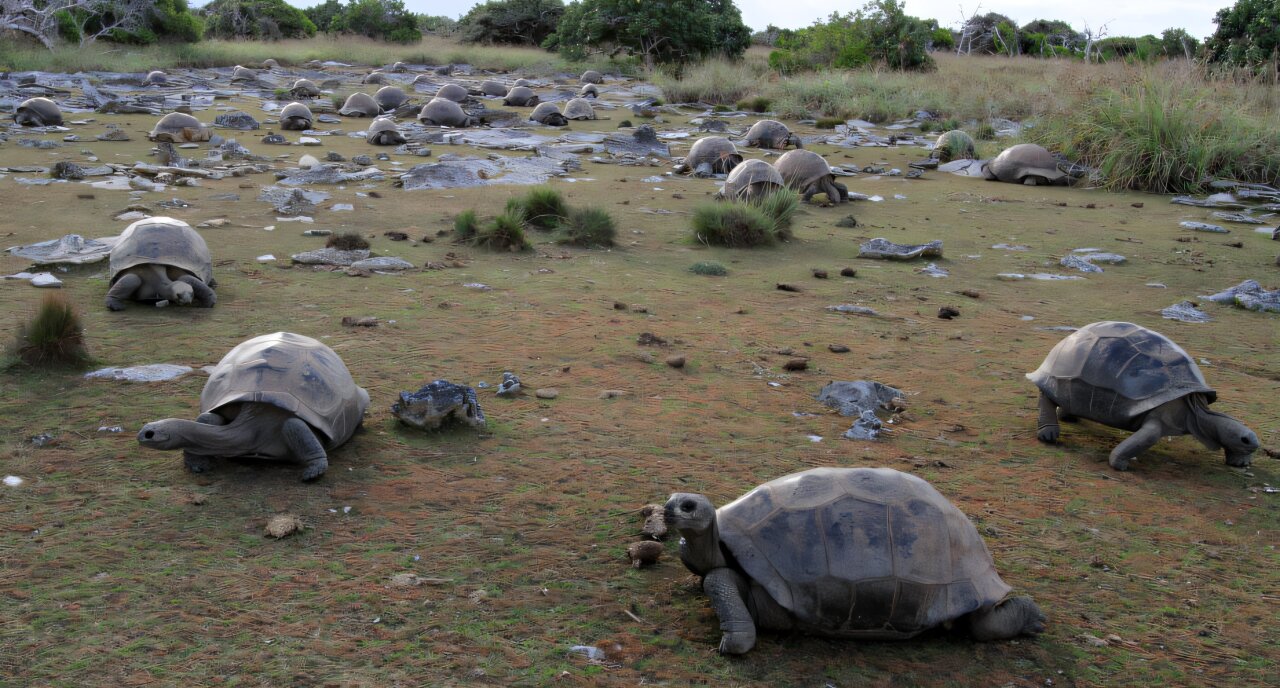
The recovery of the Aldabra giant tortoise offers an important example of how sustained conservation measures can help wildlife recover from severe population declines.
With an estimated 180,000 or more tortoises roaming freely across Aldabra Atoll, Seychelles has demonstrated the potential benefits of long-term habitat protection and scientific monitoring.
Nevertheless, experts stress that protecting the species will require continued investment, effective management of invasive species and measures to address the consequences of climate change.
For now, the latest survey provides a powerful reason for optimism: a species once threatened by human exploitation has achieved a remarkable recovery, offering renewed hope for wildlife conservation across the Indian Ocean and beyond.
Cruise TV News will continue to bring you stories on wildlife, environmental protection, science and other developments shaping our world.