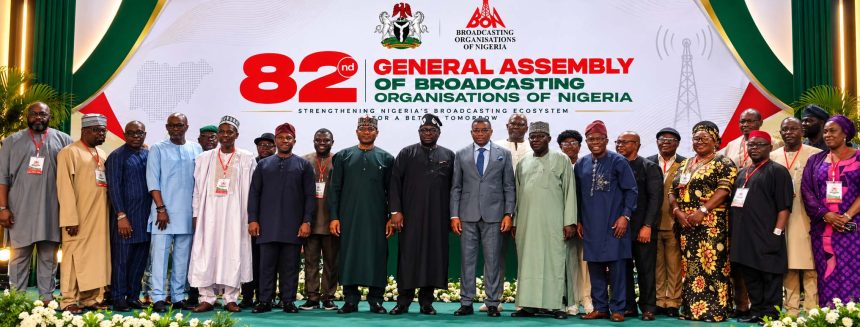
The Broadcasting Organization of Nigeria (BON) has raised the alarm over the worsening economic crisis confronting Nigeria’s broadcast industry, revealing that several radio and television stations have shut down operations while others are struggling to remain on air.
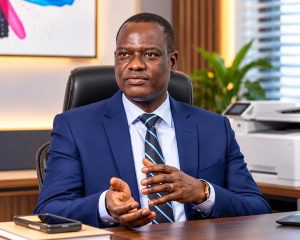
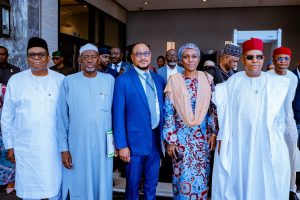
BON Chairman, High Chief Tony Akiotu, made the disclosure in Calabar during the opening of the 82nd General Assembly of BON, themed “Broadcast Media – Bedrock of Democratic and Economic Advancement in Nigeria.”
In an address delivered on his behalf by Isah Yusuf, Akiotu identified the rising cost of diesel and petroleum products, unreliable electricity supply, high tariffs and the continued devaluation of the naira as major threats to the survival of broadcast organizations.
According to him, the rising cost of importing broadcast equipment has further compounded the challenges facing operators.
“Many radio and television stations have shut down operations, while many others are struggling to maintain reduced daily transmission as a result of unbearable operational costs.”
Akiotu called on the Federal and State Governments to urgently introduce deliberate policies and interventions aimed at keeping media organizations afloat.
More Read
He also appealed to state governors to support both public and private broadcast stations within their jurisdictions, stressing that private broadcasters often provide platforms for government activities and information to reach citizens without charging the government.
BON Raises Concern Over Attacks On Journalists
The BON Chairman also condemned the increasing cases of sponsored arrests, intimidation and detention of journalists, warning against political thuggery and the invasion of media houses as the country moves closer to another electioneering period.
He urged stakeholders to protect press freedom and create an environment where journalists can carry out their constitutional responsibilities without fear or intimidation.
More Read

On national security, Akiotu commended President Bola Tinubu for what he described as the political will and courage to confront insecurity in the country, while also recognizing the sacrifices of security agencies.
However, he urged the Federal and State Governments to strengthen collaboration to ensure that Nigerians can live and travel across the country without fear of kidnapping, attacks or killings.
Cross River Government Highlights Broadcast Investment
Declaring the 82nd BON General Assembly open, Cross River State Governor Bassey Otu, represented by his Deputy, Peter Odey, described his administration as media-friendly.
The governor said his administration had invested significantly in broadcast infrastructure, including new transmitters and digital upgrades aimed at keeping state-owned media organizations operational.
He challenged BON to use the assembly to strengthen ethical standards in broadcasting, warning that the spread of divisive and unverified information could further deepen political and social polarization, particularly among young Nigerians.
Earlier, the Cross River State Commissioner for Information and Orientation, Pastor Ekpenyong Cobham, disclosed that the Cross River Broadcasting Corporation (CRBC) had transitioned from diesel-powered operations to a hybrid solar-powered system as part of efforts to reduce operational costs.
More Read
He added that the state government was also revamping the Nigerian Chronicle and Printing Press, while pursuing projects designed to expand the state’s economic base and sustain development.
The Bigger Concern
The warning from BON highlights a growing challenge for Nigeria’s media industry: how can broadcast organizations continue to perform their democratic role when the cost of staying on air is becoming increasingly difficult to sustain?
With electricity, fuel, equipment and operational costs rising, the survival of radio and television stations could have significant implications for employment, public information, journalism, democracy and access to credible information across Nigeria.