Human trafficking in Benue State is drawing renewed concern as campaigners report hundreds of girls intercepted within Nigeria, dozens of victims repatriated from foreign countries, and growing fears that insecurity, displacement and poverty are exposing more children to exploitation.
The growing crisis of human trafficking in Benue State has raised fresh concerns among anti-trafficking campaigners, government agencies and civil society organizations, with vulnerable girls increasingly targeted through deceptive promises of employment, accommodation and better living conditions.
For many young Nigerians, an offer to work in Lagos, another Nigerian city or a foreign country can appear to be a lifeline out of poverty. But what begins as a promise of financial independence can end in sexual exploitation, forced labour and modern-day slavery.
In some cases, the perpetrators are reportedly relatives, trusted acquaintances or individuals introduced to families by people they know, making it difficult for vulnerable young people and their guardians to recognize the danger until it is too late.
The situation is particularly troubling in Benue State, where insecurity, displacement and economic hardship have left many families struggling to survive in unfamiliar environments.
More Read

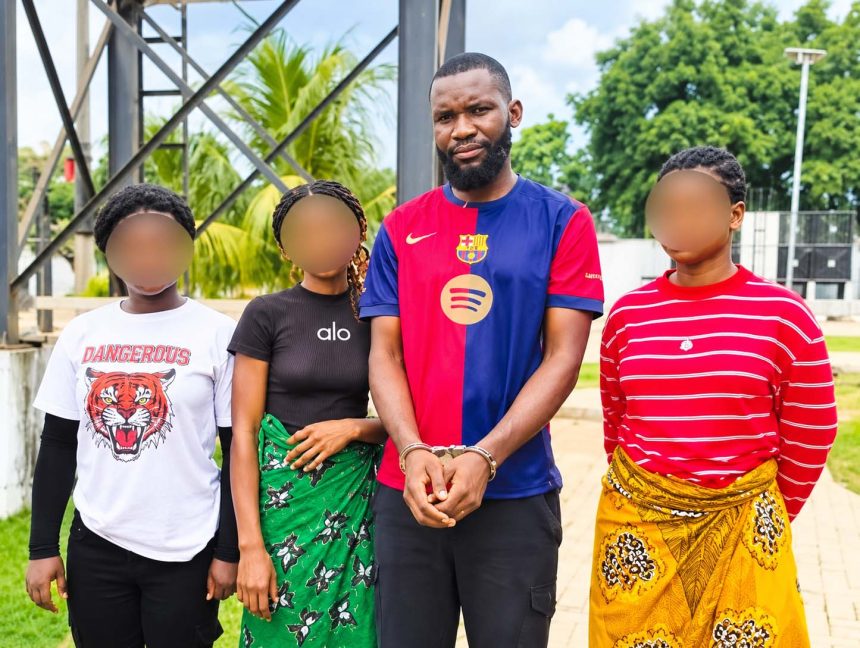
At the centre of the campaign against the trade is 36-year-old anti-trafficking campaigner Sughnen Yaaya, who says he has been working to prevent vulnerable girls from falling into the hands of trafficking networks.
Yaaya disclosed that since March 2026, he had intercepted 573 girls within Nigeria and facilitated the return of 103 others from Ghana, Mali, Côte d’Ivoire, Burkina Faso and other countries.
He also claimed that about 32 Benue girls had died abroad in circumstances linked to trafficking.
More Read

“From March till now, I have intercepted 573 girls,” Yaaya said.
“By interception, I mean that we stop them before they are taken out of the country. We could intercept them at a motor park or somewhere along the route.”
The figures, which could not be independently established from the information available for this report, underscore the need for stronger surveillance, reliable data collection and coordinated efforts to identify and dismantle trafficking networks.
The Personal Cost of Fighting Human Trafficking
For Yaaya, the decision to confront human trafficking was driven by the growing number of vulnerable young people he encountered and his determination to prevent others from suffering similar experiences.
He explained that although he could not single-handedly resolve the insecurity, kidnapping and economic challenges confronting Benue State, he believed he could make a difference by exposing trafficking networks and educating families about the dangers of suspicious travel and employment offers.
However, his efforts have reportedly come with significant personal risks.
More Read

Yaaya said some alleged traffickers and their families had attempted to intimidate him, while financial constraints continued to limit the reach of his operations.
“I am very scared. I count my days every day,” he admitted, explaining that he had no personal security and depended largely on God and support from individuals who believed in his campaign.
His account highlights the risks faced by grassroots campaigners who intervene in suspected trafficking cases, often without adequate funding, institutional protection or the resources needed to sustain rescue operations.
NIDO Africa Intensifies Anti-Trafficking Campaign
The concerns surrounding human trafficking in Benue have attracted the attention of the Nigerians in Diaspora Organization Africa (NIDO Africa), which has visited the state twice in 2026 as part of its campaign against human trafficking and drug abuse.
During a sensitization programme held in June at Government Model Secondary School, Makurdi, the organization’s Continental Chairman, Professor Jude Osakwe, called for legislation imposing stiff penalties on parents and guardians who facilitate or knowingly permit the trafficking of their children and wards.
Osakwe expressed concern that some families had become accomplices by allowing children to leave home under the guise of employment and other opportunities without adequately verifying the circumstances.
“Most of the time, traffickers promise them jobs in restaurants and several other places, but in the end, they are used as sex slaves, prostitutes and for forced labour,” he said.
According to Osakwe, NIDO Africa has rescued numerous trafficked children over the past two years and established task forces in countries including Ghana and Côte d’Ivoire to strengthen the identification, arrest and prosecution of suspected traffickers.
The organization is also planning vocational and skills acquisition centres for rescued victims, recognizing that returning survivors to their communities without sustainable livelihood opportunities could expose them to renewed exploitation.
“Prevention is better than rescue,” Osakwe said, explaining the importance of taking awareness campaigns to secondary schools and grassroots communities.
The approach places emphasis on educating young people about deceptive recruitment practices while encouraging parents and guardians to verify employment offers, travel arrangements and the identities of individuals seeking to take children away from their communities.
Displacement and Insecurity Increase Children’s Vulnerability
The campaign has become increasingly urgent in Benue, where violence and displacement have disrupted education, separated families and forced many residents to abandon their ancestral communities.
The Director of Public Prosecution in the Benue State Ministry of Justice and Secretary of the State Task Force on Human Trafficking, Dooshima Ortsega, described the campaign as timely, noting that displaced and out-of-school children were particularly vulnerable to trafficking.
For children who have lost their homes, schools and familiar surroundings, an offer to travel in search of employment or a better life may appear to provide a way out of hardship.
One incident that illustrates the scale of the challenge was the attack on Yelewata in June 2025, following which many children were reportedly separated from their communities.
The Makurdi Zonal Commander of the National Agency for the Prohibition of Trafficking in Persons (NAPTIP), Hembadoon Kuma, said more than 400 children were taken away from Yelewata, with the agency subsequently rescuing 100.
According to Kuma, 97 of the rescued children had been reunited with their families, while three remained at the NAPTIP shelter as efforts continued to locate their parents.
Some of the children had reportedly been taken to Abia, Rivers, Imo and Enugu states.
Kuma said the experience demonstrated the importance of collaboration among government institutions, transport operators, community leaders and civil society organizations in combating trafficking.
“Human trafficking cannot be fought by NAPTIP alone. We need stakeholders,” she said.
Her remarks underscore the need for coordinated responses that go beyond rescue operations to include family tracing, protection, rehabilitation and the prosecution of those responsible.
Motor Parks Become a Frontline in the Fight
As traffickers exploit road networks to move victims between locations, transport operators are increasingly being drawn into efforts to identify and prevent suspected trafficking cases.
Benue Links, the state-owned transport company, has reportedly intercepted and transported about 250 trafficked persons or intending victims back to their communities as of August 2026.
The company’s General Manager, Comrade Alexander Fanafa, said monitoring officers at its terminals had received training to identify potentially suspicious travel arrangements, particularly those involving adults travelling with children or girls who do not share their surname.
Where circumstances raise concerns, the adults and children are separated and questioned to establish their relationship, intended destination and purpose of travel.
Suspected cases are subsequently referred to NAPTIP, the police, the Department of State Services (DSS) or other relevant authorities for further investigation.
Fanafa said the company had also been directed to transport legitimate trafficking victims identified anywhere in the country back to Benue without charge and facilitate their reintegration into their communities.
The intervention, however, has placed additional financial pressure on the transport company.
According to Fanafa, Benue Links has virtually lost the profit from its Lagos route because rescued victims are transported without payment.
Nevertheless, the initiative reflects the important role transport operators can play in identifying suspicious movements and ensuring that vulnerable people receive assistance before they are exposed to further harm.
Rebuilding the Lives of Rescued Victims
For many rescued victims, returning home does not automatically bring an end to their suffering.
Some return after months or years of exploitation, having lost the money they were promised and endured physical abuse, psychological trauma or forced labour. Others face uncertainty about their future, particularly when their families remain trapped in poverty.
Without access to education, vocational training, psychosocial support and sustainable sources of income, survivors may remain vulnerable to re-trafficking.
This is why the wife of the Tor Tiv, Professor Felicia Ayati, has focused attention on supporting rescued victims and helping them rebuild their lives.
Fanafa said Ayati had taken an interest in victims brought to the Tor Tiv’s palace, engaging with them, offering support and encouraging them to acquire practical skills before reuniting with their families.
Such interventions highlight the importance of survivor-centred rehabilitation programmes that address not only the immediate consequences of trafficking but also the economic and social conditions that make victims vulnerable to exploitation in the first place.
For many survivors, a safe return home must be followed by a realistic opportunity to rebuild their lives with dignity and independence.
Poverty and Insecurity Fuel the Crisis
The Campaign for Equal Rights and Opportunities for all Nigerians (CERON) has also raised concerns about the relationship between worsening poverty, insecurity and the trafficking of young people in Benue.
The organization’s Secretary, Francis Odiir, described the situation as alarming, pointing to the number of teenagers reportedly targeted for sexual exploitation.
“Benue has become the epicentre of human trafficking in the country, if we go by the recent figures we are seeing all over the place,” Odiir said.
He argued that the state government needed to respond decisively to the circumstances driving vulnerable residents into the hands of traffickers.
“Sadly, the majority of the victims are in their teens because they are mostly used for sexual exploitation, and the trade is being fueled by worsening poverty and insecurity in the state. The state government owes the people a duty to step in and do so decisively, and quickly too,” he said.
His remarks point to the broader challenges confronting the state, where the consequences of insecurity extend beyond immediate displacement to include disrupted schooling, reduced household income and diminished opportunities for young people.
Addressing these challenges will require sustained interventions that combine law enforcement with social protection, educational support, vocational training and economic opportunities for vulnerable families.
A Call for Stronger Action
The growing concerns over human trafficking in Benue State present a challenge that extends beyond the interception of suspected victims and the arrest of alleged perpetrators.
While rescue operations remain essential, lasting progress will depend on the ability of government agencies, community leaders, transport operators, civil society organizations and international partners to address the conditions that allow trafficking networks to thrive.
Stronger intelligence sharing, effective investigations, prosecution of offenders, public awareness campaigns and improved protection for survivors will be critical to the response.
Parents and guardians also have an important role to play by verifying employment offers, checking the identities of recruiters and refusing to hand children over to individuals whose promises cannot be independently confirmed.
Schools, religious institutions and community organizations can further help by educating young people about deceptive recruitment, unsafe travel arrangements and the warning signs of exploitation.
For Benue’s displaced and economically vulnerable families, however, awareness alone will not be enough. Families need practical alternatives, children need access to education, and survivors need support that reduces the likelihood of being exploited again.
The accounts provided by campaigners and officials reveal the human consequences of a trade that preys on desperation and the hope for a better future.
Ultimately, the challenge facing Benue is to ensure that no child is forced to choose between enduring hardship at home and risking exploitation in pursuit of a promised opportunity elsewhere.
For every girl intercepted before reaching a trafficker, there may be another still travelling with the belief that a better life awaits her.
The task before the state and its partners is to reach those children before a promise of hope becomes a nightmare of exploitation.