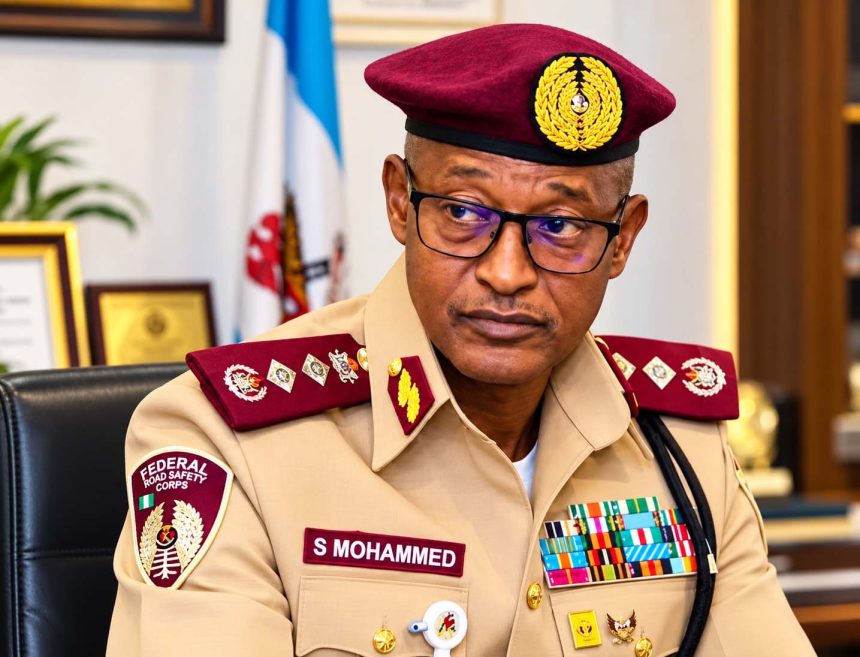
The Corps Marshal of the Federal Road Safety Corps (FRSC), Shehu Mohammed, has warned that social media distractions, emotional distress and fatigue pose serious risks to motorists and other road users, calling for greater attention to the relationship between mental wellbeing and road safety in Nigeria.
Mohammed gave the warning on Friday while serving as chairman at the 4th Vanguard Mental Health Summit held in Lagos. The summit focused on advancing youth mental health in Nigeria, with particular emphasis on the effects of social media, technology and general wellbeing.
The FRSC boss stressed that safe driving goes beyond knowledge of traffic regulations, noting that motorists also require concentration, sound judgment, emotional stability and responsible decision-making to navigate the roads safely.
According to him, stress, anger, fatigue and other forms of emotional distress can impair a driver’s ability to make sound decisions, increasing the risk of road traffic crashes.
He cautioned that motorists who allow social media notifications, online arguments or emotional disturbances to distract them while driving could endanger their lives and those of other road users.
More Read

“A driver who is mentally distracted by a social-media notification, an online argument or emotional distress may become a danger not only to himself or herself, but also to other road users,” Mohammed said.
He emphasized the need for road safety campaigns to recognize the growing connection between mental wellbeing, responsible technology use and safe driving practices.
“Our message is simple: A healthy mind contributes to a safer road. A distracted mind can contribute to a road crash,” he stated.
More Read
Social Media: Opportunities and Risks for Young People
Mohammed acknowledged that digital technology and social media have created valuable opportunities for young Nigerians to access information, educational resources, mental health awareness, peer support and professional networks.
However, he warned that excessive screen time, cyberbullying, online harassment, social comparison, misinformation, harmful online content and pressure to maintain an idealized digital identity could negatively affect emotional wellbeing.
He maintained that addressing these challenges should not involve condemning technology outright. Instead, he advocated responsible, balanced and healthy engagement with digital platforms.
The Corps Marshal’s remarks highlighted the importance of digital responsibility, particularly among young people, while reinforcing the need for motorists to avoid distractions and remain mentally alert whenever they are behind the wheel.
FRSC Boss Calls for Improved Youth Mental Health Support
Speaking on measures to improve mental health among young people, Mohammed called for affordable, confidential and youth-friendly mental health services, including counselling and psychosocial support.
He urged government agencies, educational institutions, parents, media organizations, religious bodies and civil society groups to work together to raise awareness, challenge stigma and ensure that young people have access to appropriate mental health support.
More Read

According to him, addressing mental health challenges requires collective responsibility, with families, schools, workplaces and public institutions playing important roles in creating supportive environments.
He also called on parents to listen more attentively to young people, while urging schools to strengthen psychosocial support systems and employers to promote healthier workplaces.
Mohammed further challenged technology platforms to take stronger action against harmful content and online abuse, noting the importance of creating safer digital environments for young people.
Media Urged to Promote Mental Health Awareness
The FRSC Corps Marshal commended Vanguard for sustaining its annual mental health summit, describing the media as an important partner in shaping public attitudes towards mental wellbeing.
He noted that media organizations have a responsibility to provide accurate information, amplify young people’s experiences and hold institutions accountable for their commitments to mental health promotion.
Mohammed urged stakeholders to move beyond discussions and translate their commitments into practical measures capable of improving mental health awareness and support across the country.
FRSC Reaffirms Commitment to Road Safety Education
Mohammed reaffirmed the FRSC’s commitment to strengthening public education on responsible road use, distraction prevention, emotional self-regulation and fatigue management.
His message reinforces the importance of recognizing that road safety is influenced not only by vehicle conditions and road infrastructure but also by the physical and mental state of motorists.
As social media continues to shape communication and everyday life, motorists are being reminded of the importance of putting their phones aside while driving, avoiding the road when excessively fatigued and managing emotional distress before getting behind the wheel.
The FRSC’s warning serves as a reminder that responsible driving requires full attention, sound judgment and a commitment to protecting every life on Nigerian roads.