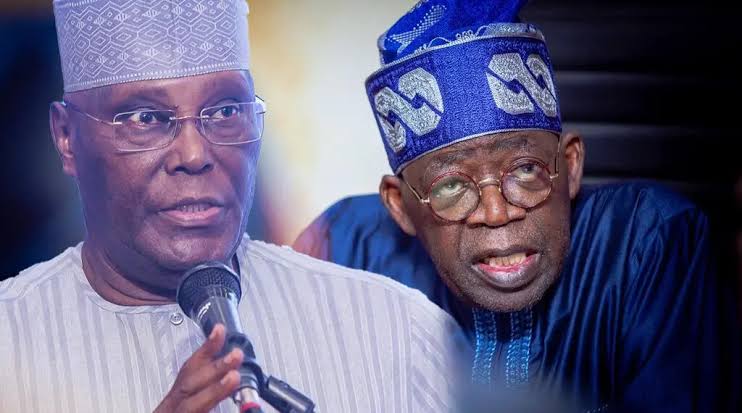
ABUJA, Nigeria — Former Vice President and African Democratic Congress (ADC) presidential candidate, Atiku Abubakar, has criticized President Bola Ahmed Tinubu’s administration over its proposed 30-day petrol discount, arguing that the temporary intervention would do little to address the rising cost of living facing Nigerians.
Atiku made the remarks on Friday during the inauguration of the ADC Presidential Campaign Council in Abuja, where he questioned the long-term impact of the Federal Government’s initiative and urged the administration to introduce sustainable measures to reduce the economic burden on households and businesses.
The Federal Government had announced that the Nigerian National Petroleum Company Limited (NNPC) would forgo its retail profit margin and sell petrol at cost for an initial period of 30 days, with priority given to public transport operators. The Presidency maintained that the arrangement was not a return to the nationwide petrol subsidy regime.
Reacting to the announcement, Atiku argued that a temporary reduction in petrol costs could not reverse years of economic pressure, particularly the rising prices of food, transportation, electricity and essential business operations.
“Thirty days cannot erase three and a half years of hardship. Nigerians have heard your excuses and endured your failed promises. They are ready to judge your record,” Atiku said.
More Read
Atiku Questions What Happens After 30 Days
The ADC presidential candidate challenged the Tinubu administration to explain what would happen when the petrol discount expires, particularly whether the initiative would translate into lower transport fares and reduced costs for farmers, traders, manufacturers and other businesses.
He argued that any intervention intended to ease the cost of living should deliver measurable and sustainable benefits rather than provide temporary relief without addressing the underlying economic challenges.
More Read
Atiku also accused the Federal Government of embracing aspects of his previously proposed production-support policy after dismissing the idea.
“When I proposed targeted support to ease fuel costs, you called me ignorant of economic policy. Your government said it could not be done. Now, in a desperate and clumsy retreat, you have shamelessly embraced the principle you mocked. You owe me an apology,” he said.
The former Vice President maintained that his proposal differed from a general petrol subsidy because it would specifically support petroleum products refined in Nigeria and sold within the domestic market.
According to him, the proposed intervention should have clearly defined limits, receive budgetary approval and undergo independent auditing to ensure transparency and accountability.
“My alternative is clear. Support petroleum products actually refined in Nigeria and sold to Nigerians. Cap the support. Put it in the budget. Audit it independently. Exclude imports. Show the public what it costs and what they save,” he said.
His proposal places domestic refining and transparent public expenditure at the centre of his suggested approach to reducing fuel costs.
More Read
Calls for Lower Food Prices, Reliable Electricity and More Jobs
Beyond the petrol discount, Atiku called for broader economic measures aimed at improving household welfare, creating employment opportunities and supporting businesses.
He urged the government to prioritise affordable food, reliable electricity, improved security on roads and farms, and policies that would enable businesses to operate and expand.
Atiku argued that economic recovery should be measured by tangible improvements in the lives of ordinary Nigerians, including the ability of households to meet basic needs and businesses to manage operating costs.
He also called for stronger support for farmers and agricultural supply chains, noting that transportation expenses and insecurity can affect the movement of produce and contribute to the cost of food.
The ADC candidate presented these issues as central to his party’s message ahead of the 2027 general election, insisting that economic policies must produce lasting benefits for citizens.
ADC Campaign Council Charged to Reach Nigerians
Addressing members of the newly inaugurated ADC Presidential Campaign Council, Atiku urged them to take the party’s message to markets, motor parks, farms, university campuses and communities across the country.
He challenged campaign officials to explain the party’s proposed policies clearly, demonstrate how the programmes would be funded and communicate how they could improve the living conditions of Nigerians.
Atiku described the 2027 election as a contest centred on the welfare of Nigerian families and called on eligible voters to participate in the democratic process.
“Another four years of Bola Tinubu means another four years of hunger, hardship and national decline,” he said.
The statement reflects the ADC candidate’s criticism of the administration’s economic record and his attempt to position his party’s policy proposals as an alternative ahead of the next presidential election.
Atiku Demands Electoral Reforms Ahead of 2027
In addition to economic issues, Atiku called for electoral reforms designed to improve transparency, strengthen public confidence and protect the integrity of votes during the 2027 general election.
He advocated immediate public access to polling-unit results, live broadcasts of state and national collation proceedings, and independent audits of election technology before and after elections.
He also proposed the establishment of an independent commission empowered to investigate and prosecute electoral offences, alongside stronger penalties for vote suppression, result manipulation and electoral fraud.
According to Atiku, transparent result management and effective enforcement of electoral laws are necessary to strengthen confidence in Nigeria’s democratic institutions.
The former Vice President further accused governments controlled by the All Progressives Congress (APC) of restricting opposition campaigns. He cited an alleged attempt to prevent an opposition candidate from campaigning in Benue State as an example of the challenges facing opposition parties.
“There will be no ‘no-go’ areas in Nigeria. Opposition members are citizens with the constitutional right to move freely, express their views and campaign anywhere in the country,” he said.
Atiku vowed that the ADC would campaign across the country and resist attempts to prevent its candidates from reaching voters, adding that the party would pursue its rights through lawful means.
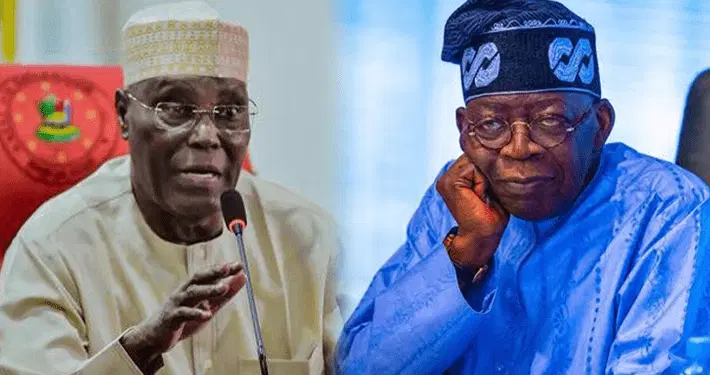
Atiku Calls on Tinubu to Resign
Atiku concluded his criticism by challenging President Tinubu to resign, arguing that the proposed 30-day petrol discount was insufficient to address the administration’s record on the economy.
“After this latest admission of failure, the honourable thing to do is step down. Nigerians deserve a government that will do the work and make life affordable again,” he said.
The Federal Government’s petrol discount is part of its response to rising fuel costs and pressure on households and businesses. While the administration has described the arrangement as a temporary cost-based intervention rather than a return to petrol subsidy, opposition figures have questioned its duration, reach and likely impact on the wider economy.
With the 2027 general election approaching, petrol prices, food affordability, electricity supply, employment, security and electoral transparency are emerging as key issues in the political debate.
Whether the 30-day intervention will translate into meaningful savings for commuters and businesses, and whether further measures will follow after the initial period, remain important questions for Nigerians concerned about the cost of living.