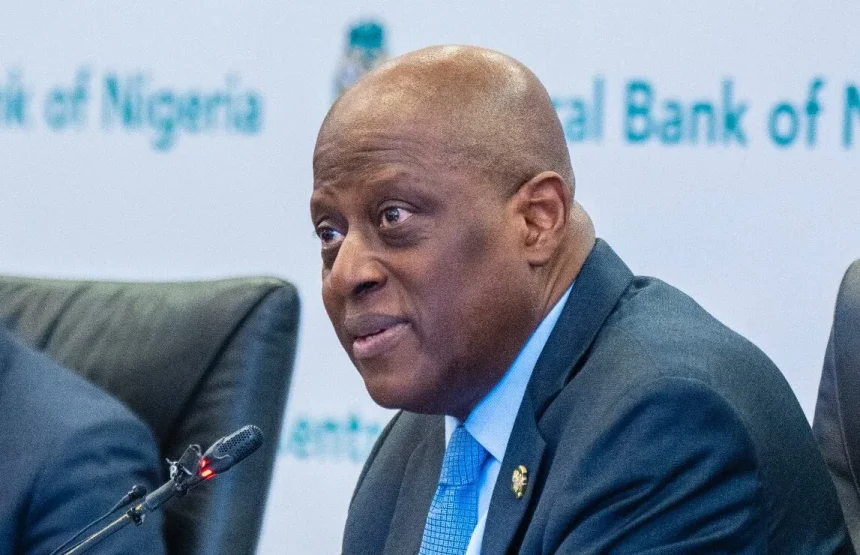
Nigeria’s banking industry is entering a new era of intense competition as 33 financial institutions that collectively raised about ₦4.6 trillion under the Central Bank of Nigeria (CBN) recapitalisation programme begin to deploy fresh capital, setting the stage for a high-stakes contest for profitable lending opportunities.
The capital raise—achieved through a mix of rights issues, public offers, private placements and strategic investments—allowed banks to meet regulatory deadlines while significantly strengthening their balance sheets and capacity to finance large-scale transactions.

At the forefront of this transformation are the so-called “Big Seven” banks, which have not only met but, in several cases, exceeded the new minimum capital requirement of ₦500 billion for internationally authorised lenders—a steep increase from the previous ₦50 billion threshold.
Access Holdings Plc led the charge, becoming the first institution to complete a fully digital rights issue via the Nigerian Exchange (NGX) platform, raising ₦351.01 billion and pushing its share capital to ₦600 billion. Zenith Bank followed closely, raising ₦289.44 billion through a combined rights issue and public offer, bringing its capital base to ₦614.65 billion.

Guaranty Trust Holding Company (GTCO) also strengthened its position, lifting its capital to ₦504 billion while securing $105 million from international investors through a dual listing on the NGX and the London Stock Exchange. Fidelity Bank recorded one of the most successful offers, with its public issue oversubscribed by 237 per cent, while First Bank is targeting a total paid-up capital of ₦748 billion through private placements.
Beyond the top-tier lenders, national and regional banks have also taken strategic steps to meet new thresholds. Stanbic IBTC achieved the ₦200 billion requirement following a rights issue, while foreign-owned banks such as Ecobank Nigeria and Standard Chartered relied on parent company support to remain compliant.
A notable development in the sector was the merger between Providus Bank and Unity Bank, facilitated by a ₦700 billion financial accommodation from the CBN to ensure stability. Meanwhile, regional and merchant banks, including Nova, Titan and Coronation, successfully aligned their capital positions with the new ₦50 billion benchmark.
More Read

The recapitalisation drive has also spurred growth in non-interest banking. Jaiz Bank now leads the segment with a capital base of ₦47.9 billion, while Lotus Bank, Taj Bank and The Alternative Bank have all met regulatory requirements, signalling increasing investor confidence in the segment.
With capital mobilisation largely complete, attention is now shifting to how effectively banks deploy the funds. Analysts warn that while the strengthened capital base enhances resilience, returns may remain subdued in the short term.
Head of Equity Research at Quest Merchant Bank, Tunde Abidoye, noted that return on equity (ROE) typically declines immediately after recapitalisation due to increased equity levels, adding that performance in 2026 is likely to be modest before rebounding by 2027.
“Most banks’ ROE will normalise over time, but the immediate challenge is deploying funds efficiently and profitably,” he said, pointing to sectors such as ICT, oil and gas, finance and real estate as key areas of opportunity, albeit with significant risk considerations.

Shareholders have also tempered expectations, warning that returns may take time to materialise due to regulatory processes, macroeconomic pressures and the gestation period required for investments to yield results.
More Read

Industry stakeholders are increasingly calling for a strategic shift toward the real sector, particularly manufacturing, agriculture and small and medium enterprises (SMEs), which remain underfunded despite their critical role in Nigeria’s economy.
Chief Executive Officer of the Centre for the Promotion of Private Enterprise (CPPE), Dr. Muda Yusuf, emphasised that while recapitalisation has strengthened the banking system, its true impact will depend on its contribution to economic growth.
“The critical question is whether this stronger banking system will support the real economy,” he said, noting that private sector credit remains low relative to GDP and SME financing is still inadequate.
Experts also warn of structural challenges, including high interest rates, stringent collateral requirements and the crowding-out effect of government borrowing, all of which could limit the effectiveness of the recapitalisation exercise.
As Nigerian banks begin to deploy their ₦4.6 trillion war chest, the coming months are expected to test their ability to balance profitability, risk management and developmental impact in an increasingly competitive and uncertain economic environment.