CBN governor says sustained price stability, stronger foreign reserves and investor confidence are key to boosting production and creating jobs.
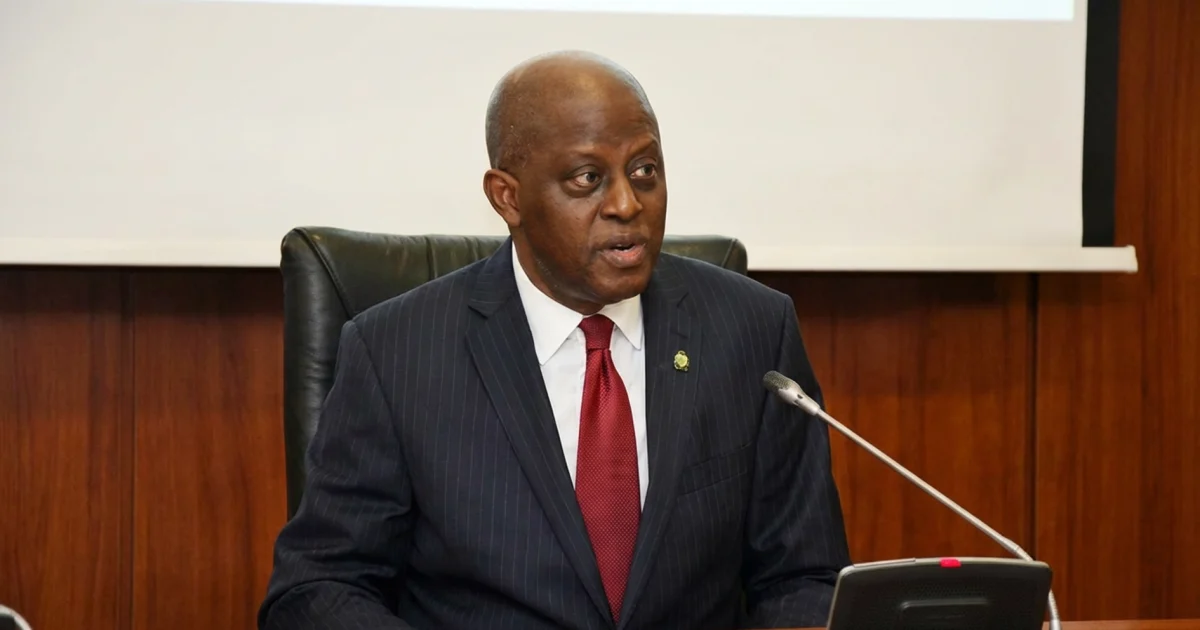
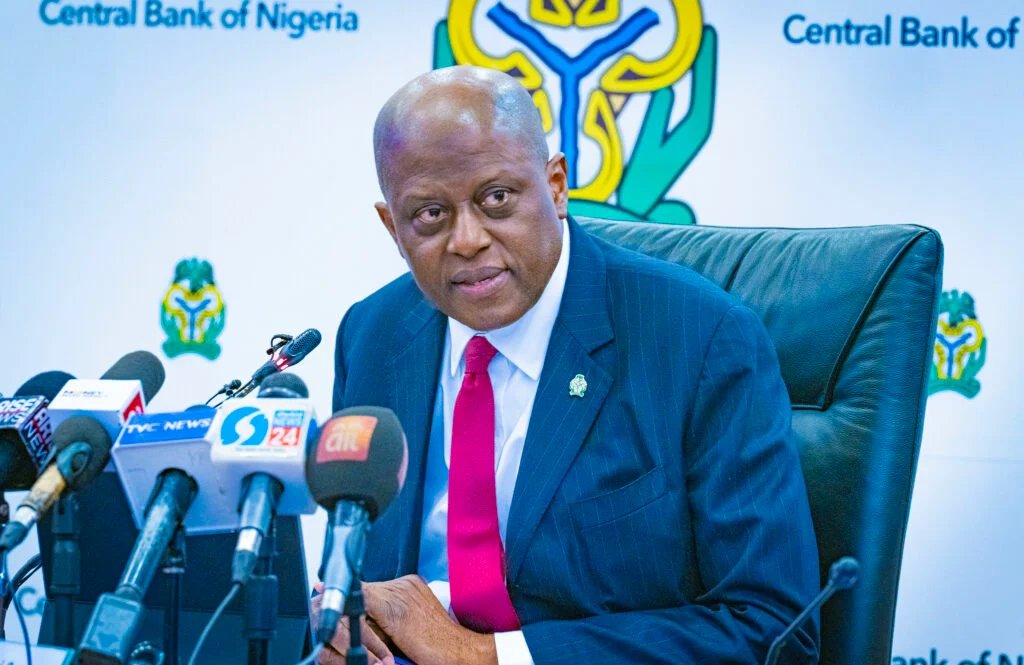
The Governor of the Central Bank of Nigeria (CBN), Olayemi Cardoso, has said sustained macroeconomic stability, declining inflation and a predictable policy environment will be critical to attracting long-term investment into Nigeria, boosting production and creating employment opportunities.
Cardoso made this known alongside the Minister of Finance and Coordinating Minister of the Economy, Taiwo Oyedele, at the 2026 International Monetary Fund (IMF) and World Bank Annual Meetings, where he highlighted the need to consolidate Nigeria’s economic recovery and strengthen investor confidence.
According to the CBN governor, although the global economy has demonstrated resilience amid economic fragmentation and other significant challenges, the prevailing environment remains fragile, making it essential for Nigeria to sustain its reform efforts and create favourable conditions for private investment.
“The global economy has shown resilience in the face of fragmentation and significant headwinds, but the environment remains fragile. What is important for Nigeria is to sustain the progress we have made and create the conditions for private investment to flourish,” Cardoso said.
More Read

He explained that the apex bank would continue to implement policies aimed at restoring price stability, strengthening the foreign exchange market and improving the economy’s capacity to withstand external shocks.
CBN Reaffirms Commitment to Price Stability
Cardoso reiterated that price stability remains a major priority of the CBN, stressing that monetary policy decisions would continue to be guided by economic data and communicated clearly to businesses, households and investors.
More Read

He noted that the decline in inflation had created an opportunity for the bank to reassess the direction of monetary policy while maintaining a sufficiently tight stance to sustain the progress recorded.
According to the figures provided in his remarks, headline inflation fell to 14.63 per cent in September 2026, compared with approximately 34.8 per cent at the end of 2024.
“Inflation has come down significantly from the levels we saw previously. Headline inflation was 14.63 per cent in September 2026, compared with about 34.8 per cent at the end of 2024. That is an important development, but we must ensure that the decline is sustained,” he said.
The CBN governor explained that lower and more predictable inflation would enable businesses to plan their operations more effectively, manage production costs and make informed investment decisions.
He added that persistent and unpredictable inflation makes it difficult for businesses to determine prices, manage expenses and commit resources to long-term expansion.
Cardoso also reaffirmed the CBN’s medium-term objective of achieving single-digit inflation, noting that monetary policy decisions must reflect Nigeria’s economic realities rather than simply replicate the actions of other central banks.
More Read

“We cannot simply copy what other central banks are doing. Our decisions must reflect Nigeria’s circumstances, the structure of our economy and the evidence before us,” he said.
Stronger Foreign Reserves Support Investor Confidence
On the foreign exchange market, Cardoso said improved stability was helping to strengthen confidence in the naira and create a more predictable environment for investors.
He disclosed that Nigeria’s external reserves had risen above $55 billion, describing the development as an important buffer against external economic shocks.
According to him, stronger reserves could help reinforce confidence in the economy and improve Nigeria’s capacity to manage pressures arising from developments in the global market.
The governor also highlighted the importance of diaspora remittances in diversifying the country’s foreign exchange earnings.
He said formal remittance inflows were approaching $1 billion monthly, adding that the CBN would continue working to improve the channels through which funds sent by Nigerians abroad enter the formal financial system.
“Formal remittances are approaching $1 billion monthly. We want to build on that progress because remittances are an important source of foreign exchange for Nigeria,” Cardoso said.
He stressed that strengthening formal remittance channels would help improve the flow of foreign exchange into the financial system and support broader efforts to deepen Nigeria’s external financial position.
CBN Seeks More Long-Term Capital for Productive Sectors
Cardoso further emphasised the need to mobilise domestic and foreign capital to finance infrastructure development, business expansion and other productive sectors of the Nigerian economy.
He explained that a stable macroeconomic environment would encourage investors to commit funds for longer periods, particularly where they have confidence in the consistency of government policies and the predictability of the business environment.
According to him, deepening Nigeria’s capital markets and expanding opportunities for long-term investment would be important to translating economic stability into sustainable growth.
The CBN governor also called for stronger collaboration between the apex bank and development finance institutions, including the Africa Finance Corporation (AFC), to support productive investment and economic development.
He explained that while the CBN’s primary responsibility was to maintain monetary and financial stability, development finance institutions had complementary roles in financing infrastructure and other economic activities.
“We need to work together more closely so that stability can translate into financing for the real economy,” he said.
Bank Recapitalisation Strengthens Financial System
The CBN governor also highlighted developments in Nigeria’s banking sector, particularly the ongoing efforts to strengthen banks’ capital positions through recapitalisation.
According to the figures he cited, banks had raised approximately ₦4.65 trillion in fresh capital, with slightly more than 70 per cent coming from domestic investors.
Cardoso described the level of domestic participation as significant, noting that it reflected the willingness of Nigerian investors to commit funds to the country’s banking system.
He said a stronger capital base would help improve the resilience of financial institutions and enhance their capacity to support businesses and other productive activities.
However, he stressed that stronger capitalisation must be accompanied by sound corporate governance and effective risk management to ensure that banks remain capable of supporting the economy under changing conditions.
“Our task is to sustain confidence, maintain financial stability and ensure that the financial system remains strong enough to support the economy through changing conditions,” he said.
Economic Stability Must Translate into Jobs and Production
Cardoso maintained that the ultimate objective of the CBN’s monetary and financial stability efforts was to deliver tangible economic benefits to Nigerians.
He explained that sustained progress in controlling inflation, improving foreign exchange market conditions and strengthening the financial system should help create an environment in which businesses can expand, production can increase and employment opportunities can grow.
For Nigeria, the challenge remains ensuring that improvements in key macroeconomic indicators translate into stronger investment, increased productive capacity and better economic opportunities for households and businesses.
The CBN governor’s remarks underscored the importance of maintaining policy credibility, attracting long-term capital and strengthening cooperation between monetary authorities, fiscal policymakers and development finance institutions.
As Nigeria continues to pursue economic recovery, the sustainability of these gains and their impact on businesses, job creation and household welfare will remain important measures of progress.