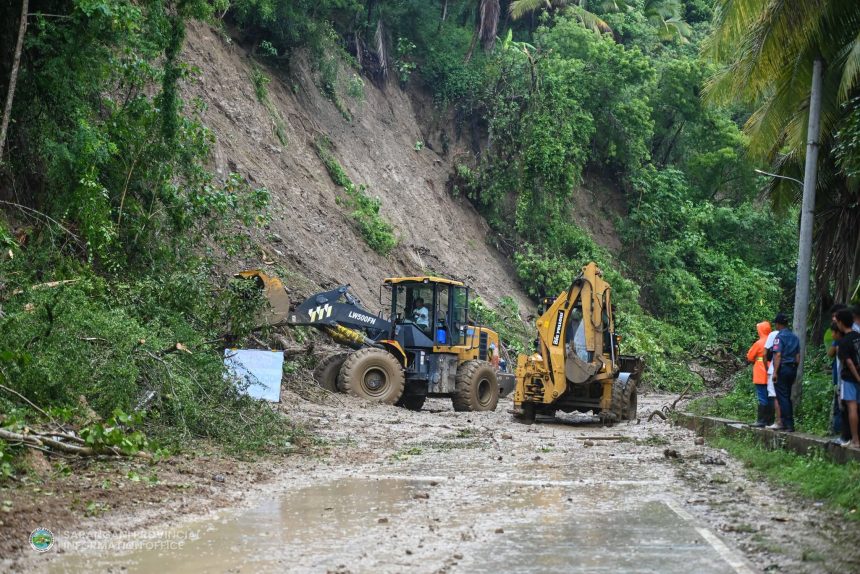
At least 15 people have been killed in the southern Philippines after powerful landslides triggered by one of the strongest storms to threaten East Asia in decades, as authorities across the region brace for the arrival of massive Typhoon Bavi.
Typhoon Bavi, stretching about 1,000 kilometres (620 miles) at its widest point — roughly the width of France — is sweeping across the Pacific towards Taiwan, bringing fears of catastrophic rainfall, flooding and destructive winds.
The powerful storm is expected to unleash torrential rain across northern and eastern Taiwan and a chain of remote Japanese islands before making landfall in south-eastern China on Saturday.
Across the region, dozens of flights have been cancelled, schools have suspended classes and residents have rushed to supermarkets to stock up on essential supplies. Shelves in some areas have reportedly been cleared as communities prepare for the approaching typhoon.


Families Buried in Deadly Philippines Landslides
On the southern Philippine island of Mindanao, several families were buried overnight after heavy rainfall triggered devastating landslides.
Rescue teams are continuing to search for missing people amid difficult conditions, with officials warning that moderate to heavy rainfall will continue to drench parts of the country throughout the weekend.
The death toll currently stands at at least 15, but fears are growing that the number could rise as emergency workers reach affected communities.

Taiwan Deploys 29,000 Soldiers
Taiwanese authorities have issued severe weather warnings, saying Typhoon Bavi could dump as much as one metre — 39 inches — of rain on parts of the island.
Taiwan’s defence ministry said about 29,000 soldiers have been placed on standby to assist with evacuations, rescue operations and emergency relief efforts.
The island’s Central Weather Administration said Bavi could become the largest storm by size to hit Taiwan since 1987.
Farmers rushed to harvest crops and protect agricultural land while weather conditions remained calm on Friday. Fishermen also worked to secure their vessels ahead of the storm.
“Don’t be fooled by the nice and calm weather now. A storm like this could be the most terrifying,” 60-year-old fisherman Chen Ming-hui warned.
Thousands of sandbags have also been distributed to residents and business owners in flood-prone communities.
More Read

China Warns of ‘Significant Impact’
Across the Taiwan Strait, Chinese authorities have warned that Typhoon Bavi could have a “significant impact” after striking the south-eastern Fujian province.
Experts fear the storm could move northwards, carrying heavy rainfall into areas less accustomed to dealing with powerful typhoons.
“Bavi’s large size and abundant energy mean its remnants and outer rainbands could move from Jiangsu and Anhui provinces toward the Bohai Sea region,” said Ma Jun, director of China’s Institute of Public and Environmental Affairs.
He warned northern provinces, which have less experience dealing with typhoons than southern China, to strengthen emergency preparations.
Some weather forecasts suggest Bavi could make landfall twice in China.
Japan Islands on High Alert as Hundreds of Flights Are Cancelled
Residents of Japan’s remote Sakishima Islands have also been placed on high alert.
Images shared online showed residents taping windows and placing windproof nets over homes and businesses as they prepared for strong winds and heavy rain.
Air travel across the region has already been severely disrupted.
Japan Airlines cancelled more than 100 flights scheduled for Friday and Saturday, affecting nearly 20,000 passengers.
All Nippon Airways also cancelled more than 160 flights through Sunday, disrupting travel plans for approximately 20,000 people.
Thai Airways and Malaysia Airlines have also grounded flights to and from Taipei.

Region Still Reeling From Typhoon Maysak
The arrival of Typhoon Bavi comes as parts of southern China are still struggling to recover from the devastation caused by Typhoon Maysak earlier this week.
Maysak killed at least 39 people, while rescue workers continue searching through wreckage for those still missing.
More than 130,000 people were evacuated, mainly in the Guangxi region.
The storm also caused widespread agricultural destruction, killing large numbers of livestock and damaging farmland. It also triggered two rare tornadoes in China’s central Hubei province.
With Typhoon Bavi now closing in, emergency officials across East Asia are urging residents to remain indoors, follow evacuation instructions and prepare for potentially life-threatening flooding and landslides.
Authorities warn that the storm’s enormous size and intense rainfall could leave a trail of destruction across several countries in the coming days.