Tehran, Iran — The United Nations’ nuclear watchdog has confirmed plans to resume inspections in Iran under the framework of a preliminary peace agreement reached between Iran and the United States, signaling a significant step toward easing tensions over Tehran’s nuclear program.
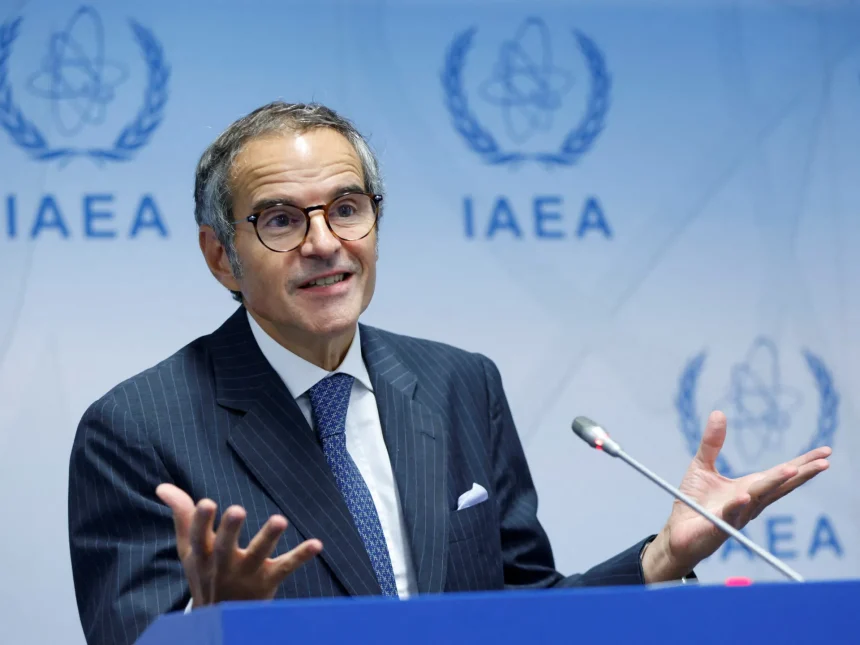
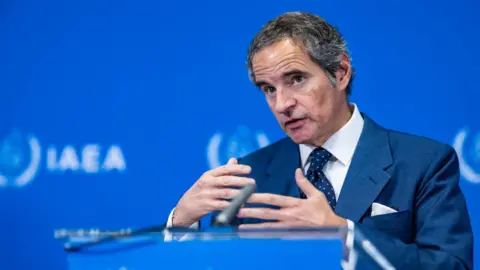
Speaking to reporters during a visit to Japan, International Atomic Energy Agency (IAEA) Director General Rafael Grossi said the agency would soon begin discussions with Iranian authorities regarding the practical arrangements for renewed inspections.
“The inspections will indeed take place,” Grossi stated. “We will be working on the modalities—dates, procedures, places—very soon.”
According to Grossi, the preliminary agreement signed last week explicitly provides for the dilution of Iran’s highly enriched uranium under IAEA supervision. The move is seen as a confidence-building measure aimed at reducing concerns over Iran’s nuclear capabilities while negotiations continue toward a broader and more permanent settlement.
More Read

However, Iranian officials appeared to temper expectations regarding the extent of international access. Deputy Foreign Minister Kazem Gharibabadi emphasized that access to damaged nuclear facilities and nuclear materials would only be discussed within the framework of a final agreement with Washington and after meaningful progress is made toward lifting sanctions.
In a statement posted on social media, Gharibabadi insisted that “media noise cannot be used to impose facts on the ground,” underscoring Tehran’s cautious approach to negotiations.
60-Day Window for Final Agreement
Under the 14-point memorandum of understanding reached between the two countries, Iran and the United States have committed to negotiating a comprehensive agreement within 60 days. The framework outlines plans to determine the future of Iran’s stockpile of enriched uranium through a mutually agreed mechanism, with on-site down-blending under IAEA supervision identified as the minimum acceptable method.
More Read

The agreement represents one of the most significant diplomatic breakthroughs between Tehran and Washington in recent years, following months of heightened tensions and regional instability.
Regional Diplomacy Intensifies
As negotiations progress, US Secretary of State Marco Rubio has embarked on a diplomatic tour of Gulf nations to build regional support for the agreement. Rubio met with United Arab Emirates President Sheikh Mohamed bin Zayed Al Nahyan and is expected to continue discussions in Kuwait and Bahrain.
The preliminary deal also includes provisions aimed at stabilizing regional trade and maritime security. Iran has agreed to allow commercial shipping to pass freely through the Strait of Hormuz, one of the world’s most critical energy corridors, while the United States has committed to lifting a naval blockade on Iranian ports.
The announcement has already had an impact on global energy markets. Brent crude oil prices fell below $75 per barrel on Wednesday for the first time since the outbreak of the recent US-Israeli conflict involving Iran, reflecting growing investor confidence that regional tensions may ease.
Questions Remain Over Nuclear Stockpile
Despite the positive developments, significant uncertainties remain regarding Iran’s nuclear activities.
In a recent report, the IAEA disclosed that its inspectors were granted access to the Bushehr nuclear power plant earlier this month. However, access to several sensitive nuclear facilities damaged during military strikes last year remains restricted.
More Read

The agency warned that these limitations prevent it from independently verifying the size, composition, and current location of Iran’s enriched uranium stockpile. Analysts believe a substantial portion of the material may be stored in underground tunnels near the Isfahan nuclear complex.
Enriched uranium can be used to produce fuel for civilian nuclear reactors, but when refined to higher levels, it can also be used in the production of nuclear weapons.

A Critical Test for Diplomacy
The coming weeks are expected to be crucial as negotiators work to transform the preliminary understanding into a comprehensive agreement. Key issues include the scope of international inspections, the future of Iran’s enriched uranium reserves, and the pace at which sanctions relief will be implemented.
For now, the commitment by both sides to continue talks and permit IAEA involvement marks a notable diplomatic breakthrough, offering cautious optimism that one of the world’s most persistent nuclear disputes could move toward a peaceful resolution.