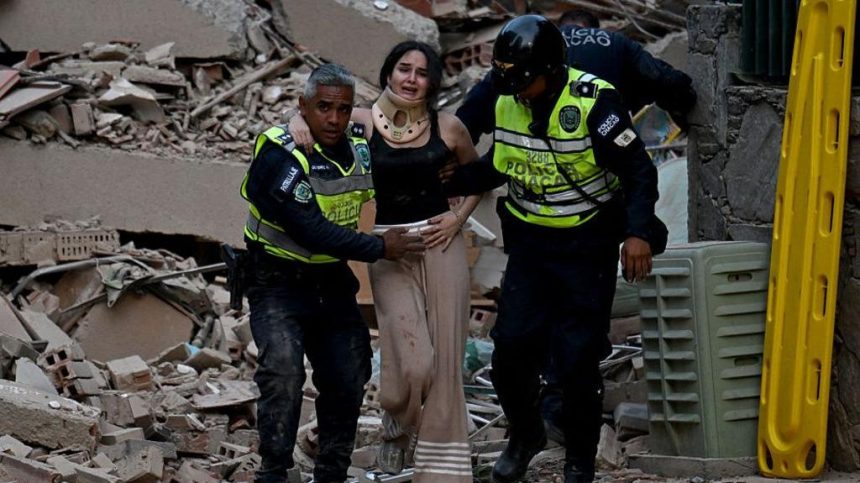
CARACAS, Venezuela — Venezuela is reeling from one of the most devastating natural disasters in its recent history after two powerful earthquakes struck within minutes of each other, killing at least 32 people and injuring more than 700, while reducing buildings to rubble across the capital, Caracas, and surrounding regions. Authorities fear the death toll could climb as rescue teams continue searching for survivors trapped beneath collapsed structures.
The twin earthquakes, measuring 7.2 and 7.5 in magnitude, struck on Wednesday evening west of Caracas. The powerful tremors sent thousands of terrified residents fleeing into the streets as apartment blocks, commercial buildings, and public infrastructure suffered severe damage. The quakes were also felt in neighboring Colombia and parts of Brazil, prompting widespread evacuations across the region.

Emergency services have been working around the clock, using heavy machinery and search dogs to locate survivors buried beneath collapsed buildings. Witnesses described scenes of panic as clouds of dust engulfed neighborhoods and desperate cries for help echoed from the rubble.
Acting President Delcy Rodríguez declared a nationwide state of emergency, calling the disaster “a national tragedy” and urging citizens to remain calm while emergency responders continue life-saving operations. Schools have been closed indefinitely in the affected areas, while hospitals have activated emergency protocols to accommodate the influx of injured victims.
More Read

The earthquakes also crippled key infrastructure. Parts of Caracas experienced widespread power outages, the metro system was suspended, and Simón Bolívar International Airport was temporarily closed after sustaining damage. Communication networks were disrupted in several districts, complicating rescue operations and leaving many families unable to contact loved ones.
The United States Geological Survey issued an initial assessment warning that the scale of the disaster could be far greater, noting a significant probability of additional casualties if rescue operations fail to reach those trapped beneath collapsed buildings quickly. Authorities have also warned residents to remain alert for aftershocks, several of which have already been recorded.
International support has begun pouring in, with several countries, including the United States, Brazil, Ecuador, and Mexico, offering humanitarian aid, rescue personnel, and emergency supplies. Search-and-rescue teams are expected to arrive over the coming days to assist overwhelmed local emergency services.
More Read


For many Venezuelans, the disaster has brought back memories of some of the country’s worst seismic events. Families spent the night outdoors, fearing further tremors, while volunteers joined rescue workers in clearing debris and assisting displaced residents.
Officials have appealed for blood donations, medical supplies, and emergency relief as thousands remain without electricity, shelter, or access to basic services. Rescue operations are expected to continue for several days as authorities race against time to locate survivors.
The government has urged citizens to follow official safety advisories and avoid damaged buildings until structural inspections are completed.