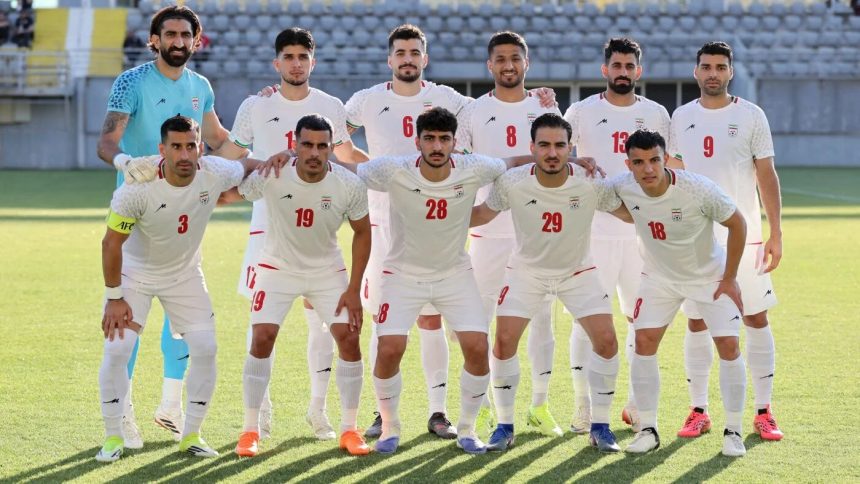
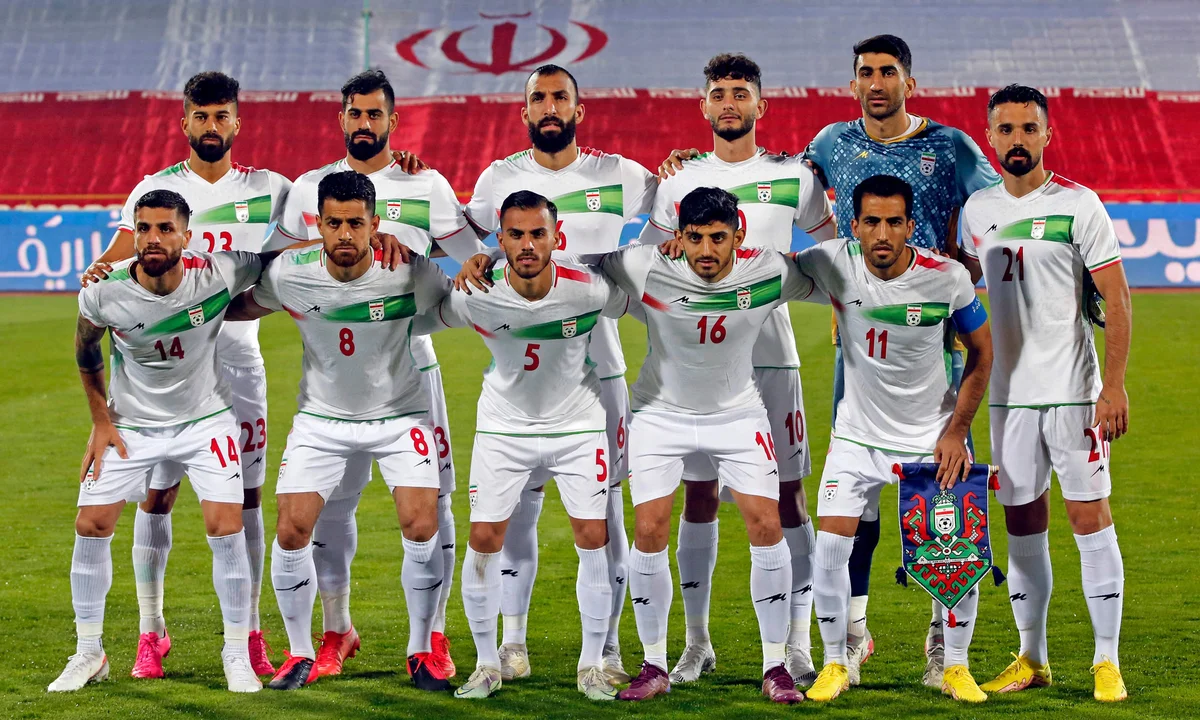
Iran has accused the United States of denying visas to several crucial members of its national football team’s backroom staff, just hours after Washington confirmed that Iranian players had been cleared to travel for the upcoming 2026 FIFA World Cup.
U.S. officials announced on Friday that visas had been granted to all players and what they described as “necessary support staff,” ten days before Iran’s opening Group Stage match in Los Angeles on June 15.
However, American authorities stressed that Iran would not be allowed to “abuse this system to sneak terrorists into the United States under false pretenses.”
The response sparked outrage from Iranian officials. Iran’s embassy in Turkey accused Washington of engaging in “politically biased interference in sport” after allegedly denying visas to a significant number of managerial personnel, executive officials, and technical advisers attached to the team.
More Read

According to Iranian state-linked media, as many as 15 officials were denied entry, including the president of the football federation, his deputy, and the team’s media director.
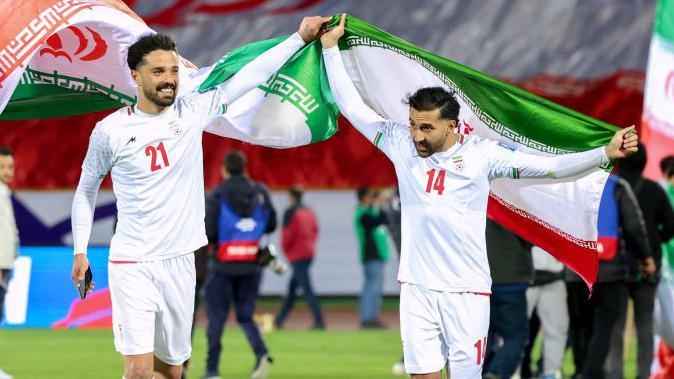
Despite the controversy, Iran’s squad departed from its training camp in Turkey on Saturday and is headed to Mexico, where the team will be based throughout the tournament. The players are expected to arrive in the early hours of Sunday following a 20-hour journey.
Iran’s ambassador to Mexico revealed that under the conditions attached to their visas, the squad must enter and leave the United States on the same day as each of their matches.
More Read

In a strongly worded statement, Iranian officials described the U.S. announcement as a “whitewash,” claiming the restrictions represent the highest level of discriminatory treatment yet directed at the national team.
The embassy has also urged football’s governing body, FIFA, to intervene in the matter.
The 2026 World Cup, jointly hosted by the United States, Canada, and Mexico, kicks off on June 11. Iran secured qualification after topping its qualifying group in March 2025, long before the outbreak of the current conflict.
The tournament will mark the first time in World Cup history that a host nation welcomes a team from a country with which it is actively at war.
Earlier this year, Iran relocated its World Cup training base from Tucson, Arizona, to Mexico amid growing tensions.
More Read
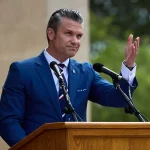
The U.S. Department of Homeland Security declined to specify whether additional restrictions would be imposed on Iranian players or officials during their stay but reaffirmed its commitment to ensuring the safety and security of World Cup attendees. The agency noted that it is working closely with other government departments to secure all 11 U.S. host cities, including Los Angeles.
Meanwhile, U.S. Secretary of State Marco Rubio recently told lawmakers that individuals linked to the Islamic Revolutionary Guard Corps would not be permitted to join Iran’s World Cup delegation.
Iran’s national team is also scheduled to face Belgium in California and Egypt in Seattle during the group stage of the tournament.
The dispute adds a fresh layer of political tension to what is already shaping up to be one of the most closely watched World Cups in history.