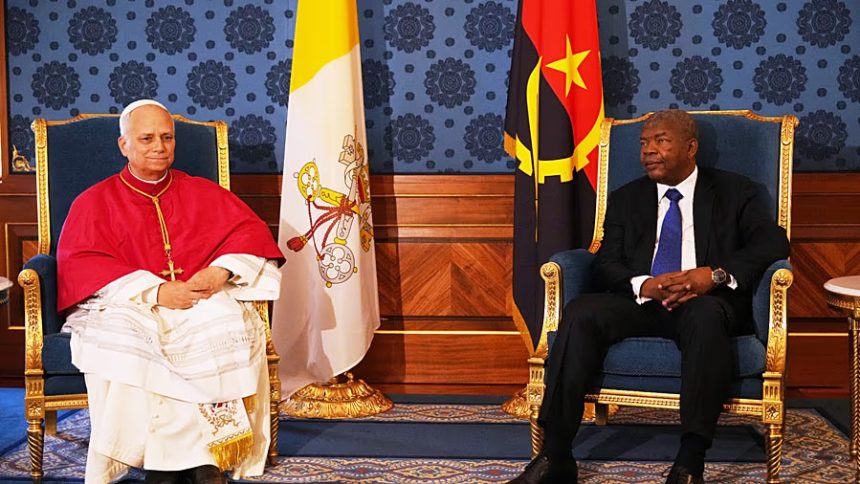
LUANDA, Angola — A visiting pontiff on Saturday delivered a powerful message to Angola’s leaders and citizens, urging the resource-rich nation to move beyond a long history of exploitation and embrace a future rooted in justice, dignity and shared prosperity.
Addressing government officials shortly after arriving in Luanda, the pope condemned the enduring legacy of “extractivism” — an economic model in which natural resources are heavily exploited, often at the expense of local populations.
“How much suffering, how many deaths, how many social and environmental disasters are brought about by this logic of extractivism,” he said, calling on leaders to prioritize the well-being of their people over the relentless pursuit of material gain.

The visit marks the third stop on the pontiff’s four-nation tour of Africa, following earlier engagements in Cameroon. It is part of a broader effort to encourage peace, solidarity and sustainable development across the continent.
More Read
In his first address in Angola, the pope met with President João Lourenço and reflected on the country’s turbulent past, shaped by centuries of colonial exploitation and a devastating civil war that lasted nearly three decades.
“I desire to meet you in the spirit born of peace and to affirm that your people possess treasures that cannot be bought or stolen,” he said. “There dwells within you a joy that not even the most adverse circumstances have been able to extinguish.”
Angola, home to about 38 million people, gained independence from Portugal in 1975 but soon descended into a brutal civil war that lasted until 2002, claiming more than half a million lives. The conflict, fueled by Cold War rivalries, left deep scars on the nation’s social and economic fabric.
Today, Angola stands as one of Africa’s leading oil producers and a major global supplier of diamonds, with vast reserves of gold and critical minerals. Yet despite its natural wealth, poverty remains widespread. According to the World Bank, more than 30 percent of Angolans were living on less than $2.15 a day as of 2023.
The pope acknowledged this stark contrast, noting that Angola’s lands have long attracted external interests seeking to extract wealth rather than invest in local communities.
“You know well that all too often people have looked — and continue to look — to your lands in order to give, or, more commonly, in order to take,” he told the gathering.

During his journey, the pontiff also addressed questions about international tensions, including recent exchanges with U.S. President Donald Trump over the conflict involving Iran. He downplayed any personal dispute, emphasizing instead his mission to promote peace.
“It is not in my interest at all to debate,” he said, adding that his focus remains on spreading a message of reconciliation, justice and brotherhood.
More Read
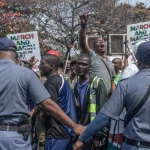
The visit has been welcomed by many Angolans as a moment of reflection and encouragement, particularly as the nation continues to grapple with inequality and the long-term effects of conflict.
As his African tour continues, the pope’s message in Angola underscores a broader call for nations rich in resources to ensure that their wealth benefits all citizens — not just a privileged few.