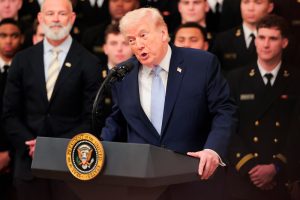
In a move that could have far-reaching implications for global trade and regional security, U.S. President Donald Trump has announced that the United States will pause its operations aimed at guiding commercial ships through the strategically vital Strait of Hormuz.
The Strait of Hormuz, a narrow waterway between the Persian Gulf and the Gulf of Oman, is one of the world’s most critical transit chokepoints, with a significant portion of global oil supply passing through it daily. For years, the U.S. Navy has played a central role in ensuring safe passage for vessels navigating the region, particularly amid heightened tensions involving Iran and other regional actors.

Trump’s statement did not immediately clarify the duration of the pause or the specific reasons behind the decision. However, analysts suggest the move could signal a shift in U.S. maritime security strategy or a response to evolving geopolitical dynamics in the Middle East.
The decision has already sparked concern among international shipping companies and energy markets, where stability in the Strait is seen as essential to maintaining steady oil prices and global supply chains. Any disruption—or perceived vulnerability—in the region can quickly lead to price volatility and increased insurance costs for vessels.
More Read

Critics argue that suspending escort operations may expose commercial ships to greater risks, including piracy, harassment, or potential military confrontation. Supporters, on the other hand, view the move as a recalibration of U.S. commitments abroad, possibly encouraging regional powers to take on more responsibility for their own security.
Maritime security experts warn that even a temporary pause could embolden hostile actors or create uncertainty among shipping operators. “The presence of U.S. naval forces has long acted as a deterrent,” one analyst noted. “Any reduction in that presence raises questions about who fills the gap.”

More Read

As the international community watches closely, the broader implications of the decision remain unclear. Whether this pause represents a short-term tactical adjustment or a longer-term policy shift will likely depend on developments in the region and responses from both allies and adversaries.
For now, the Strait of Hormuz remains a focal point of global attention, underscoring its enduring importance in international trade and security.