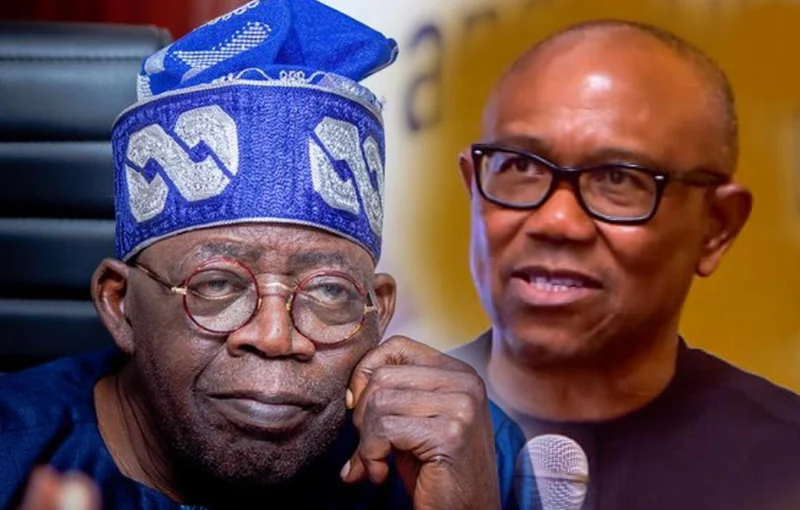
Presidential candidate of the Nigeria Democratic Congress (NDC), Peter Obi, has criticized the 30-day petrol discount introduced by President Bola Tinubu’s administration, describing the initiative as a reactive measure that fails to address the root causes of Nigeria’s economic hardship.
Obi, a former governor of Anambra State, expressed his concerns in a post on X, arguing that the temporary fuel price reduction appeared to prioritize political optics over sound economic policymaking.
He said he had delayed commenting on the announcement to allow sufficient time to assess its potential outcomes before concluding that the initiative reflected what he described as a confused approach to governance.
According to Obi, the federal government’s handling of key economic reforms has raised serious questions about policy planning, implementation and the impact of government decisions on ordinary Nigerians.
More Read
Obi Faults Subsidy Removal, Economic Reforms
The former governor recalled that Tinubu removed the petrol subsidy on May 29, 2023, without what he considered adequate consultation or a comprehensive assessment of the potential consequences for the economy and citizens’ livelihoods.
He also criticized the subsequent floating of the naira and the implementation of tax reforms, arguing that the policies were poorly sequenced and executed.
Obi maintained that the combined effects of these measures had contributed to rising inflation, higher prices of goods and services, increasing poverty and unemployment, insecurity, widening inequality and the migration of young Nigerians in search of better opportunities.
More Read
“Collectively, these policies stoked inflation in all sectors, pushing in most cases unbearable price hikes across board which placed severe shocks and other adverse consequences on Nigerians,” Obi said.
He argued that economic reforms should be carefully planned, supported by adequate data and implemented in a manner that considers their immediate and long-term consequences for households and businesses.
NDC Presidential Candidate Demands Impact Assessments
Obi also accused the federal government of failing to conduct and publish detailed regulatory impact assessments of its major economic policies.
He said such assessments would help the government identify potential risks, consult relevant stakeholders and citizens, and develop policies that are more inclusive, sustainable and responsive to the needs of the population.
According to him, transparent assessments would also enable Nigerians to understand the rationale behind government decisions and evaluate whether the measures are delivering their intended results.
The NDC presidential candidate stressed the importance of evidence-based policymaking, particularly at a time when many households and businesses are struggling with the rising cost of living.
More Read
Obi Questions Benefits of One-Month Petrol Discount
Obi further questioned the economic significance of the 30-day petrol discount, which he described as representing less than five per cent of fuel costs.
He challenged the government to explain how the temporary reduction would translate into meaningful improvements in the lives of Nigerians.
“What really does the President Bola Tinubu-led government want to achieve with a one-month discount of less than 5% on fuel cost. Will it reduce poverty, unemployment, insecurity, and inequality? Will it increase productivity and exports?” he asked.
He argued that a short-term discount might offer limited relief to consumers but questioned whether it could adequately address the broader economic pressures affecting transportation, food prices, production costs and household spending.
Obi’s criticism centres on whether the initiative represents a sustainable economic intervention or a temporary response to public dissatisfaction over the cost of living.
Raises Questions Over Possible Subsidy Restoration and 2027 Elections
The former Anambra State governor also questioned the government’s underlying motivation for introducing the temporary petrol discount.
He asked whether the initiative was intended to test public reaction to a possible return to fuel subsidy payments or whether political considerations ahead of the 2027 general elections influenced the decision.
However, these questions formed part of Obi’s criticism of the policy and do not, on their own, establish the government’s intentions.
He concluded that the announcement had raised more questions than it answered, calling attention to what he described as the need for greater clarity, transparency and accountability in the management of the economy.

Economic Hardship Remains a Key Political Issue
The debate over petrol prices and economic reforms remains a significant issue in Nigeria, where fuel costs have far-reaching implications for transportation, food distribution, manufacturing and the general cost of living.
Obi’s remarks add to the political debate over how the federal government should balance economic reforms with measures designed to protect vulnerable households and support businesses.
While temporary discounts may provide some relief, the broader question raised by the NDC presidential candidate is whether such interventions can deliver lasting improvements without a comprehensive strategy to address inflation, unemployment, poverty and declining purchasing power.
The federal government’s response to the criticism, as well as further details on the expected economic impact of the petrol discount, would be important in assessing the policy’s objectives and effectiveness.