South African President Cyril Ramaphosa has suspended National Police Commissioner Fannie Masemola in connection with a widening $20 million health tender scandal, deepening a crisis that has engulfed the country’s top law enforcement leadership.
The suspension, announced on Thursday, comes amid mounting political pressure and follows allegations that Masemola violated procurement laws in awarding a controversial 2024 police health services contract. The deal, now cancelled, was granted to Medicare24, a company owned by businessman Vusimuzi “Cat” Matlala, who is suspected of links to organised crime.

“In consideration of the seriousness of these charges and the critical role that the national commissioner of police plays, I have agreed with General Masemola that he be deemed to be on precautionary suspension pending the conclusion of the case,” Ramaphosa said.
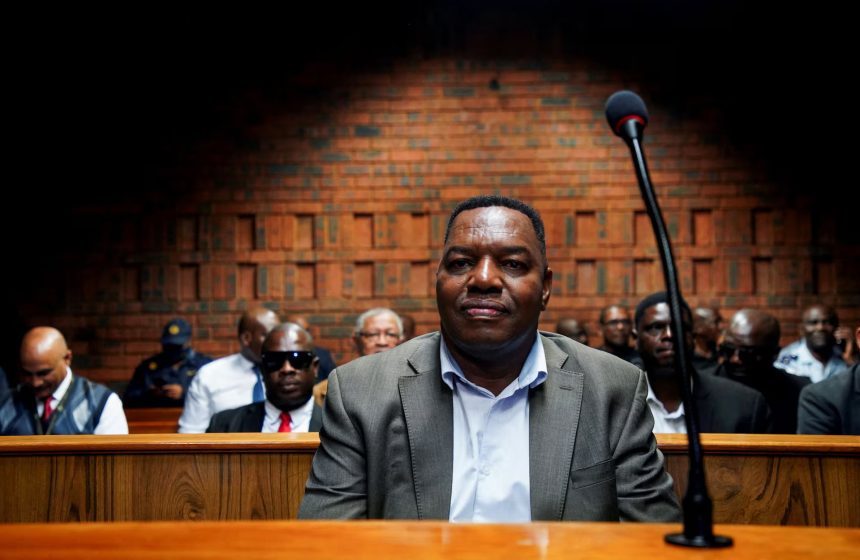
Masemola, who briefly appeared in court earlier this week, faces four counts of breaching the Public Finance Management Act. He has denied the allegations. The case has been postponed to May 13 and is expected to be consolidated with proceedings involving 16 other suspects, including Matlala.
More Read

The development marks a rare and dramatic upheaval at the top of South Africa’s police force. The police minister, national commissioner, and deputy commissioner have all now been suspended or placed on leave, raising serious concerns about leadership stability within the institution.

Lieutenant-General Puleng Dimpane, the police’s chief financial officer, has been appointed acting national commissioner. Ramaphosa described her as a leader with a “reputation for professionalism and integrity,” as authorities attempt to steady the embattled force.
More Read

The scandal has intensified scrutiny of corruption within government ranks, with opposition parties calling for deeper accountability. The Democratic Alliance (DA), South Africa’s second-largest political party, has demanded a formal inquiry into Masemola’s fitness to hold office.
“These serious allegations require full and proper scrutiny so that accountability is not delayed, diluted or quietly avoided,” the DA said in a statement.
At the heart of the controversy is Matlala, a figure often described locally as a “tenderpreneur” — someone who has amassed wealth through government contracts. He has been at the center of multiple investigations, including allegations of involvement in organised crime and a previous hospital corruption scandal in which more than 2.2 billion rand ($129 million) was allegedly siphoned off.
Matlala was also arrested in May last year in connection with the attempted murder of his former partner, Tebogo Thobejane.
The tender scandal gained national prominence after a senior regional police official accused top figures within the police and the political leadership of criminal conduct. Those claims led to the removal of the police minister and the establishment of a judicial commission of inquiry.

More Read
The Madlanga Commission, whose hearings are broadcast daily, has become a focal point of public attention, exposing alleged links between senior police officials and criminal networks. A separate parliamentary probe is also examining claims that officers accepted bribes from crime bosses in exchange for protection or favours.
Ramaphosa said a comprehensive vetting process of senior police officials is now underway as part of efforts to restore credibility within the force.
“That system of vetting is an important restructuring and rebuilding process,” he said.
The unfolding scandal comes at a politically sensitive time, as South Africa prepares for local government elections. Analysts say the government’s handling of corruption could significantly influence voter sentiment, particularly amid growing public frustration over governance failures.
The case also revives painful memories of past corruption scandals, including the killing of whistleblower Babita Deokaran, who was assassinated in 2021 after exposing irregularities in the Tembisa hospital case.
As investigations deepen, the scandal threatens to further erode public trust in South Africa’s institutions — and test the government’s commitment to accountability at the highest levels.