A wave of torrential rains and flash floods has left a trail of devastation across Kenya, claiming at least 81 lives this month and displacing thousands, as authorities warn that the crisis is far from over.
The relentless downpours have wreaked havoc in several parts of the country, with Kisumu County among the worst-hit. Entire villages have been swallowed by floodwaters, and an estimated 1,200 hectares of farmland have been destroyed, wiping out crops and threatening food security in the region.
In Nyakach, the situation remains critical after the Sondu Miriu River overflowed its banks, forcing more than 3,000 families from their homes. Emergency response teams have relocated victims to over eight evacuation centres, but many remain stranded and in urgent need of assistance.
Local chief Seth Oluoch Agwanda described the scale of destruction, noting that livelihoods have been severely impacted.
“We have lost farmlands due to massive erosion… and many crops,” he said, highlighting the growing humanitarian concerns.
More Read

For residents, the disaster has turned daily life into a struggle for survival.
“There is no house that is not flooded,” said Kennedy Oguta, who is desperately searching for shelter for his family and livestock.
Another resident, Sarah Akinyi Onyango, said families are still trapped in rising waters, with children exposed to dangerous conditions and limited access to basic necessities.
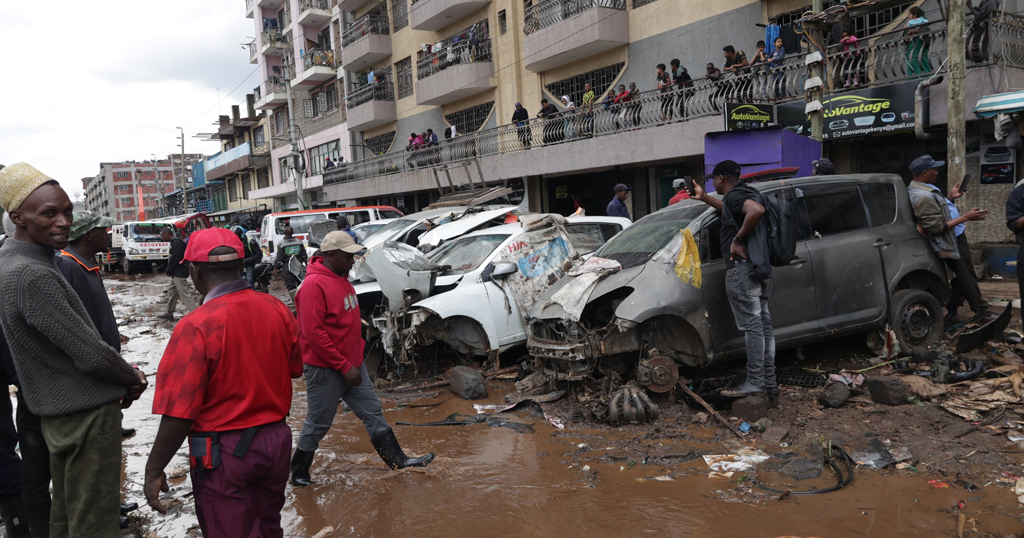
The impact of the floods has also been felt in the capital, Nairobi, where at least 37 people have died. Homes, roads, and critical infrastructure have been severely damaged, disrupting daily activities and economic operations.
More Read

Elsewhere, fatalities have been recorded in Kiambu County, while landslides have been reported in Kasaka, compounding the crisis.

Authorities are now urging residents in flood-prone areas to exercise extreme caution, as meteorological forecasts indicate that heavy rainfall is likely to persist in the coming days.
Scientists have linked the increasing frequency and intensity of such disasters to climate change, warning that East Africa is becoming more vulnerable to extreme weather patterns, including devastating floods and prolonged droughts.
As rescue and relief efforts continue, thousands of affected families face an uncertain future, with many left homeless, hungry, and in urgent need of humanitarian support.