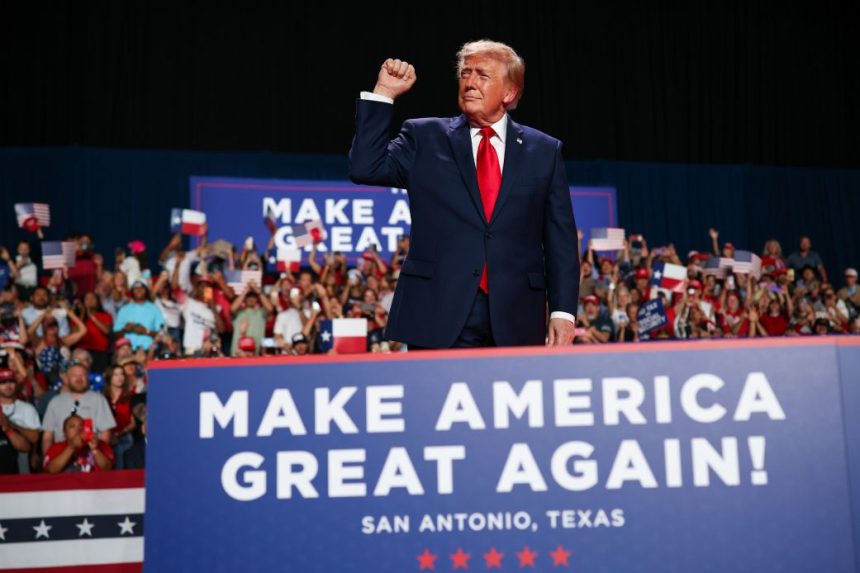
SAN ANTONIO, Texas — U.S. President Donald Trump has returned to Texas for the third time in less than a month, throwing his political weight behind Republican Senate candidate and state Attorney General Ken Paxton as the GOP battles to retain control of the U.S. Senate.
Trump’s latest visit to San Antonio comes just weeks before the November 3 midterm elections, with Republicans facing an increasingly difficult path to maintaining their Senate majority. Texas, traditionally a Republican stronghold, has emerged as one of the races attracting national attention because of the unexpectedly competitive contest between Paxton and Democratic challenger James Talarico.
Republicans have invested heavily in Paxton’s campaign after polling showed the race to be much closer than expected in a state Trump won by more than 13 percentage points in 2024. Texas has not elected a Democrat to statewide office since 1994.
The president’s appearance is therefore being closely watched by Republican strategists, who are assessing whether Trump’s endorsement and ability to mobilize his political base can improve Paxton’s standing before Election Day.
Trump has increasingly treated the midterm campaign as a personal political battle, repeatedly urging supporters at rallies to “pretend” that he is on the ballot. His campaign strategy has focused heavily on energizing Republican voters in traditionally conservative states.

A Complicated Alliance
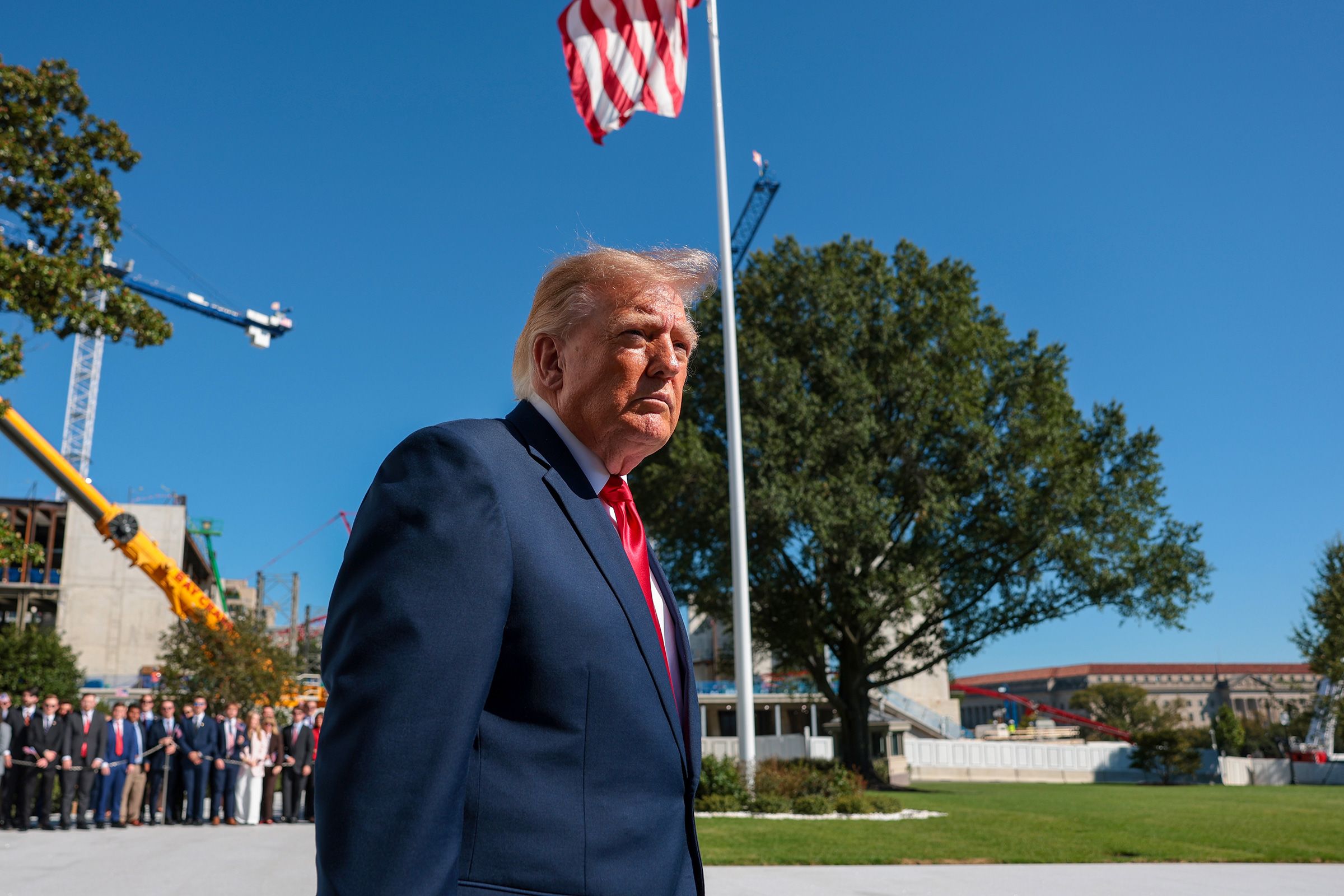
Despite their public show of unity in San Antonio, Trump and Paxton have had a complicated political relationship.
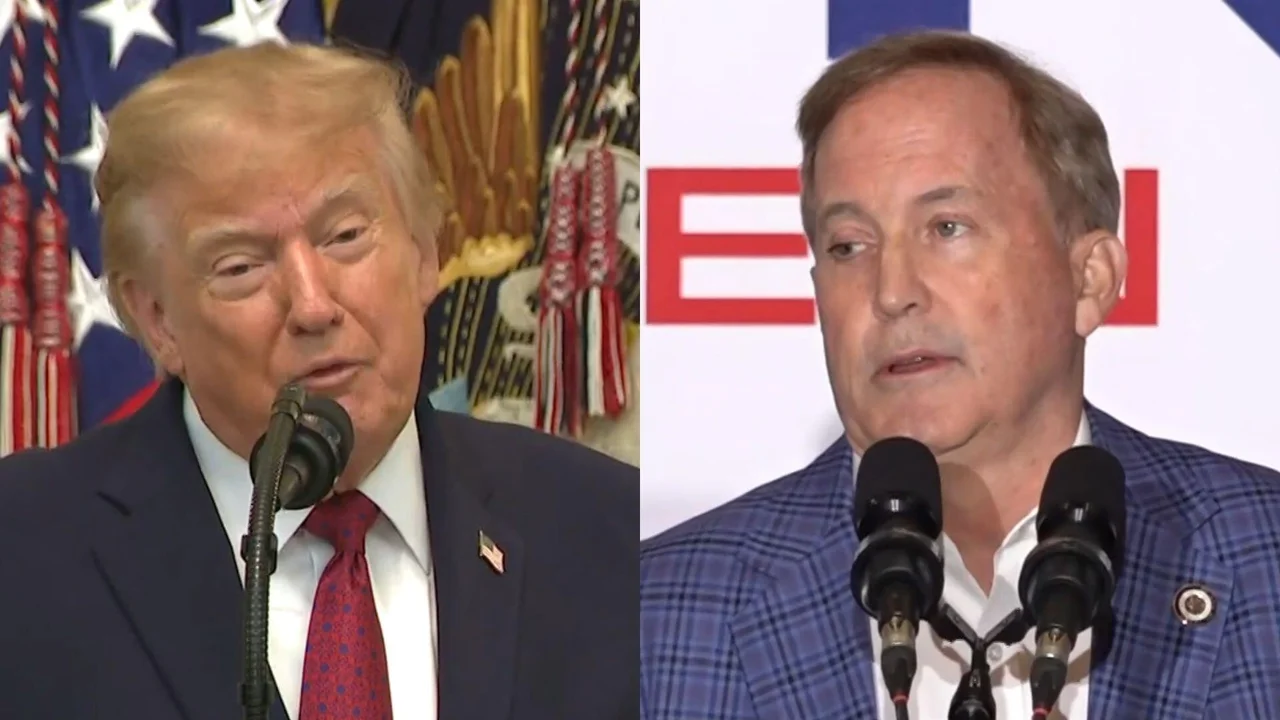
Paxton has privately expressed concerns about aspects of Trump’s political strategy and agenda, while Trump himself has publicly criticized the Republican Senate candidate on several occasions.
More Read

At a rally in Texas last week, Trump described Paxton as “one of the most loyal people,” while also calling him “a pain in the ass sometimes.”
Trump has also mocked Paxton’s appearance, telling supporters during a Republican convention in Dallas that some people may not like the way the attorney general dresses — adding, “I don’t.”
However, the tone was notably different during Wednesday’s San Antonio rally.
Trump described Paxton as a “fantastic man” and said he was confident that the Republican candidate would make an “unbelievable senator.”
“I’m very proud of him,” Trump said as he invited Paxton to speak.
Paxton responded by thanking the president and asking the enthusiastic crowd: “Aren’t you guys glad he came to San Antonio?”
More Read

The appearance appeared designed to demonstrate Republican unity despite tensions that have surfaced during the campaign.
Paxton Campaign Faces Pressure
Paxton has also found himself at the centre of controversy over comments reportedly critical of the Trump administration’s policies.
According to audio obtained by Axios, Paxton told donors and lobbyists last month that the war in Iran and high gasoline prices were hurting his campaign.
“I don’t make the decisions,” Paxton reportedly said, while questioning what was behind some of the administration’s decisions.
CNN said it had not independently verified the audio.
Paxton’s campaign rejected the interpretation of his comments, arguing that Texans are primarily concerned about rising costs.
His spokeswoman, Madison Cercy, said the attorney general was simply acknowledging that gasoline and diesel prices were too high and that Texans were struggling with the cost of living.
She also maintained that Trump was working to bring prices down.
The latest controversy follows reports that Paxton had also complained about Trump’s Republican midterm convention in Dallas, reportedly saying the event had hurt his campaign numbers.
Paxton’s advisers have dismissed those reports as misleading.
Trump Faces His Own Political Challenges
Trump’s intervention in Texas comes as his approval ratings remain weak, particularly among some groups that helped him win the 2024 presidential election.
The latest CNN Poll of Polls puts Trump’s approval rating at 34%, while an NBC News/Telemundo poll reportedly found his approval among Latino voters at just 27%.
That presents a particular challenge in San Antonio, where the Hispanic or Latino population represents a large majority of residents.
During his rally, Trump sought to energize his political base by focusing on border security and other issues central to his MAGA movement.
He also attacked Talarico, including over the Democrat’s dietary choices, while campaign organizers promoted early voting and mail-in ballot information to rally attendees.
But Trump’s appearance also carried political risks.
At least a dozen protesters reportedly interrupted the rally and were removed from the event.
Democrats have welcomed Trump’s repeated involvement in the Texas contest, arguing that the president’s frequent appearances demonstrate concern within the Republican campaign.
“If you have to pull in Donald Trump four times in the closing stretch of the campaign in Texas, then you have given up on independent voters,” one Texas Democratic operative said, describing the strategy as a “loss mitigation strategy.”
A Race Costing Hundreds of Millions
The Texas Senate contest is shaping up to be one of the most expensive races in the country.
Republican-aligned spending in the state is expected to surpass $300 million, with Republican groups reportedly outspending Democrats by more than five to one.
Since the end of the Republican primary runoff in May, Republicans have spent approximately $158 million on advertising, with another $38 million in advertising reservations. Democrats have spent about $75 million during the same period, with an additional $6 million reserved.
The enormous spending has raised concerns among Republicans that resources being poured into Texas could affect other competitive Senate races across the country.
One Texas Republican strategist warned that saving Paxton’s Senate campaign could cost between $100 million and $200 million.
The strategist also cautioned that Republicans could face serious consequences if they devote too many resources to Texas while losing critical Senate contests elsewhere.
Why Texas Matters
Texas remains structurally conservative, but recent elections have demonstrated that Democrats can become competitive in statewide contests.
In 2018, Trump campaigned heavily for Republican Senator Ted Cruz when he faced Democratic challenger Beto O’Rourke. Cruz ultimately survived the contest by just 2.6 percentage points.
The current race has therefore renewed debate over whether Paxton’s vulnerability is primarily the result of his personal political baggage, the national political environment or Trump’s declining popularity.
Paxton has faced a series of controversies, including securities fraud charges that ended in a pre-trial agreement, allegations of infidelity and a 2023 impeachment by the Texas House. He was later acquitted by the state Senate.
Despite those controversies, Trump backed Paxton over incumbent Senator John Cornyn during the Republican primary runoff earlier this year.
Now, Trump’s political reputation and Paxton’s candidacy are closely intertwined.
Bigger Stakes for Republicans
The outcome of the Texas race could extend beyond control of the Senate.
Republicans fear that a Democratic victory could give Democrats momentum in a state that has long been regarded as one of the country’s most important Republican strongholds.
A Texas Republican operative compared a potential Talarico victory to a “hole in the dam,” arguing that Democratic success could encourage the party to target Texas more aggressively in presidential elections and other statewide contests.
Paxton has openly acknowledged the significance of the election.
“If we lose Texas, we lose America,” he said in a social media post announcing his planned rally appearance with Trump.
With Election Day approaching, the Texas Senate race has become a major test of Trump’s ability to mobilize Republican voters, defend a controversial ally and protect the GOP’s path to retaining control of the Senate.
For Paxton, the challenge is even more immediate: converting Trump’s endorsement, millions of dollars in Republican spending and the state’s conservative political foundation into enough votes to defeat a Democratic challenger who has turned what was once expected to be a safe Republican seat into one of the most closely watched races of the 2026 midterm elections.