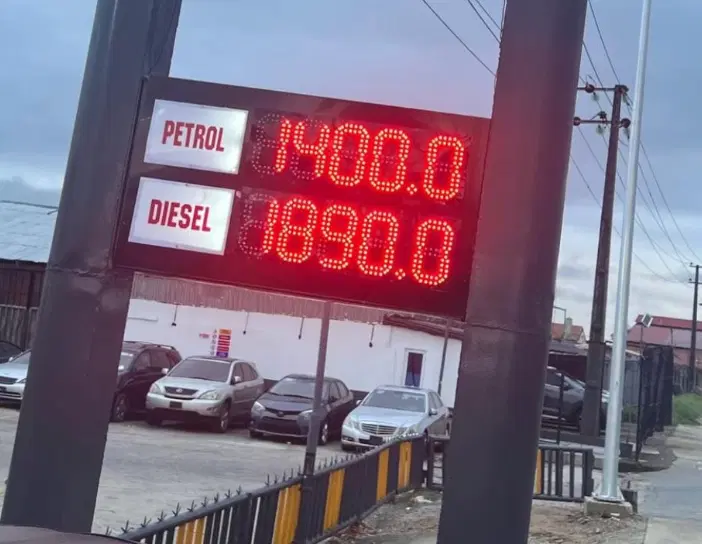
Motorists and consumers across Nigeria are facing fresh economic pressure following another increase in the pump price of Premium Motor Spirit, commonly known as petrol.
The latest development comes amid a sharp rise in international crude oil prices, which have climbed above 100 dollars per barrel, putting additional pressure on the cost of refined petroleum products and domestic fuel distribution.
In Lagos and surrounding areas, MRS filling stations have reportedly increased their petrol price from N1,300 to N1,400 per litre, representing a N100 increase.
Similarly, outlets operated by NNPC Limited have adjusted their pump price from about N1,275 to N1,375 per litre, while some independent marketers are now selling petrol for approximately N1,400 per litre.
More Read

The latest adjustments followed an increase in the gantry price of petrol by the Dangote Petroleum Refinery, with the refinery’s reported price rising to about N1,350 per litre.
TRANSPORT FARES UNDER PRESSURE
The latest petrol increase is expected to have an immediate impact on transportation costs.
Commercial bus operators, taxi drivers, tricycle operators and other petrol-dependent transporters are likely to face increased daily operating expenses.
More Read

For millions of Nigerians who depend on public transportation, the development could translate into higher fares and increased daily commuting expenses.
Workers, students, traders and other commuters may therefore feel the impact as they travel to offices, schools, markets and business centres.
FOOD PRICES MAY ALSO RISE
Beyond transportation, higher fuel prices could affect the cost of moving agricultural produce, raw materials and finished products across the country.
Distributors and retailers facing increased logistics expenses may pass those costs on to consumers, potentially pushing up the prices of food and other essential commodities.
Households that depend on petrol-powered generators could also see their energy expenses increase.
More Read

BUSINESSES FACE HIGHER OPERATING COSTS
Small and medium-sized businesses are among those likely to feel the pressure.
Manufacturers, restaurants, retailers, logistics companies, construction firms and other businesses that rely heavily on fuel for transportation, production or electricity generation may be forced to absorb higher operating costs or increase the prices of their products and services.
Economists and industry observers warn that if the crude oil price rally continues, the impact could spread further across the Nigerian economy and add to existing cost-of-living pressures.
WHY CRUDE OIL PRICES MATTER
The National President of the Oil and Gas Services Providers Association of Nigeria, Mazi Colman Obasi, attributed the immediate pressure on petrol prices to the sharp rise in international crude oil prices.
According to him, Nigeria’s deregulated downstream petroleum market means pump prices are increasingly influenced by crude oil prices, refined-product costs, freight, exchange rates and other supply-chain expenses.
He warned that if crude oil prices remain above the $100-per-barrel level or rise further, domestic petrol prices could face additional pressure.
HOUSEHOLDS ALREADY UNDER PRESSURE
Executive Director of Spaces for Change, Victoria Ibezim-Ohaeri, also warned that higher fuel and logistics costs could further weaken household purchasing power.
She noted that households and businesses relying on petrol or diesel generators could face additional energy expenses, while higher transportation costs could feed into the prices of food and other essential goods.
According to figures cited from the National Bureau of Statistics, Nigeria’s headline inflation rate currently stands at 15.43 per cent, while food inflation is 20.31 per cent.
Analysts say a prolonged oil-price shock could therefore create a difficult situation for households and businesses, even as higher crude prices potentially increase revenue for the oil-producing sector.
WHAT HAPPENS NEXT?
The major concern now is whether the international crude oil rally will continue.
Ongoing geopolitical tensions and disruptions to major shipping routes could keep crude oil and refined petroleum prices elevated.
If international oil prices remain above $100 per barrel for an extended period, Nigerians could face further increases in transportation, food, electricity generation and general business costs.
For consumers already battling rising living expenses, the latest petrol price increase represents another significant economic challenge.
Cruise TV News will continue to monitor developments in the downstream petroleum sector and bring you updates as they emerge.