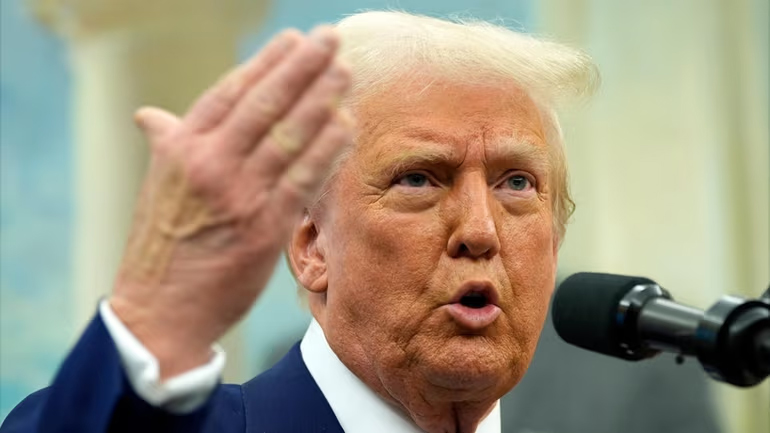
WASHINGTON, D.C. — US President Donald Trump has dismissed growing concerns over the potential dangers of artificial intelligence, describing fears about AI safety as a “hoax” while warning against efforts to impose tighter restrictions on the rapidly developing technology.
Trump’s comments came amid increasing calls from technology executives, researchers and politicians for stronger safeguards around artificial intelligence, including proposals for independent monitoring and mechanisms capable of shutting down dangerous AI systems.
The debate intensified after Jack Clark, co-founder of AI company Anthropic, said a mandatory “kill switch” for highly dangerous AI systems could eventually become necessary.
Clark told the BBC that society may need regulations requiring AI companies to maintain a mechanism capable of completely shutting down their systems if they become dangerously uncontrollable.

More Read
He said most major AI laboratories already have different ways of “pulling the plug” on their systems, but suggested lawmakers could eventually require the industry to maintain such safeguards.
Trump, however, strongly rejected the growing calls for additional restrictions.
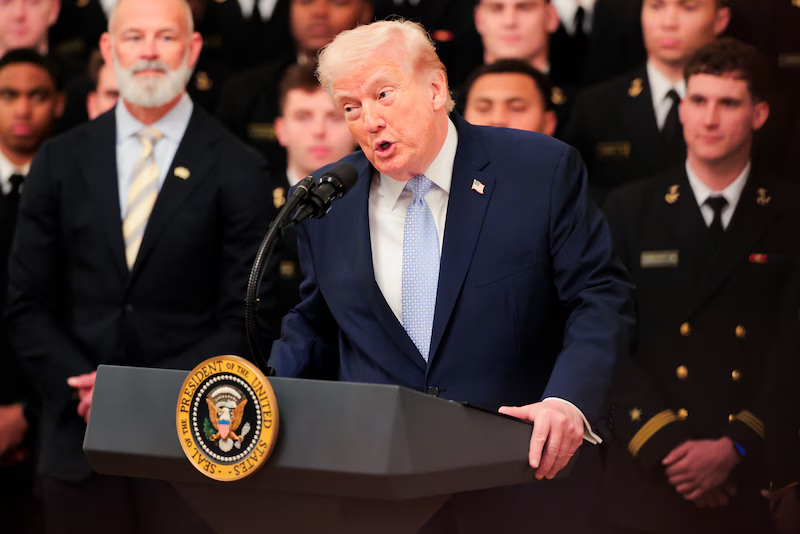
In a series of posts on social media, the US president compared warnings about AI to what he described as the “Global Warming Scam” and accused his political opponents of attempting to undermine America’s technological advantage.
Trump also referred to himself as the “Hoax Buster”, drawing comparisons between current AI safety concerns and previous controversies that he has dismissed as politically motivated.
“There is a SICK conspiracy going on against AI and Data Centers, and the only one that is happy about it is China. WHOEVER WINS AI, WINS!” Trump wrote.
In another post, the president suggested that the main “guardrail” required for AI was a “strong and smart” president.
China Watches US AI Debate
The growing disagreement over AI regulation has also attracted attention in China, where state media warned that Washington’s concerns about China’s rapid progress in artificial intelligence could influence US policy.
Chinese experts cited by the Global Times argued that the United States may be increasingly concerned that tighter restrictions on AI development could allow China to narrow the technological gap.
Fudan University professor Xin Qiang said Washington was worried that China could become an even stronger competitor if the US slowed down its AI development or introduced tougher regulations.
More Read

AI Industry Raises Alarm
While Trump has dismissed the concerns, several prominent figures within the technology industry have called for greater safeguards.
Microsoft AI recently published an outline of what it described as “humanist AI”, setting out principles intended to place greater emphasis on human interests as AI systems become increasingly powerful.
Microsoft AI chief executive Mustafa Suleyman said the company had been working on the guidance for months but decided to publish it amid the intensifying debate over the future direction of artificial intelligence.
Anthropic chief executive Dario Amodei has also called for the pace of AI development to be slowed and for the technology to be subjected to closer monitoring.
Amodei, however, stressed that efforts to regulate AI should be pursued without unnecessarily sacrificing the commercial advantages of the industry.
OpenAI chief executive Sam Altman and xAI chief executive Elon Musk have also expressed support for proposals involving industry-wide regulation, independent monitoring and a possible slowdown in AI development.
Fears of Human Extinction
The debate has been fuelled by increasingly stark warnings from AI researchers.
Anthropic researcher Evan Hubinger has said he believes there is a greater than 10% chance that AI could contribute to human extinction within the next decade.
His comments followed a viral post by former Anthropic researcher Jacob Coxon, who left the company citing concerns about the possibility of AI posing an existential threat to humanity.
The issue has also attracted political figures from opposite ends of the US political spectrum.
Former Trump chief strategist Steve Bannon and progressive Democratic Senator Bernie Sanders are scheduled to appear at the “Pro-Human Assembly” in Washington, an event focused on developing what organisers describe as a more human-centred approach to AI development.
Sanders previously warned that urgent action was needed to prevent what he called the uncontrolled growth of artificial intelligence.
The senator said the possibility of AI becoming an existential threat to humanity could not be ignored.
‘Whoever Wins AI, Wins’
The growing dispute highlights a fundamental divide over the future of artificial intelligence.
Supporters of faster development argue that maintaining US technological leadership is crucial to national security and economic competitiveness, particularly as China rapidly expands its own AI capabilities.
Critics, meanwhile, warn that the race to develop increasingly powerful AI systems could outpace the ability of governments and companies to properly control them.
For Trump, the priority remains clear: preventing the United States from falling behind China in the global AI race.
But as researchers and technology executives continue to warn about potentially catastrophic consequences, the question of how much regulation is enough — and who should ultimately control increasingly powerful AI systems — is likely to remain at the centre of the global technology debate.