YAHODYN, UKRAINE — A Russian drone has struck a passenger train in western Ukraine, just minutes after a diplomatic train carrying former British Prime Minister Boris Johnson and other senior European officials passed through the area.
The attack occurred on Sunday at Yahodyn railway station, approximately two kilometres from Ukraine’s border with NATO member Poland.
The drone hit the locomotive of a passenger train bound for Poland. Ukrainian authorities said the passengers had been evacuated before the strike and no casualties were reported.

The incident has triggered fresh concerns over the expanding reach of Russia’s attacks and the growing danger posed to Ukraine’s European neighbours.
More Read

According to Ukraine’s state railway operator, Ukrzaliznytsia, the diplomatic train carrying Boris Johnson and other European officials had left Yahodyn earlier than scheduled because of the continuing threat of Russian attacks on railway infrastructure.
The train had reportedly passed through the area shortly before the drone struck the locomotive of another passenger train.
Ukrzaliznytsia said it was quite possible that the diplomatic train could have been the intended target, although investigations into the incident are continuing.

Among those travelling through the area were Boris Johnson, former Swedish Prime Minister Carl Bildt and senior European security officials, including Britain’s national security adviser Jonathan Powell.
Former CIA Director David Petraeus was also in the area at the time of the attack, travelling on a separate train at Yahodyn station.
Petraeus later described the incident as terrifying and accused Russian President Vladimir Putin of attempting to terrorise Ukrainian civilians.
Former Swedish Prime Minister Carl Bildt also confirmed that passengers on his train had received instructions to prepare for evacuation before they were eventually cleared to continue their journey.
The train carrying the European delegation later reached Poland safely.
Boris Johnson condemned the attack, describing the strike as a random and senseless assault on civilian railway infrastructure.
More Read

He also called on Ukraine’s allies to urgently provide the country with additional air-defence systems to protect its people and critical infrastructure.
Meanwhile, Ukrainian Foreign Minister Andrii Sybiha described the attack as a serious escalation, warning that Russian attacks were effectively bringing the war closer to the borders of the European Union and NATO.
In Poland, Prime Minister Donald Tusk convened an emergency meeting following the strikes.
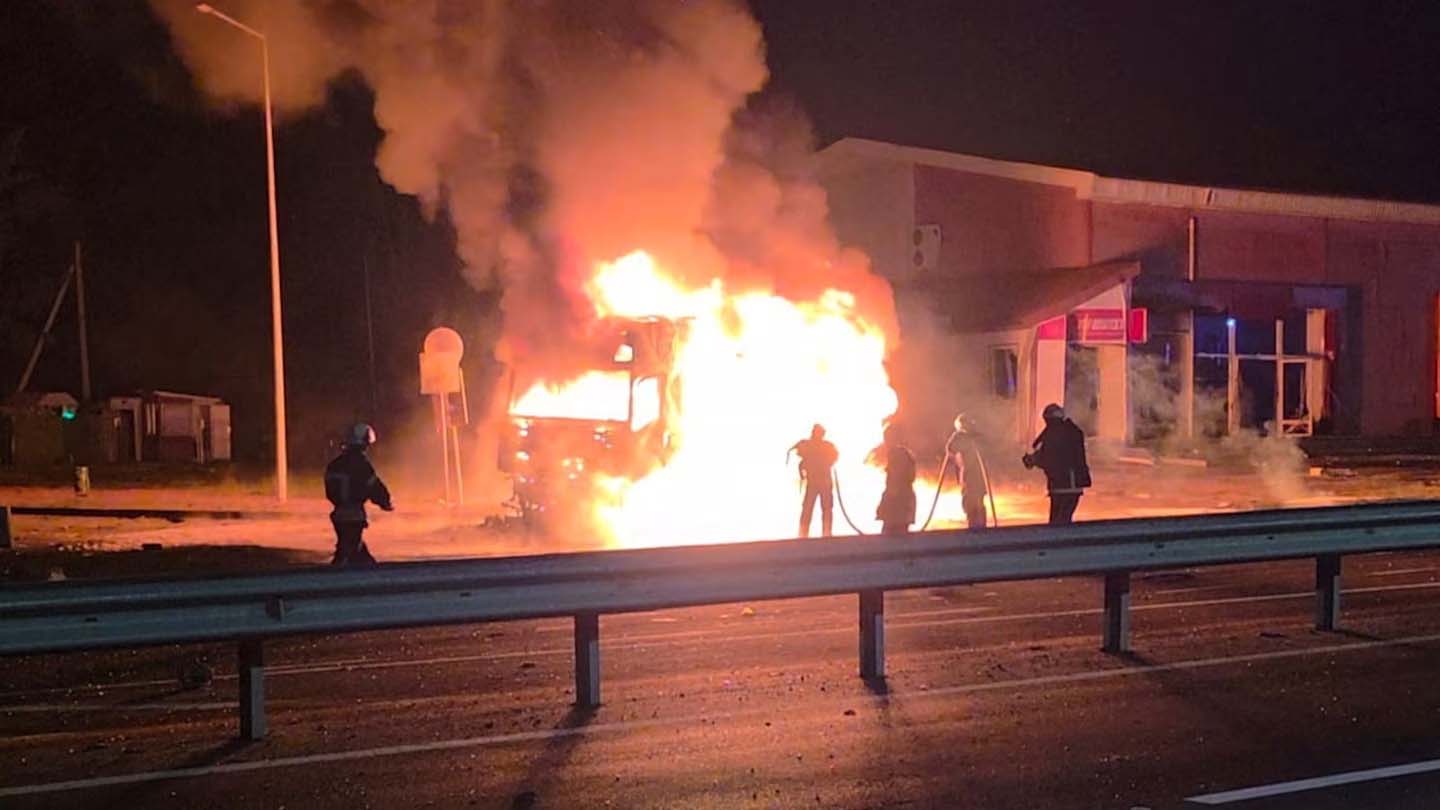
Polish officials have expressed growing concern over Russian military activity close to their territory, although there was no indication that Polish territory itself had been struck in the Yahodyn incident.
Russia, however, has rejected the suggestion that the strike was aimed at the European officials.
The Russian Defence Ministry said its forces had targeted railway infrastructure in western Ukraine that was being used to transport military cargo from European countries.
The strike comes amid an intensifying Russian campaign against Ukraine’s railway network, which remains one of the country’s most important means of transporting civilians, humanitarian supplies and military equipment.
Ukraine’s rail system has repeatedly come under attack since Russia launched its full-scale invasion in February 2022.
The latest incident is particularly significant because of its proximity to Poland — a member of both NATO and the European Union — and because it occurred shortly after prominent European officials had travelled through the same railway corridor.
For now, there is no confirmed evidence establishing that Boris Johnson or the diplomatic delegation was deliberately targeted.

But the timing, location and circumstances of the attack have raised serious questions about Russia’s intentions and the growing security risks along Ukraine’s western border.
As the war continues, European governments are now facing renewed concerns that attacks on Ukrainian infrastructure could increasingly spill over into areas immediately adjacent to NATO territory.
From Yahodyn in western Ukraine, the message from European officials is clear: the war may be taking place inside Ukraine, but its security consequences are being felt increasingly close to Europe’s doorstep.