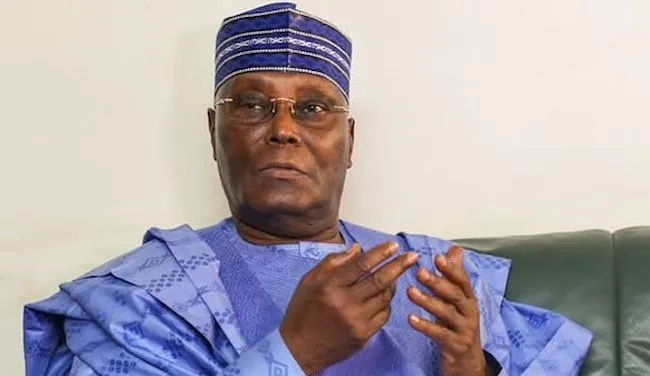
Former Vice President Atiku Abubakar has promised to reintroduce a targeted and capped fuel subsidy if elected president in 2027, arguing that the policy would help cushion the economic hardship faced by vulnerable Nigerians.
Atiku, the presidential candidate of the African Democratic Congress (ADC), said the proposed intervention would be fundamentally different from the previous subsidy regime, which he described as opaque and vulnerable to corruption.
He maintained that President Bola Tinubu could not prevent him from implementing the policy if he wins the 2027 presidential election.
Atiku made his position known in a statement issued in Abuja on Sunday by his Senior Special Assistant on Public Communication, Phrank Shaibu.

More Read

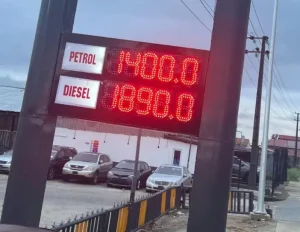
The former vice president criticised the Tinubu administration’s decision to remove the petrol subsidy, arguing that Nigerians had continued to bear the consequences through higher transportation costs, rising food prices and declining purchasing power.
He also challenged the Federal Government’s claim that the fuel subsidy had been completely abolished, pointing to figures contained in the audited accounts of the Nigerian National Petroleum Company Limited (NNPCL).
According to Atiku, NNPCL recorded approximately ₦4.84 trillion in energy-security expenses and related shortfalls in 2023, while the figure increased to about ₦7.13 trillion in 2024.
He argued that such expenditure amounted to the government absorbing part of the difference between the regulated price of petrol and its actual economic cost, irrespective of the terminology used to describe the arrangement.
“Nigerians do not eat semantics. Whether government calls it subsidy, under-recovery, shortfall or energy security, public resources were being used to bridge a gap between economic cost and the price at which petrol was sold,” Atiku said.
He added: “You cannot abolish subsidy at the podium and resurrect it in the accounts under an alias.”
Atiku Questions Oil Industry Incentives
The former vice president also questioned the Federal Government’s petroleum investment incentives, particularly the Deep Offshore Oil and Gas Projects Incentives framework, which provides production tax credits to qualifying projects.
Atiku accused the Tinubu administration of applying what he described as different economic standards to businesses and ordinary Nigerians.
He argued that while oil investors were receiving economic concessions, households and workers were being asked to endure the consequences of high petrol prices and rising living costs.
“The government can protect a multibillion-dollar oil investment from risk, yet it says protecting the Nigerian worker from crushing hardship is bad economics,” he said.
More Read

What Atiku’s Proposed Subsidy Would Look Like
According to Atiku, his proposed fuel intervention would be targeted, capped, transparently budgeted and independently audited.
He said the policy would also have a clearly defined exit strategy to prevent it from becoming a permanent burden on public finances.
The proposed subsidy, he said, would form part of his Atiku Economic Recovery Plan, alongside measures designed to increase domestic refining capacity, promote competition in the petroleum sector, improve mass transportation and restore household purchasing power.
Atiku argued that a properly designed intervention could protect vulnerable Nigerians from sudden increases in petrol prices while avoiding the financial leakages and corruption associated with the previous subsidy system.
Demand for Disclosure of Oil Companies’ Tax Concessions
The ADC presidential candidate also called on the Federal Government to publish details of tax concessions granted to petroleum companies.
He specifically demanded disclosure of the beneficiaries of such incentives and the amount of government revenue allegedly forgone through the concessions.
Atiku said the government should not demand sacrifices from ordinary Nigerians while simultaneously providing economic relief to large corporations.
“A government cannot preach unrestrained market forces to the poor while practising interventionist economics for his rich foreign friends,” he said.
The former vice president maintained that his proposed targeted subsidy would be focused on protecting vulnerable Nigerians rather than returning the country to the subsidy system of the past.
His latest position is likely to further intensify the economic policy debate ahead of the 2027 presidential election, particularly over petrol pricing, subsidy reforms, taxation, domestic refining and the broader question of how the Federal Government should protect Nigerians from the impact of economic reforms.