Every glass of water poured in Johannesburg tells a deeper regional story—one that begins high in the mountains of Lesotho. Now, that story is entering a new chapter with the completion of a major infrastructure milestone set to significantly increase water exports from the tiny kingdom to its much larger neighbor.
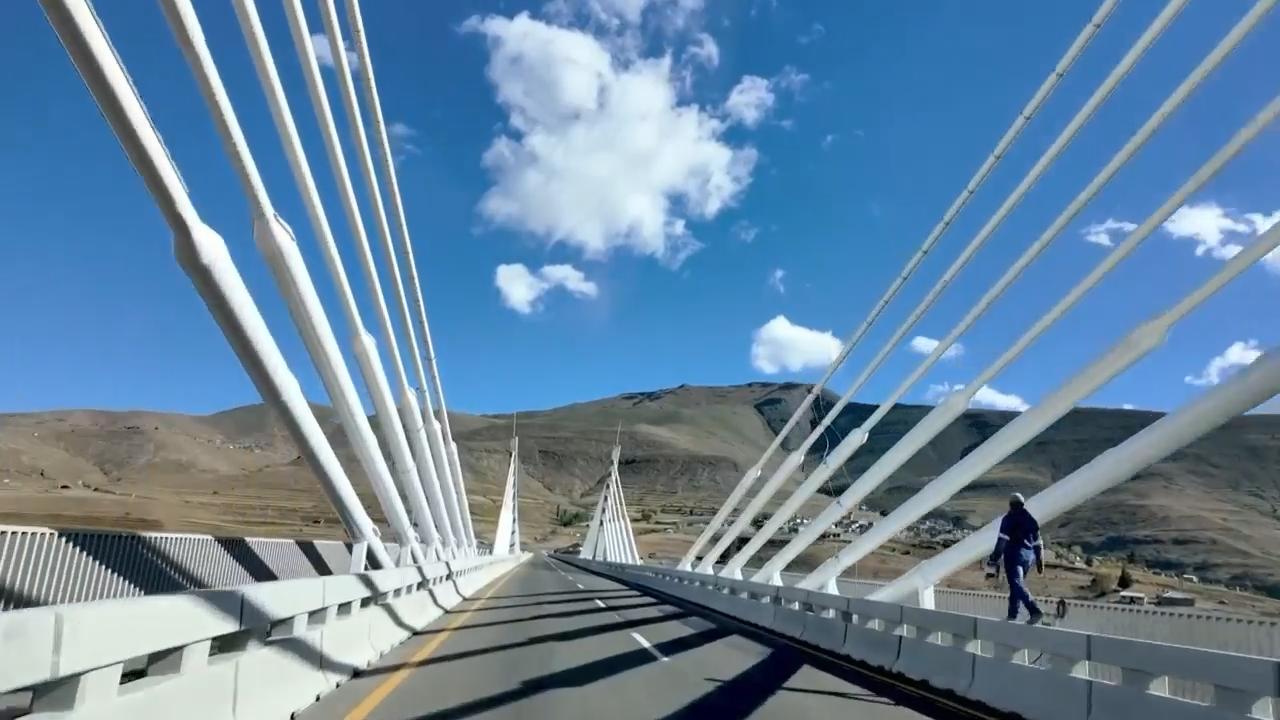
The newly built Senqu Bridge, an 825-metre-long structure towering 90 metres above the valley below, is a central component of the Lesotho Highlands Water Project (LHWP)—a decades-long collaboration between Lesotho and South Africa aimed at securing water supply and boosting economic development.
Currently, the project channels around 780 million cubic metres of water annually to South Africa, supplying a substantial portion of Johannesburg’s needs. Once ongoing expansion phases are completed, that figure is expected to rise sharply to more than 1.27 billion cubic metres per year, nearly doubling current transfers.
At the bridge’s launch, South African President Cyril Ramaphosa hailed the project as a powerful symbol of African capability and cooperation.
“This bridge is an example of what Africa can achieve when it believes in itself,” he said, underscoring the importance of regional partnerships in tackling shared challenges like water security.
More Read

For Lesotho, the project represents more than just infrastructure—it is a cornerstone of national development. King Letsie III highlighted the country’s growing role in supporting South Africa while advancing its own economic ambitions.
“Lesotho is proud to contribute to South Africa’s water security, while advancing its own economic development and energy aspirations,” the king said.
He also urged leaders and stakeholders to adopt a long-term vision, stressing the importance of discipline, integrity, and commitment to national benefit in building infrastructure that will serve future generations.
“We must reflect on whether we are building for the next 40 years with greater discipline, stronger integrity, and a higher commitment to national benefit,” he added.
Beyond its strategic significance, the Senqu Bridge stands out as an engineering achievement. With a construction cost of $144 million, it is Lesotho’s first extradosed bridge, a hybrid design that combines elements of cable-stayed and prestressed girder systems. This innovative approach allows for greater strength and efficiency while maintaining a relatively low profile.
More Read


The bridge was constructed using the incremental launching method, a technique in which sections of the bridge are built and pushed into place from one end. This method not only improves safety for construction workers but also reduces environmental disruption in the rugged terrain.
As the Lesotho Highlands Water Project moves into its next phase, the Senqu Bridge is expected to play a critical role in expanding capacity and strengthening ties between the two nations. For millions of South Africans, it will help ensure a more reliable water supply. For Lesotho, it marks another step toward leveraging its natural resources for long-term growth and stability.
In the end, the bridge is more than steel and concrete—it is a symbol of shared resources, mutual dependence, and the promise of progress built across borders.