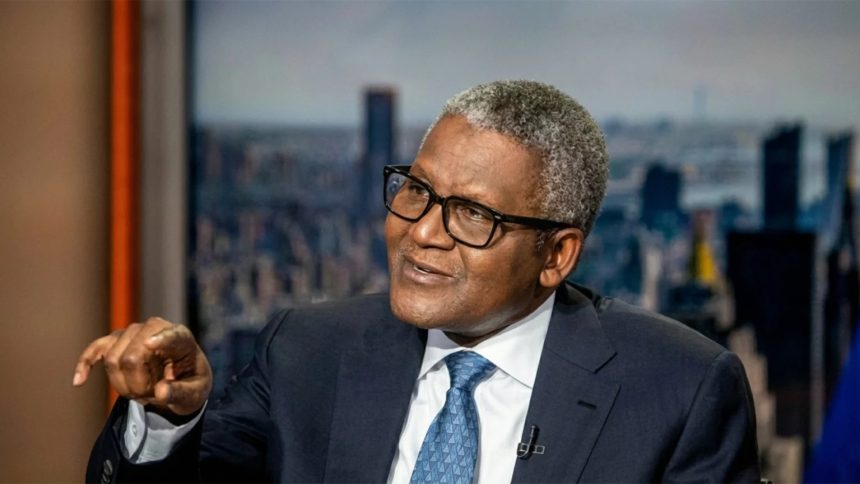
Africa’s richest man, Aliko Dangote, is set to break ground on a proposed $16 billion mega-refinery in Lamu, Kenya, in what he describes as a major step towards reducing Africa’s dependence on imported refined petroleum products.
The proposed refinery, to be located along Kenya’s Indian Ocean coast, is expected to have a processing capacity of 700,000 barrels of crude oil per day—a scale that would make it larger than any refinery currently operating in Europe.
The project represents another major expansion of Dangote’s ambitions in Africa’s energy sector, following the establishment of the Dangote Petroleum Refinery in Nigeria, currently Africa’s largest oil refinery.
The Lamu project is expected to form part of Kenya’s broader infrastructure development around the coastal region, which also includes the development of a major port.
However, the proposed refinery has already attracted legal and environmental challenges.
More Read

A local community has filed a lawsuit over land rights, while environmental groups, including Greenpeace, have raised concerns about the potential impact of the project on the surrounding environment.
A court ruling published on Monday cleared the way for the planned ground-breaking to proceed, although the underlying legal dispute remains ongoing.
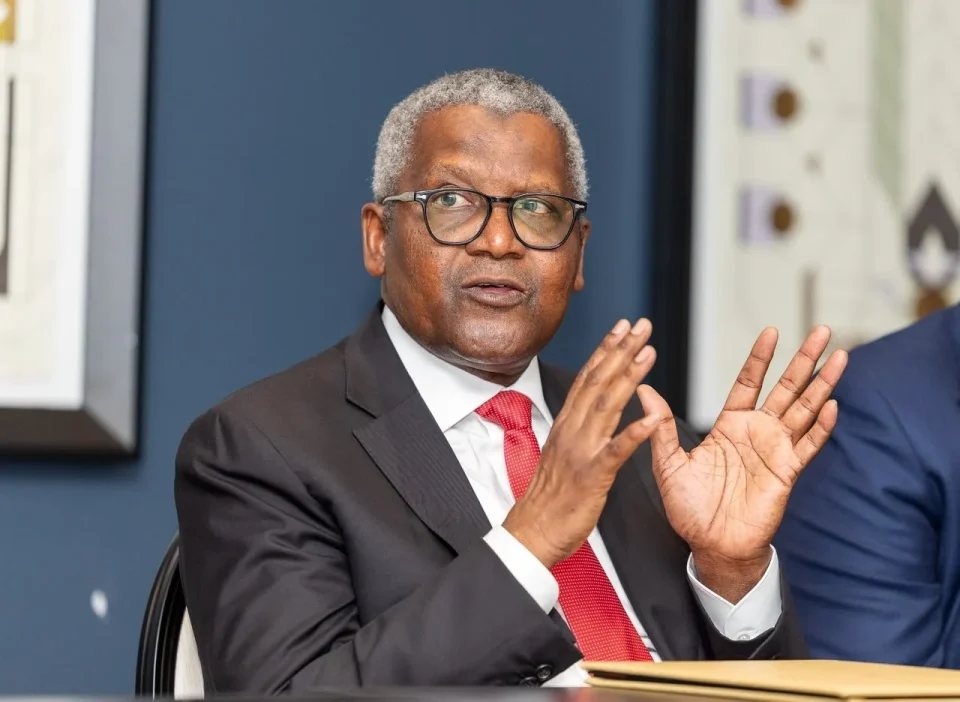
Dangote, speaking to journalists on Tuesday, dismissed the challenges, saying opposition to major projects should not prevent Africa from pursuing industrial development.
More Read

“There’s actually no problem with these sort of cases… There are people who don’t want the development of Africa,” he said.
According to Dangote, Lamu was selected after Tanzania and the Kenyan port city of Mombasa were considered as possible locations.
He said Lamu offered advantages including deeper waters, cleaner water and solid land, making it more suitable for a project of such magnitude.
The proposed refinery will also feature a 1,000-megawatt power facility, with Dangote saying about half of the electricity generated would be supplied to Kenya’s national grid.
The Nigerian billionaire said the wider objective is to help African countries reduce their reliance on imported fuel and foreign expertise by developing refining and other industrial capacities within the continent.
Dangote said he expects the majority of African countries to become self-sufficient in fuel by 2030.
More Read
“It does not matter where it is refined, but it should be in the African continent, on the soil of Africa,” he said.
He also argued that African countries should increasingly develop their own technical capacity to execute major infrastructure projects rather than relying heavily on foreign contractors.
“If anybody is doing a big project going forward, you don’t have to go and bring Chinese or Indians and build it for you,” Dangote said.
CRUDE SUPPLY REMAINS A KEY QUESTION
One of the major questions surrounding the proposed refinery is the availability of crude oil to sustain its enormous refining capacity.
East African countries are only beginning to develop significant oil production, raising questions about whether the region can provide enough crude for a refinery of such scale.
Dangote said the facility would initially source crude from multiple international markets, including the Middle East and the United States.
He added that the refinery would also be positioned to take advantage of increased oil production from countries such as Kenya, Tanzania and Mozambique as their petroleum industries develop.
Dangote argued that Africa cannot afford to wait until its crude oil production reaches much higher levels before investing in refining infrastructure.
He said the continent must begin preparing now for the energy demands that will accompany its growing population and economies.
“Are we going to wait until Africa has one quarter of the world’s population before we start thinking of what to do? We have to start addressing that issue today,” he said.
Dangote also pointed to concerns over future global fuel supplies, including potential restrictions on diesel exports from the United States, as another reason for African countries to strengthen domestic refining capacity.
Despite the proposed 700,000-barrel-per-day capacity, Dangote described the project as relatively small when compared with Africa’s projected future fuel demand.

“When you talk about 700,000 barrels per day, it’s actually small. For the region, it’s a big refinery, it’s a big investment, but it is a start-up,” he said.
The proposed Lamu refinery, if completed, would significantly expand Africa’s refining capacity and could further reshape the continent’s petroleum supply landscape.
For Dangote, the project is part of a broader push to build African industrial capacity on African soil and reduce the continent’s dependence on imported refined petroleum products.