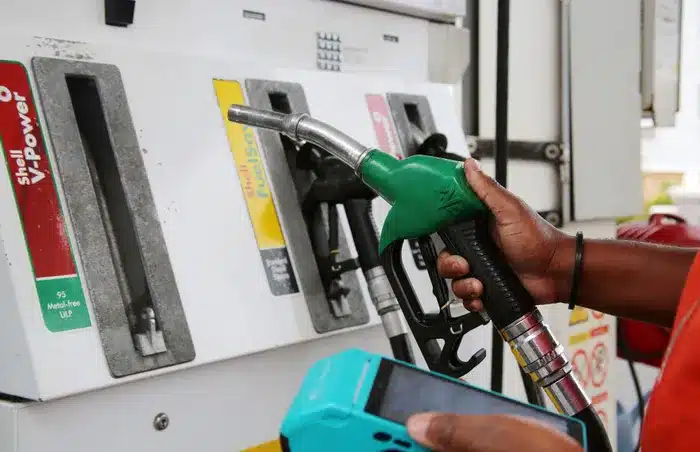
Petrol prices fell by as much as N24 per litre at major petroleum depots in Lagos on Tuesday, raising expectations that filling stations may soon reduce pump prices as they replenish their stocks with cheaper supplies.
The decline was recorded across several major markets, although the magnitude varied from one location to another.
The development coincided with a decline in international crude oil prices, with both Brent and West Texas Intermediate (WTI) recording losses, while the OPEC and Indian crude baskets posted sharper declines.
The latest depot price movements also showed significant reductions in Automotive Gas Oil (AGO), commonly known as diesel, with prices falling by as much as N50 per litre in Warri and N35 per litre in Port Harcourt.
More Read

Lagos Depots Record N24 Reduction
In Lagos, Ascon, Integrated and Sahara depots reduced their petrol prices by N24 per litre, from N1,351 to N1,327 per litre.
Pinnacle also reduced its price by N24, from N1,350 to N1,326 per litre, while MRS cut its price by N20, from N1,352 to N1,332 per litre.
However, Dangote retained its petrol price at N1,325 per litre.
More Read

Mixed Movements Across Other Markets
In Port Harcourt, Ascon and Integrated reduced their petrol prices by N5 each, from N1,820 to N1,815 per litre. Ibeto retained its price at N1,815.
In Calabar, Mainland reduced its price by N7, from N1,327 to N1,320 per litre, while Alkanes reduced its price by N2 to N1,325 per litre.
In Warri, Keonamex reduced its price by N3 to N1,327 per litre, while Nepal reduced its price by N1 to N1,329 per litre.
Diesel Prices Also Fall
The diesel market recorded even steeper reductions.
Matrix in Warri reduced its AGO price by N50, from N2,050 to N2,000 per litre.
In Port Harcourt, Masters cut its AGO price from N1,935 to N1,900 per litre, representing a N35 reduction.
More Read

Prudent and Rain Oil in Warri also reduced their AGO prices by N10 each, from N1,950 to N1,940 per litre.
Will Petrol Pump Prices Fall?
A petroleum products marketer, who spoke on condition of anonymity, said the depot price reductions could put pressure on filling stations to review their pump prices.
However, he cautioned that motorists may not immediately see a uniform reduction because many retailers may still have products purchased at higher prices.
“The latest depot reductions are expected to put pressure on filling stations to review their pump prices, particularly outlets buying directly from the affected depots or replenishing their stocks at the new lower rates,” he said.
He explained that stations with existing high-cost inventories may continue selling at their current prices until those products are exhausted.
“However, motorists may not see an immediate or uniform reduction. Stations still holding products purchased at higher prices may maintain existing pump prices until those stocks are depleted and replaced with cheaper supplies,” he added.
According to the marketer, competition among filling stations could accelerate the transmission of lower depot prices to consumers.
“Where retailers begin buying at the lower depot rates, competition among filling stations could encourage downward adjustments, especially in areas where several outlets operate within close proximity,” he said.
Lower Depot Price Does Not Mean Equal Pump Price Cut
The marketer further warned motorists against expecting the full depot-price reduction to automatically translate into an equivalent reduction at filling stations.
He noted that transportation costs, operating expenses and retail margins would continue to influence the final pump price.
Consequently, a N20–N24 reduction at some Lagos depots should not automatically be interpreted as a N20–N24 reduction at the pump.
Crude Oil Prices Decline
The depot price reductions came amid weakness in the international crude oil market.
WTI fell by $1.03, or 1.12 per cent, to $91.34 per barrel, while Brent crude declined by $0.29, or 0.29 per cent, to $100 per barrel.
The marketer, however, cautioned that the downward movement could still be reversed by changes in crude oil prices, foreign exchange rates and other supply-related costs.
For Nigerian motorists, the key question now is whether the lower depot prices will be sustained long enough — and whether retailers will pass the savings on to consumers.
If the trend continues and filling stations begin replenishing their inventories at the lower rates, motorists could start seeing downward adjustments in petrol pump prices in the days ahead.