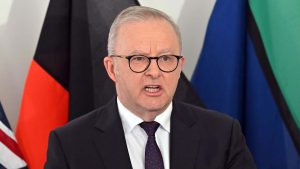
The United Nations Children’s Fund (UNICEF) has identified poor communication and the failure to translate research findings into practical policy recommendations as major obstacles to improving the lives of children in Nigeria.
The agency called on policymakers, researchers and development partners to strengthen collaboration, learn from programme failures and ensure that evidence generated through research informs policies and interventions for children.
UNICEF Representative in Nigeria, Wafaa Saeed, made the call on Wednesday at the Knowledge for Use (K4U) Summit on Child Rights, held at the United Nations House grounds in Abuja.
The summit, themed “From Knowledge to Action: Advancing Child Rights Through Evidence, Innovation and Learning,” brought together policymakers, academics, development partners, young people, civil society organizations, media professionals, United Nations agencies and UNICEF staff to explore ways of turning research and innovation into practical solutions for children.
Saeed expressed concern that despite the substantial volume of research and evaluation reports being produced, much of the knowledge was not reaching decision-makers or being translated into meaningful action.
She stressed that research findings could only make a difference when they were effectively communicated, understood and applied by those responsible for developing policies and implementing programmes.
According to her, stakeholders must demonstrate the honesty and courage to examine what is not working, learn from past failures and make necessary adjustments rather than continue with ineffective approaches.
She also emphasized the importance of presenting research findings in accessible formats that policymakers, parents, communities and other stakeholders could easily understand and use.
The UNICEF representative further called for greater involvement of young people in research and decision-making, saying they should be recognized as experts on issues affecting their lives rather than treated merely as beneficiaries or respondents.
Saeed said young people had expressed a desire to participate in shaping knowledge and developing solutions from the beginning of the process, rather than being consulted only after decisions had already been made.
She noted that achieving meaningful change would require stronger engagement with communities and parents, alongside opportunities for stakeholders to reflect on lessons and adapt their programmes to changing circumstances.
Also speaking, UNICEF Chief of Planning and Monitoring, Wayne Bacale, said the summit was designed to strengthen collaboration among government institutions, academic organizations, United Nations agencies and development partners in sharing knowledge generated through research, assessments and evaluations.
Bacale explained that the objective went beyond presenting research findings to ensuring that the information was used to improve the lives of children and mothers.
He called for sustained dialogue among researchers, policymakers and implementing institutions to identify practical ways of incorporating evidence into policy decisions and programme implementation.
“This effort to share, learn, and put knowledge into action should not stop, should not end here,” he said.
Similarly, UNICEF’s Child Protection Chief in Nigeria, Natalie McCauley, said the country and its development partners already possessed considerable evidence on child rights issues, but faced challenges in making existing knowledge accessible, synthesized and useful.
McCauley highlighted the interconnected nature of challenges affecting children, noting that many experienced multiple forms of deprivation simultaneously.
She said evidence from different sectors, including child protection, healthcare and education, needed to be brought together to develop more comprehensive interventions rather than addressing each issue in isolation.
She also identified weak institutional memory as a significant challenge, explaining that personnel changes within organizations could lead to the loss of valuable knowledge about previous research, programmes and lessons.
According to her, new officials sometimes embark on approaches that have already been tried without having access to sufficient information about their previous outcomes.
McCauley therefore called for stronger systems to preserve and synthesize institutional knowledge, enabling decision-makers to access relevant information and avoid repeating ineffective interventions.
She also cautioned that research findings must be assessed in relation to their methodology and context before being applied to other populations or circumstances.
The challenges of translating research into policy featured prominently during a roundtable session moderated by UNICEF Deputy Representative, Rownak Khan.
The session, titled “Knowledge for Use on Child Rights: Lessons from Publications and Collaborative Action for Impact,” brought together representatives from academia, the Ministry of Budget and Economic Planning, UNICEF, the United Nations Population Fund and the Economic Community of West African States.
Professor Alphonso Isara of the Behavioural Research Design Laboratory (BIRD Lab), University of Benin, said the presentation of research findings played a crucial role in determining whether they were understood and applied.
He argued that researchers should communicate their findings in accessible language and formats tailored to their intended audiences instead of relying exclusively on technical academic terminology.
Isara noted that complex medical and research terms could prevent community members from understanding information that directly affected their lives.
He therefore advocated stronger connections between research institutions and communities, describing the relationship as a bridge between “town and gown.”
Participants at the session also identified the disconnect between research institutions and organizations responsible for implementing policies as a major obstacle to evidence-based decision-making.
They observed that some researchers considered publication the final stage of their work, when research findings should instead provide a foundation for practical interventions and policy implementation.
The participants further emphasized the need to ensure that evidence remained relevant to the populations and circumstances in which it was being applied, particularly as lengthy research processes could cause findings to become outdated.
Another issue highlighted at the summit was the limited feedback provided to communities that participate in research and data collection.
Participants said development organizations frequently gathered information and perspectives from communities without systematically communicating the findings or explaining how the contributions were being used.
They stressed that closing this feedback gap would improve accountability, strengthen trust and enable communities to better understand the impact of their participation.
The importance of involving parents, extended families and community leaders in child-focused interventions was also underscored.
UNICEF highlighted the value of its parenting programmes, which have demonstrated the importance of simplifying technical information and using peer-to-peer and community-based communication, particularly in areas with low literacy and numeracy levels.
Participants also called for more inclusive youth engagement, urging stakeholders to ensure that young people from rural and disadvantaged communities were adequately represented in research and the development of solutions.

In her closing remarks, Saeed challenged stakeholders to ensure that every research finding led to practical reflection and, where necessary, changes in policy and programme implementation.
She said research should ultimately answer a fundamental question: “What are we going to do differently because we know this?”
The summit proposed stronger mechanisms for synthesizing existing research and making relevant evidence more readily available to decision-makers, rather than continually commissioning new studies without adequately using the knowledge already generated.
UNICEF said the K4U Summit marked the beginning of a continuing dialogue on strengthening the link between evidence, innovation and learning, with the ultimate goal of improving policies, programmes and outcomes for children across Nigeria.