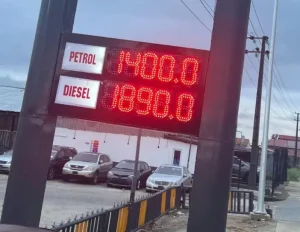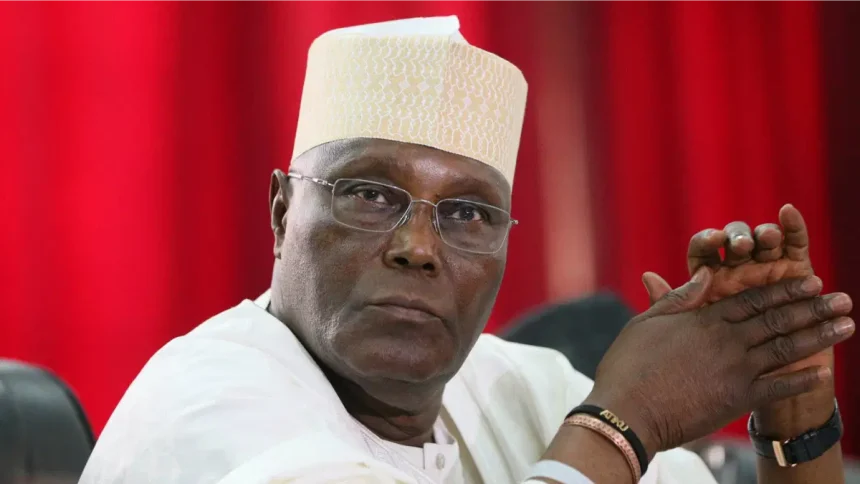
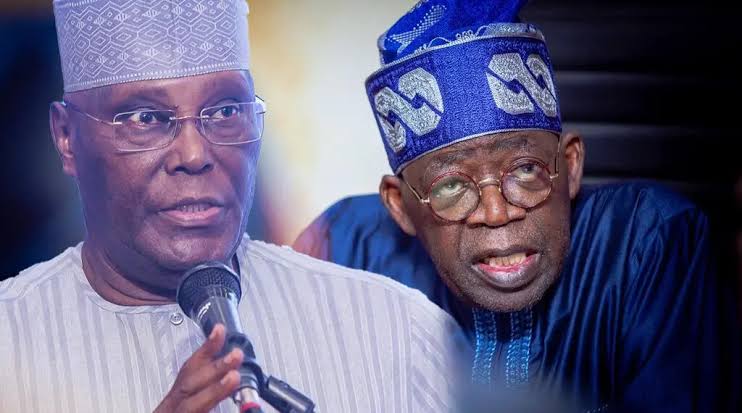
ABUJA — Former Vice President Atiku Abubakar has criticised the administration of President Bola Tinubu over the current price of petrol, questioning why Nigerians are paying as much as ₦1,470 per litre despite crude oil selling at about $102.52 per barrel.
Atiku, the presidential candidate of the African Democratic Congress (ADC), made the remarks in a statement issued by his Senior Special Assistant on Public Communication, Phrank Shaibu.
He compared the current situation with 2008, when crude oil reportedly sold for about $147 per barrel, yet petrol was sold at ₦65 per litre under the administration of the late President Umaru Musa Yar’Adua.
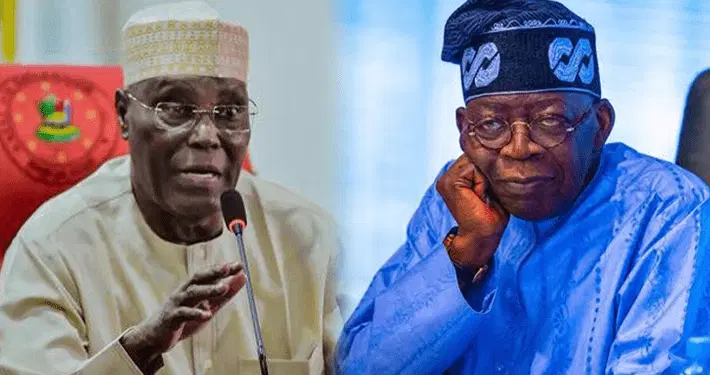
According to Atiku, the disparity raises serious questions about the management of Nigeria’s oil revenues and the economic burden being placed on citizens.
More Read
“With crude oil around $102.52 per barrel, Nigerians are paying as much as ₦1,470 per litre. In 2008, when crude oil reached about $147 per barrel, petrol sold at ₦65 per litre under the Yar’Adua administration,” he said.
Atiku accused the Tinubu administration of what he described as an “organised system of grand larceny”, alleging that it involves opaque Federation Account deductions, questionable management of oil revenues, parallel funding arrangements and alleged off-book transactions.
He argued that the removal of petrol subsidy was presented to Nigerians as a difficult but necessary policy that would free government resources for critical sectors such as education, healthcare and infrastructure.
However, he said Nigerians are yet to receive a clear and verifiable account of the savings generated from the policy.
“Petrol at ₦1,470 per litre is not merely a figure at the filling station. It enters the price of transportation, food, school runs, farming, manufacturing and virtually everything Nigerians buy,” Atiku said.
“After all the pain imposed on Nigerians, they have a right to ask: where are the subsidy savings and where is the money?”
Atiku Demands FAAC Reconciliation
The former Vice President also called for greater scrutiny of revenues accruing to the Federation Account.
He cited official figures which, according to him, showed that ₦4.232 trillion in gross Federation Account revenue was reported in June 2025, while ₦1.818 trillion was eventually distributed, with other amounts categorised under various deductions and adjustments.
Atiku consequently demanded a comprehensive reconciliation of Federation Account revenues from 2023 to date.
He wants the government to disclose gross collections, every deduction made before distribution, the legal authority for each deduction, the accounts receiving the funds and the ultimate beneficiaries.
“Nigerians deserve accounts they can interrogate, not accounting labels designed to discourage questions,” he said.
Questions Over Oil Revenues
Atiku also called for greater transparency concerning the Renewed Hope Infrastructure Development Fund, OML 143, oil-production revenues and the Nigerian National Petroleum Company Limited’s international LNG trading operations.
He further demanded disclosure regarding offshore corporate structures and allegations surrounding unofficial crude lifting, maritime surveillance contracts and other possible off-book revenue flows.
“These allegations are too serious to be answered with press statements and political insults,” Atiku said.
“Every barrel can be measured, every cargo identified and every legitimate payment traced. If everything is in order, publish the records and allow independent forensic auditors to reconcile them.”
He added that if the allegations were false, the records would provide evidence to clear the government.
Atiku Compares Nigeria With US
The ADC presidential candidate also rejected what he described as attempts to use the current international situation as a blanket justification for rising domestic fuel prices.
He compared petrol prices and minimum wages in Nigeria and the United States, arguing that Nigerians are facing a disproportionate economic burden.
“At about $4.31 per gallon, U.S. petrol is roughly $1.14 per litre. Yet while the U.S. federal minimum wage is $7.25 per hour, Nigeria’s minimum wage is only ₦70,000 per month,” he said.
“Tinubu has brought Nigerians close to American fuel prices while leaving them with Nigerian poverty wages. That is the true cost of his subsidy-removal policy.”
Atiku maintained that the government could no longer demand continued sacrifice from citizens without providing greater transparency over public finances.
“After all the oil, all the revenue, all the deductions and all the hardship, petrol is now ₦1,470 per litre,” he said.
“The question Tinubu must answer is simple: where are the savings, where are the revenues, and who is taking Nigeria’s money?”