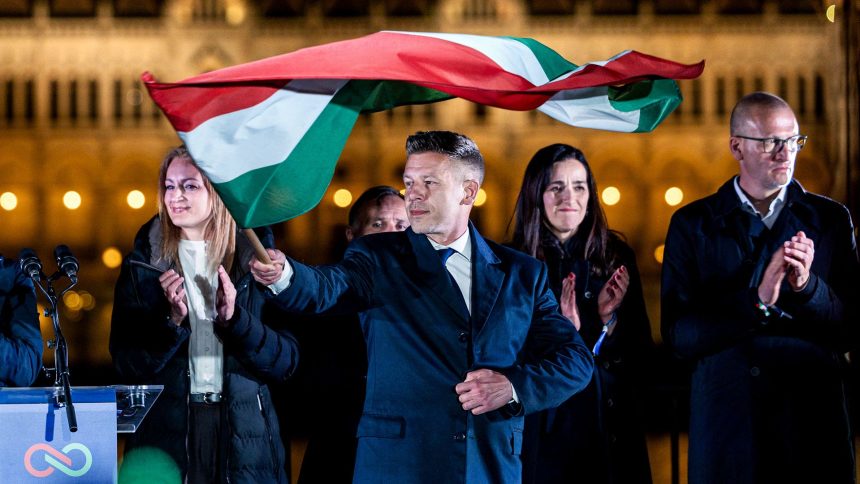
In a stunning political upset, Hungary’s long-serving Prime Minister Viktor Orbán has been defeated after 16 years in power, marking the end of a system critics long described as an “electoral autocracy.”
Opposition leader Péter Magyar, a 45-year-old former government insider turned reformist challenger, led his Tisza party to a landslide victory in Sunday’s election. With more than 98% of votes counted, Tisza is projected to secure 138 seats in parliament, dwarfing Orbán’s Fidesz party at 55 seats and the far-right Our Homeland party at six.
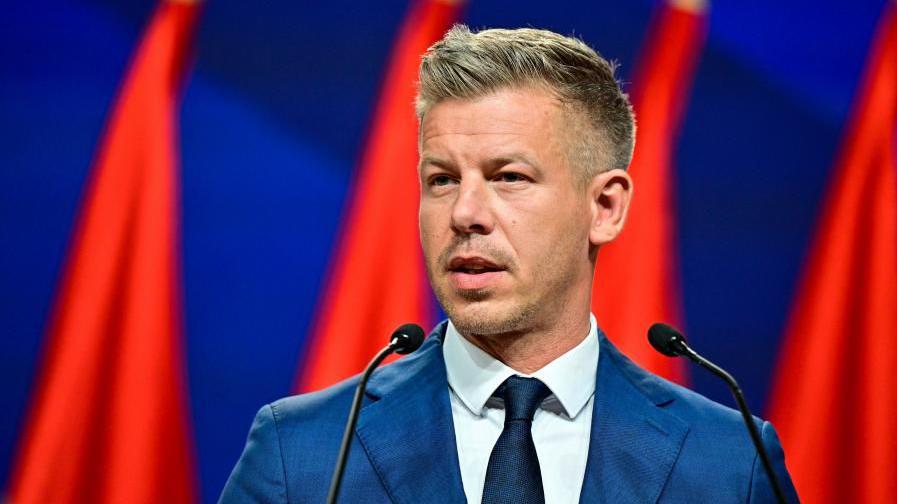
Addressing jubilant supporters along the Danube in Budapest, Magyar declared: “We did it. Together we overthrew the Hungarian regime.” The moment marked a dramatic political turning point in a country where Orbán had consolidated power through four successive election wins.
Voter turnout reached a record 79.5%, reflecting a surge in public engagement and a widespread desire for change after years of mounting frustration over alleged corruption and cronyism.
More Read

Magyar’s victory is expected to reshape Hungary’s domestic and foreign policy direction. While Orbán had maintained close ties with US President Donald Trump and Russian President Vladimir Putin—often clashing with the European Union—Magyar campaigned on restoring stronger relations with the EU and Ukraine while distancing Hungary from Moscow.

The scale of the defeat became evident within minutes of vote counting. In a symbolic moment underscoring the shift in power, Orbán personally called Magyar to concede even before final results were confirmed.
More Read

Later, addressing supporters, a somber Orbán acknowledged the outcome: “The result of the election is clear and painful,” he said, thanking loyal voters and calling for unity in the days ahead.
For Hungary, the election signals not just a change in leadership, but the beginning of a new political chapter with implications that could reverberate across Europe.