The latest Security Council straw poll leaves the race to succeed António Guterres wide open, with Costa Rica’s Rebeca Grynspan recording the highest support despite opposition from permanent members.
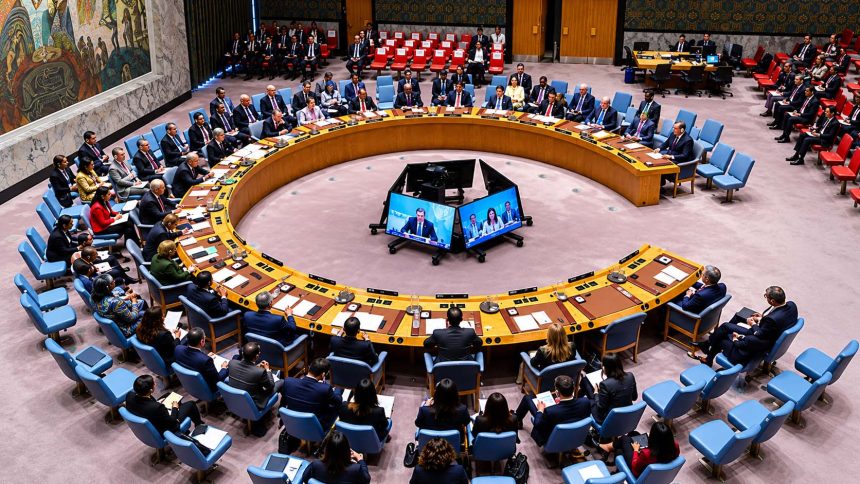
The race to select the next Secretary-General of the United Nations has entered a critical phase after all seven declared candidates received at least one “discourage” vote from a permanent member of the UN Security Council, raising fresh concerns about the possibility of a deadlock in the selection process.
The latest informal poll, conducted on Friday, October 16, 2026, marked the first time that the five permanent members of the Security Council — the United States, the United Kingdom, China, France and Russia — used colour-coded ballots to distinguish their votes from those of the council’s 10 elected members.
The development offers a clearer indication of which candidates could face opposition from the five powerful nations, each of which holds veto power over the council’s formal recommendation for the position.
According to diplomats familiar with the confidential exercise, none of the seven contenders has secured the support needed to overcome opposition from the permanent members, leaving the competition open to further negotiations and potentially new entrants.
More Read

Grynspan Maintains Lead Despite Opposition
Costa Rica’s Rebeca Grynspan, a former vice-president of the country and the current head of the United Nations Conference on Trade and Development (UNCTAD), received the highest number of “encourage” votes in Friday’s poll.
However, she also received five “discourage” votes, including two from permanent members of the Security Council, highlighting the challenge she faces in building the broad consensus required to secure the position.
More Read
Grynspan has featured prominently in previous rounds of informal voting. Her continued support among council members has kept her candidacy in focus, although the opposition recorded in the latest poll means that further diplomatic engagement will be essential.
The United States has also reportedly expressed reservations about the current field of candidates. Washington’s ambassador to the United Nations, Mike Waltz, declined to comment directly on reports that the country opposes all seven contenders.
“We have always said we just simply need the best,” Waltz said on Friday, reiterating Washington’s position on the search for Guterres’ successor.
He also indicated that countries remained free to nominate additional candidates, saying that introducing more contenders was within their sovereign rights.
New Candidates Could Enter the Contest
With no candidate yet able to secure the necessary support across the Security Council’s permanent membership, diplomatic attention has turned to individuals who could still enter the race.
Among the names being discussed by diplomats are Nickolay Mladenov, the High Representative for Gaza under the US-backed Board of Peace, and Lana Nusseibeh, the United Arab Emirates’ Minister of State for Foreign Affairs.
More Read

Feridun Hadi Sinirlioglu, Secretary-General of the Organization for Security and Co-operation in Europe (OSCE), has also been mentioned as a potential contender.
The emergence of additional candidates could reshape the competition, particularly if the current contenders struggle to overcome opposition from one or more of the five permanent members.
Nevertheless, entering the race at this stage would leave prospective candidates with limited time to build diplomatic support before the end of Guterres’ tenure.
Seven Candidates Face a Difficult Path
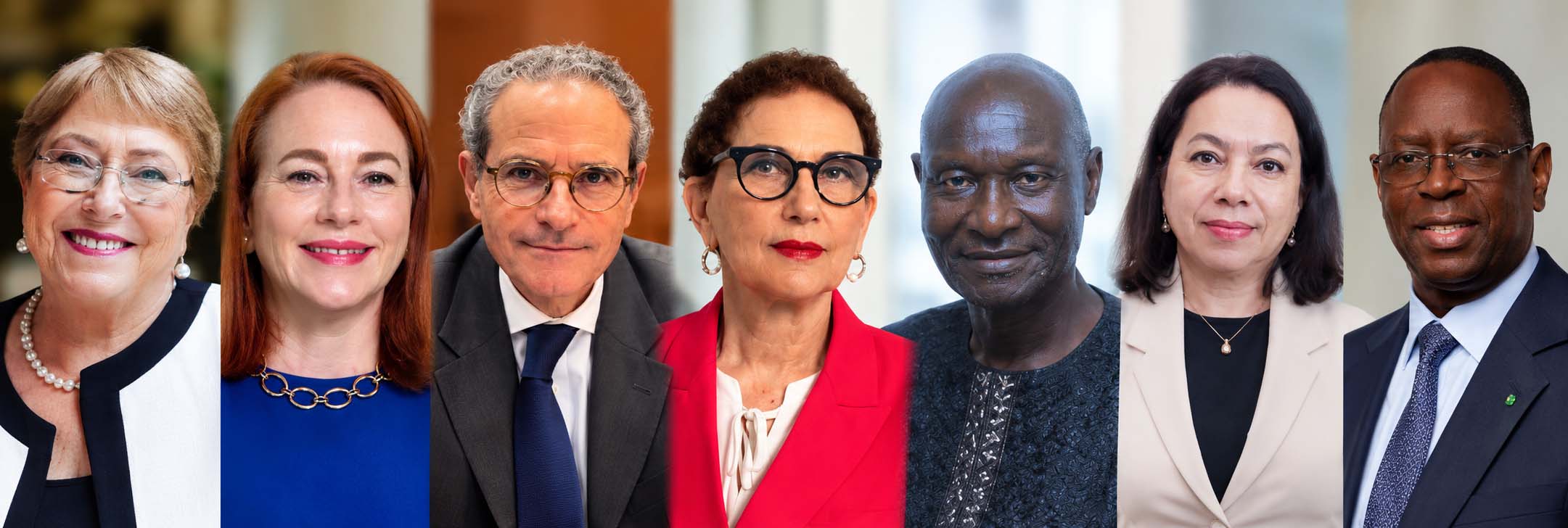
Beyond Grynspan, the current field includes Carolyn Rodrigues-Birkett of Guyana, Rafael Grossi of Argentina, former Senegalese President Macky Sall, Ecuadorian candidates Ivonne A-Baki and María Fernanda Espinosa, and Ugandan diplomat Olara Otunnu.
Grossi currently heads the International Atomic Energy Agency (IAEA), while Rodrigues-Birkett is Guyana’s representative in the UN system. Espinosa is a former president of the UN General Assembly and former Ecuadorian foreign minister.
The candidates bring different diplomatic and political backgrounds to the contest, but the latest poll underscores the difficulty of finding a nominee acceptable to all five permanent members.
The results also leave open questions about regional representation and the long-standing calls for a woman to lead the organization. The United Nations has never had a female Secretary-General since its establishment in 1945.
How the UN Secretary-General Is Selected
The UN Secretary-General is appointed by the General Assembly upon the recommendation of the Security Council.
Under the established procedure, a candidate must obtain at least nine affirmative votes in the 15-member Security Council and must not receive a veto from any of the five permanent members.
The permanent members are China, France, Russia, the United Kingdom and the United States. Their veto powers mean that even a candidate who attracts substantial support from the other council members can be blocked from advancing.
The informal straw polls are designed to assess candidates’ levels of support before the council proceeds to a formal recommendation. Members anonymously indicate whether they “encourage” or “discourage” a candidate or have “no opinion”.
The use of different-coloured ballots in the latest round provides a clearer indication of whether opposition comes from a permanent member. However, an informal “discourage” vote is not itself a formal veto, and diplomatic positions may change during subsequent negotiations.
Once the Security Council agrees on a nominee, the candidate’s name is submitted to the General Assembly for appointment.
Regional Rotation and Calls for Female Leadership
Traditionally, the selection of the Secretary-General has been influenced by the principle of regional rotation, although the UN Charter does not prescribe a formal rotation system.
Under this convention, Latin America and the Caribbean are widely viewed as the region whose turn it is to produce the next Secretary-General.
The current field includes several candidates from the region, notably Grynspan, Grossi, Rodrigues-Birkett, A-Baki and Espinosa. Sall and Otunnu represent Africa.
There have also been growing calls for the UN to appoint a woman to the position for the first time. However, neither regional expectations nor calls for gender representation override the Security Council’s formal voting requirements.
Guterres’ Departure Adds Urgency
The selection process is unfolding as António Guterres approaches the end of his second five-year term on December 31, 2026.
His successor will inherit an organization facing international conflicts, diplomatic divisions, financial pressures and calls for institutional reform.
The latest poll highlights the challenge facing council members as they seek a candidate capable of securing the necessary support amid competing national interests.
With the current field still facing opposition from permanent members, further consultations and informal ballots are expected to play an important role in determining the direction of the race.
For now, the outcome remains unresolved, and the possibility of additional candidates entering the contest has not been ruled out.