President Bola Tinubu’s directive for transportation fares to begin falling from October 1 through the deployment of Compressed Natural Gas-powered buses has yet to translate into widespread fare reductions across several Nigerian states.
Findings across the country showed that while some state governments have introduced subsidized, free or cheaper transportation services using CNG and electric vehicles, millions of commuters continue to depend on commercial buses whose fares remain largely unchanged.
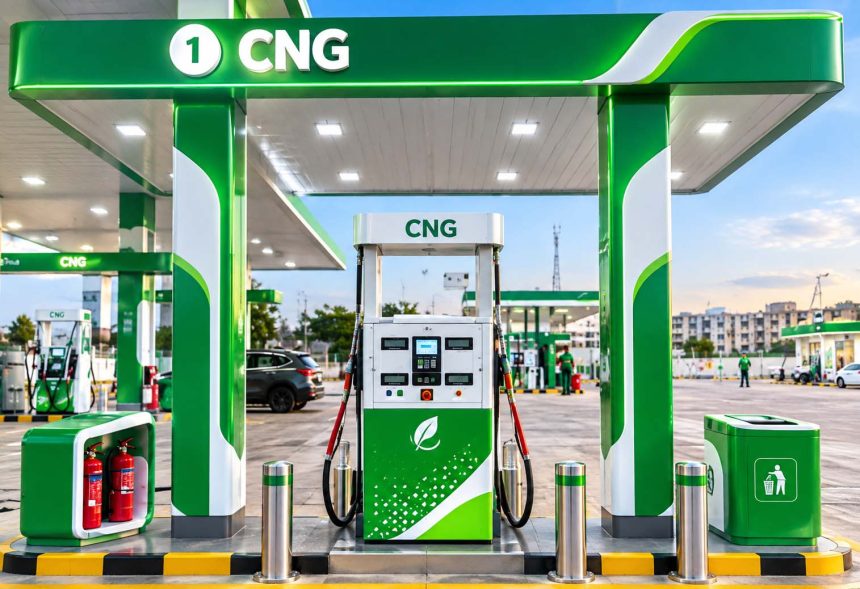
The situation has been attributed to several challenges, including the limited availability of CNG buses, inadequate refueling infrastructure, high vehicle maintenance costs, expensive spare parts and the absence of conversion centres in some states.
The affected states include Enugu, Anambra, Delta, Imo, Sokoto, Kebbi, Jigawa, Gombe, Edo, Plateau, Ondo, Osun, Oyo and Ogun.
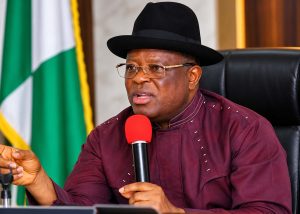
Tinubu had, on September 19, directed state governments to ensure that savings from cheaper CNG-powered transportation were passed on to Nigerians through lower fares beginning October 1.
More Read

The President made the call while providing an update on the National Affordable CNG Transit Programme, which was established following his August 27 meeting with the 36 state governors.
According to Tinubu, the objective agreed with the governors was to ensure that Nigerians began experiencing “measurable reductions in transportation costs” from October 1.
He urged states to work with transport unions and commercial operators, support vehicle conversion and fleet deployment, facilitate the required infrastructure and ensure that the savings from cheaper energy reached commuters through lower fares.
However, the Presidential Initiative on Compressed Natural Gas and Electric Vehicles said the October 1 date was not intended to mean that every state would reduce fares simultaneously.
The Chairman of the initiative, Ismaeel Ahmed, said several states, including Borno, Kaduna, Zamfara and Ebonyi, had already started recording reductions through the deployment of CNG and electric vehicles.
Ahmed explained that October 1 was the point from which the Federal Government would begin monitoring the implementation of fare reductions on routes where CNG and electric vehicles were being deployed.
He said fare reductions had already commenced on some routes before the October 1 target.
According to him, Abuja has operated CNG buses on several high-traffic routes, while Lagos has begun expanding its CNG transport programme following the donation of 20 CNG buses to the Lagos Metropolitan Area Transport Authority.
He also cited Kaduna, where CNG buses have reportedly contributed to significant fare reductions over the past two years.
More Read

In Zamfara, 100 electric taxis have been launched, while Ebonyi provides free transportation for some categories of residents, including civil servants and students.
Borno has also introduced electric vehicles, with Ahmed saying fares on some routes had fallen dramatically compared with conventional commercial transport.
Despite these examples, however, the Federal Government acknowledged that the programme had not yet reached every part of the country.
Commuters in Anambra, Delta, Imo still pay high fares
In Anambra State, commuters continued to pay existing fares on October 1, with a trip from Upper Iweka to Oba costing about N700 and Awka to Onitsha around N2,000.
Some drivers reportedly said they were unaware of the Federal Government’s CNG buses, while concerns were also raised over the availability of functioning gas stations.
A commercial transport operator, Uche Daniel, blamed poor roads, expensive spare parts and vehicle maintenance costs for the inability of operators to reduce fares.
In Delta State, transport operators similarly reported no reduction in fares.
Only five CNG-branded buses were observed parked at the Commissioner for Transport’s lodge in Asaba, while the Chairman of the NURTW Summit Motor Park, Emeka Okoro, said the union had not received any CNG buses.
“We cannot reduce transport fare when the cost of buying fuel is still high,” Okoro said.
In Imo State, commercial transporters also said they were yet to receive Federal Government CNG buses.
A driver said passengers were paying as much as N4,500 from Owerri to Akokwa and N9,000 from Owerri to Awka.
Northern states face similar challenges
In Sokoto and Kebbi states, fares also remained largely unchanged.
Passengers travelling from Sokoto to Kebbi continued to pay between N5,000 and N6,000, while trips to Kano or Kaduna cost around N20,000 on commercial vehicles.
In Kebbi, commercial buses charged approximately N5,000 for the Sokoto route, although state-owned vehicles offered a lower fare of N3,500.
In Jigawa State, passengers at Dutse Central and Shuwarin motor parks said fares had not changed.
A passenger travelling to Kano, Isa Hamisu, said he paid N3,500 on October 1, the same amount he had paid the previous week.
However, the state chairman of NARTO, Bello Usman Dunaro, disclosed that about 100 vehicles belonging to members of the association had been converted to CNG under the government initiative.
He said the objective was to reduce transportation costs and that implementation was still ongoing.
In Gombe State, commuters similarly reported no significant change in fares.
The Managing Director of the Gombe State Transport Service, Dr Sani Sabo, said the agency was exploring alternatives to prevent fares from rising further and was working towards converting some buses to CNG.
Edo, Plateau and Ondo await wider CNG rollout
In Edo State, short-distance journeys in Benin remained between N200 and N300, while longer trips cost between N500 and N600.
Even some vehicles that had already been converted to CNG had not reduced their fares, with transport operators citing expensive spare parts and inadequate gas infrastructure.
The Edo State Government, however, announced plans to launch 50 52-seater CNG buses later in the month.
In Plateau State, commercial fares in Jos also remained unchanged.
While government-supported metro buses continued to charge N200, commuters using commercial vehicles reported paying significantly more on some routes.
The state government said its subsidised transport scheme was already assisting about 13,000 commuters daily, while plans were also underway to establish a CNG and hybrid vehicle conversion centre in Jos.
Ondo State also recorded no immediate reduction in commercial transport fares, with some drivers saying they were unaware of any CNG buses being deployed.
The state government said it was working on conversion centres and additional gas outlets.
Enugu records cheaper fares — but coverage remains limited
Enugu State presented a different picture, with government-owned CNG buses charging a flat fare of N300.
However, their limited routes and operating hours have restricted their impact.
A journey from Emene to Old Park, for instance, costs about N600 on regular commercial buses compared with N300 on the government CNG buses.
The buses mainly operate on major routes during morning and evening periods, meaning commuters travelling outside those hours often have to rely on more expensive commercial vehicles.
The state government had previously rolled out 100 CNG mass transit buses from an acquisition plan of 200 units.
Kaduna reports significant savings
Kaduna State has recorded some of the most visible benefits from its CNG-powered mass transit programme.
The state government operates free CNG-powered mass transit services on selected routes.
It has deployed 100 CNG buses across eight routes and approximately 200 bus stops.
According to the state government, the buses carried about 3.2 million passengers during their first year and saved commuters more than N3.5bn in transportation costs.
However, commuters outside the designated CNG routes continue to depend on commercial vehicles, where fares remain higher.
Oyo and Ogun yet to record immediate reductions
In Oyo State, fares on major routes in Ibadan remained at levels introduced after the increase in petrol prices.
The Ojoo-Mokola route, for instance, remained N600 compared with N500 before the latest petrol price increase, while Ojoo-Iwo Road cost between N400 and N500.
In Ogun State, there was also no immediate reduction.
A journey from Kuto to Ijebu Ode remained N3,500, while Kuto to Ita Oshin cost between N600 and N700. The Kuto-Sagamu route remained N2,000 and above.
Transport operators blamed rising fuel prices, maintenance expenses and general operating costs.
The Ogun State Government, however, said it would announce further interventions to cushion the impact of transportation costs.
Federal Government promises wider rollout
Despite the mixed implementation across the country, Ahmed said the Federal Government would continue to expand the programme.
He acknowledged that the initiative had not yet reached every community but said efforts were underway to extend CNG and electric transportation to more routes and high-traffic corridors.
The developments highlight a significant gap between the Federal Government’s policy objective of reducing transportation costs through alternative fuels and the experience of many commuters who continue to pay existing or increased fares.
While some states have already introduced free or subsidized CNG and electric transport services, the effectiveness of the nationwide initiative will depend largely on the availability of vehicles, refueling infrastructure, conversion facilities and the extent to which transport operators pass fuel savings on to passengers.