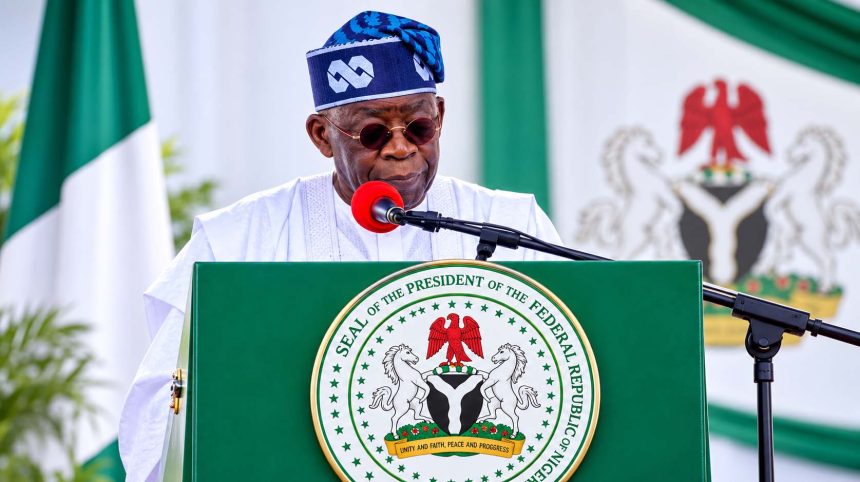
President Bola Tinubu has nominated four national commissioners and two resident electoral commissioners to the Independent National Electoral Commission (INEC), urging the Senate to expedite their confirmation as preparations gather momentum for the 2027 general elections.
The nominations were announced on Friday by the President’s Special Adviser on Information and Strategy, Bayo Onanuga, and are aimed at filling vacancies arising from the expiration of the tenures of serving commissioners.
The nominees are expected to undergo scrutiny by the Senate before their appointments can be confirmed.
Among those nominated is Professor Mustapha Aliu, who is expected to replace Professor Abdullahi Zuru as the national commissioner representing the North-West geopolitical zone. Bashir Muhammed Umar has also been nominated to replace Professor Muhammad Adamu as the North-Central representative.
In the South-West, President Tinubu nominated the Resident Electoral Commissioner (REC) in Osun State, Mrs Oluwatoyin Babalola, as a national commissioner. She is expected to succeed Professor Cornelius Ajayi, whose tenure expires on October 24.

The President also reappointed Dr Bala Bila as the national commissioner representing the North-East geopolitical zone.
For the resident electoral commissioner positions, Tinubu nominated retired permanent secretary, Dr Samuel Akinjide Akinleye, to serve as REC in Ekiti State. Zahradden Basiru Sanusi, from Jigawa State, was nominated to replace Professor Saidu Ahmed Babura.
The nominations come as INEC intensifies preparations for the 2027 general elections, placing renewed attention on the leadership, institutional readiness and operational capacity of the electoral body ahead of the crucial polls.
More Read

President Tinubu has urged the Senate to expedite the confirmation process, citing the approaching elections as a key reason for the urgency.
The Senate is expected to examine the credentials and suitability of the nominees before deciding on their confirmation. The appointments will take effect upon the completion of the required scrutiny and confirmation process.
The development marks another step in preparations for the 2027 elections, with the composition of INEC remaining central to the administration of the electoral process and public confidence in Nigeria’s democratic institutions.