President urges local councils to improve healthcare, education and rural infrastructure as questions persist over direct access to federal allocations
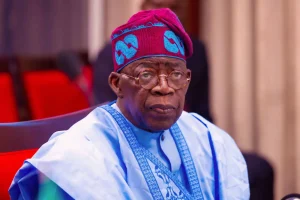
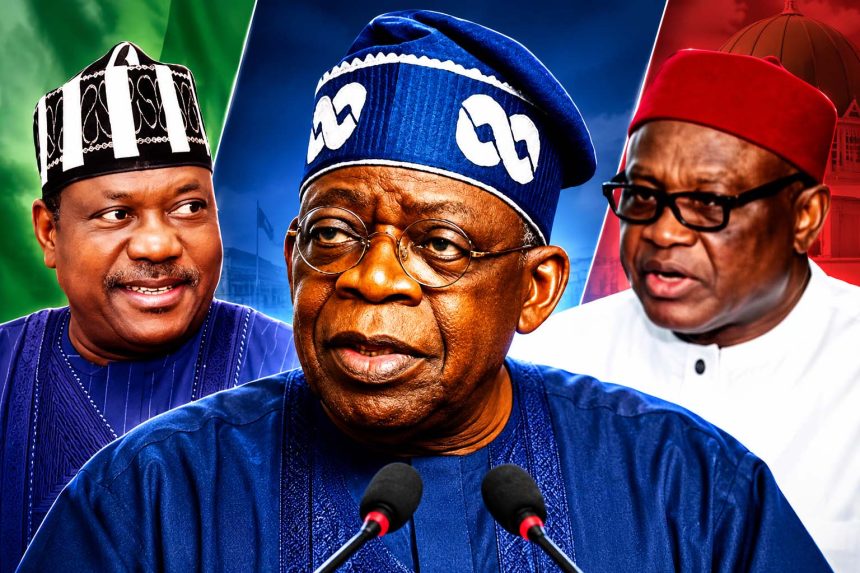
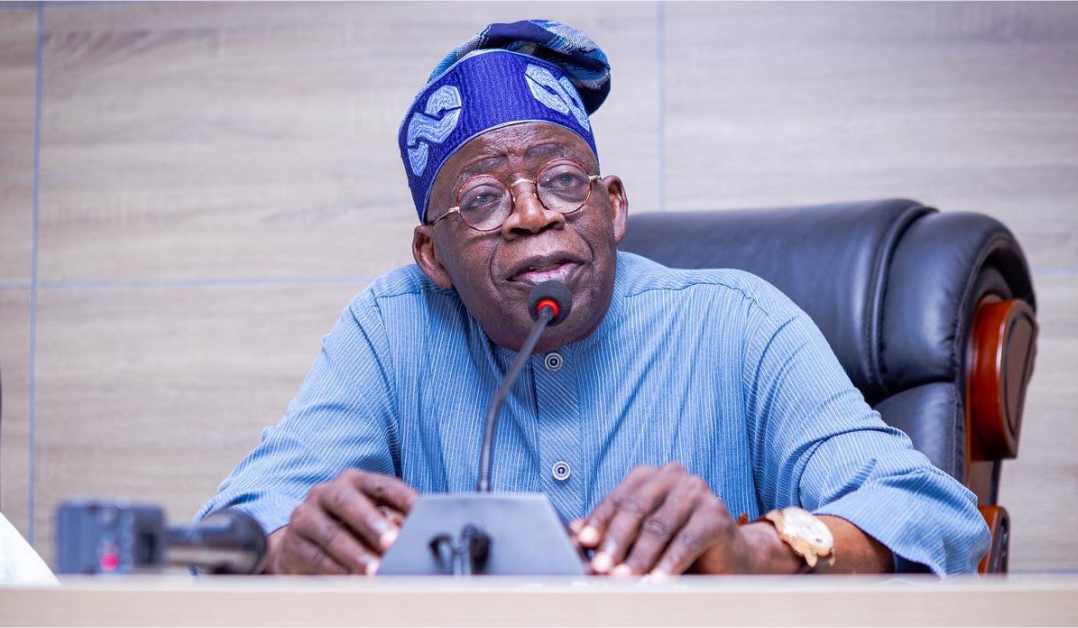
President Bola Ahmed Tinubu has challenged chairmen of Nigeria’s 774 local government areas to translate financial autonomy into tangible development at the grassroots, amid continued concerns over the control and disbursement of council funds by state governments.
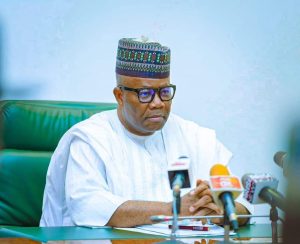
Tinubu, represented by the Secretary to the Government of the Federation, Senator George Akume, gave the directive on Tuesday at the inaugural Annual National Conference of Council Chairmen in Abuja.
The President described local government autonomy as a means to improve public service delivery rather than an end in itself, urging council leaders to demonstrate measurable progress in primary healthcare, basic education, rural roads, potable water, food security and grassroots livelihoods.
However, the presidential directive has drawn criticism from some political stakeholders who argue that many councils still lack independent access to their statutory allocations, despite the Supreme Court’s July 11, 2024, judgment affirming local government financial autonomy.
The judgment directed that federal allocations be paid directly to local governments, but concerns remain over the extent to which the ruling has been implemented across the federation.
Chief Chekwas Okorie, a political stakeholder, described Tinubu’s directive as political posturing, arguing that the Federal Government had not done enough to ensure compliance with the court ruling.
He questioned the timing of the President’s appeal, saying it came just months before an election, and maintained that council chairmen could not be expected to deliver meaningful results without control over their finances.

State governments accused of retaining control over council funds
Investigations cited in the report across Osun, Benue, Abia and other states indicate that state governments continue to exercise significant influence over local government finances, with joint project arrangements and other mechanisms reportedly limiting councils’ independent control of their allocations.
In Osun State, the implementation of local government autonomy remains complicated by legal and political disputes. The opposition All Progressives Congress (APC) is pursuing court action over the tenure of its chairmen, alleging that they were unlawfully removed.
Prof. Tunji Ogunyemi, a lawyer and public affairs analyst, argued that constitutional amendments were necessary to achieve full autonomy. He specifically pointed to Sections 162 (5), (6) and (7) of the Constitution, which deal with local government funding and related financial arrangements.
Ogunyemi criticised the Joint State and Local Government Account (JAAC), describing it as unnecessary and arguing that it undermines the Supreme Court’s decision on direct allocations.
He also raised concerns about state influence over local government financial administration, noting that directors of finance are appointed by governors and that existing legal and administrative arrangements restrict councils’ ability to operate independently.
Ogunyemi further called for changes to the electoral framework, proposing that the National Judicial Council, rather than the President, should appoint a retired justice to oversee local government elections.
However, Osun State ALGON Chairman, Hon. Abiodun Idowu, maintained that autonomy was operational in the state, although litigation had affected funding arrangements.
In a contrasting position, the state Commissioner for Local Government and Chieftaincy Affairs, Hon. Dosu Babatunde, criticised the distribution of motorcycles and patrol vehicles by former council chairmen, describing the actions as political manipulation and financial illegality.
ADC chieftain in Lagos, Tunji Shelle, also questioned whether local governments were actually receiving their allocations directly, asking how citizens could hold officials accountable when the handling of public funds remained unclear.
Benue chairmen cite ongoing infrastructure projects
In Benue State, however, some local government chairmen reported progress in infrastructure development under the current state administration.
Hon. Justin Shaku, chairman of Katsina-Ala Local Government Area and state ALGON chairman, said autonomy was working under Governor Hyacinth Alia.
Shaku pointed to the construction of the 21-kilometre Yooyo Road and the renovation of the council secretariat as examples of ongoing development activities in his area.
He nevertheless called for a review of the revenue-sharing formula among the three tiers of government, proposing that local governments receive 40 per cent, states 35 per cent and the Federal Government 25 per cent.
According to Shaku, a greater share of public revenue should go to local councils because many rural residents have limited access to state and federal institutions.
He also identified insecurity and inadequate funding as major obstacles to local development, urging closer cooperation between councils and security agencies.
Other council chairmen in Benue also highlighted infrastructure projects. Ado, Guma and Ohimini council leaders, Sunday Oche, Maurice Orwough and Gabriel Adole, respectively, cited investments in roads, security equipment and other public infrastructure.
In Guma, the report said ₦4 billion had been earmarked for the Gbajimba secretariat road and security vehicles. In Ado, ₦2.8 billion was allocated for roads, alongside a ₦1.2 billion counterpart contribution under the Rural Access and Agricultural Marketing Project (RAAMP) for solar lighting.
Otukpo Chairman Maxwell Ogiri also cited projects in the town as evidence of local government spending on development.
Abia councils still operate under joint account system
In Abia State, the report found that full financial autonomy had yet to take effect, with local government allocations still passing through the Joint State and Local Government Account.
Under the arrangement described in the report, the state government adds 10 per cent of its internally generated revenue before distributing funds to councils. However, officials who spoke anonymously said local governments remained far from receiving their federal allocations independently.
The officials alleged that the state government continued to control council finances, including salary payments, while many development projects were executed jointly, limiting the councils’ ability to determine their own spending priorities.
One council official said direct access to funds would have enabled local governments to clear outstanding staff leave allowances and gratuities that had accumulated over the years.
The sources also alleged that the state government had taken control of important local revenue streams, including market and signage fees, making it difficult for councils to perform their statutory responsibilities.
Jigawa emerges as reported exception
While concerns persist in several states, Jigawa was identified in the report as an example of direct local government funding.
According to the state ALGON Chairman, Sibu Abdullahi, all 27 local government areas in Jigawa receive their monthly allocations from the Federation Account Allocation Committee (FAAC) directly into independent council accounts, bypassing the joint state and local government account system.
The report described Jigawa as the only state with verifiable end-to-end direct disbursement, while councils in 35 other states reportedly remained entangled in state-controlled financial arrangements.
The contrasting experiences have intensified calls for the Federal Government to enforce the Supreme Court’s ruling and ensure that local governments can independently manage their statutory funds.
Former President of the Kano Chamber of Commerce, AbdulKarim Daiyabu, questioned why local governments should not receive direct allocations when the federal and state governments already enjoy direct access to their respective funds.
He also called for greater accountability and urged lawmakers to hold the executive accountable for the implementation of court judgments.
Electoral reforms also feature in autonomy debate
Beyond the question of funding, stakeholders have argued that financial autonomy must be accompanied by reforms to local government elections and oversight.
Some critics maintain that state-controlled electoral commissions weaken accountability because governors can influence the electoral process and the political fortunes of council chairmen.
Shelle argued that the dominance of a governor’s political party among local government chairmen makes it difficult to establish effective checks and balances.
He questioned whether council leaders could independently challenge governors when their political positions depend on the state’s ruling party.
The report also highlighted concerns about caretaker committees, delayed local government elections and the influence of state governors over the composition and operations of State Independent Electoral Commissions (SIECs).
Some reform advocates have proposed transferring responsibility for local government elections to the Independent National Electoral Commission (INEC) or establishing a new National Independent Local Government Electoral Commission.
However, the proposal has not attracted unanimous support.
Shelle expressed reservations about INEC’s ability to conduct credible local government elections, while Okorie also opposed placing the responsibility entirely on the national electoral body.
Instead, Okorie advocated reforms to make state electoral commissions genuinely independent, alongside the use of electronic technology such as the Bimodal Voter Accreditation System (BVAS) to strengthen electoral credibility.
He also argued that local government elections should not depend exclusively on the voters’ register maintained by INEC.
Stakeholders demand enforcement of Supreme Court ruling
The debate over local government autonomy has raised broader questions about accountability, constitutional implementation and the relationship between the three tiers of government.
Stakeholders interviewed in the report argued that without independent access to public funds, council chairmen may struggle to deliver essential services, including healthcare, education, sanitation, rural roads and agricultural support.
They also warned that the lack of transparency surrounding local government allocations makes it difficult for citizens to determine whether poor service delivery results from inadequate funding, interference by state governments or financial mismanagement by council officials.
Okorie questioned why the ruling party, which he said controls a majority of state governments and has a majority in the National Assembly, had not secured full implementation of the Supreme Court judgment.
He maintained that the court’s decisions must be respected and that the Federal Government should take steps to ensure compliance.
Daiyabu, meanwhile, called for a judicial committee with the authority to investigate alleged misappropriation of local government funds and recover public money found to have been looted.
He also stressed the importance of citizens electing public officials who would prioritise the needs of their communities.
As political campaigns approach, local government autonomy is expected to remain a significant issue in discussions about governance and public accountability.
For now, Tinubu’s directive has renewed attention on the responsibilities of council chairmen, but the central question remains whether local governments across the country will have the financial independence and institutional authority required to deliver the services their communities need.