Nigerian billionaire and President of the Dangote Group, Aliko Dangote, has accused local petroleum marketers and international oil companies of fuelling protests against his proposed $16 billion refinery in Lamu, Kenya.
Dangote made the allegation following the groundbreaking ceremony for the massive refinery, which he performed alongside Kenyan President William Ruto on Wednesday, September 30, 2026. The ceremony went ahead despite a Kenyan court order restricting activities on part of the disputed project site.
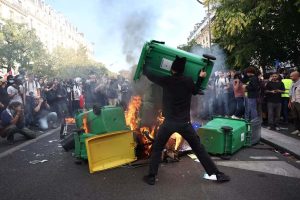
Speaking on the BBC’s Focus on Africa programme, Dangote dismissed the protests as “games played by local marketers and international players,” insisting that opposition would not derail the project.
The refinery, which is expected to cost about $16 billion, is designed to process 700,000 barrels of crude oil per day and is targeted for completion by 2030. If completed as planned, it would become one of Africa’s largest refining facilities and the largest industrial project by refining capacity in East Africa.
Dangote also rejected claims that his company had taken more land than was required for the project, saying the refinery was being developed on land allocated by the Kenyan Government.
More Read

“They said some people are demonstrating; demonstrating about what?” Dangote asked, according to the BBC.
He questioned why residents would protest against a project he said would bring significant economic opportunities to the region.
More Read

Court dispute over land
The refinery project is facing a legal challenge from residents of Lamu County. A group of 133 residents has approached the Kenyan courts over the land earmarked for the development.
The residents have raised concerns about land ownership, compensation, possible displacement and the impact of the project on their livelihoods. Environmental campaigners have also called for greater transparency over the project’s environmental assessment and proposed mitigation measures.
The Malindi Environment and Land Court ordered that the status quo on the disputed property be maintained pending further proceedings. The matter is scheduled to return to court on October 14, 2026.
Despite the legal challenge, Dangote has maintained that the refinery project will proceed.
60,000 jobs expected
Dangote said the refinery could create approximately 60,000 jobs at the peak of construction, with local communities expected to benefit from employment and associated economic activities.
The project will also feature a 1,000-megawatt power plant, which is expected to supply electricity to the refinery and support other industries that could emerge around the facility.
More Read

Dangote described the Kenyan project as his largest proposed investment outside Nigeria and said the success of his refinery in Lagos could be replicated elsewhere on the continent.
“Lekki proved that it can be done, Lamu must prove that it can be repeated,” he said.

Regional investment
The groundbreaking ceremony attracted several African leaders, including the presidents of Uganda, Ethiopia, Togo and Benin, alongside President Ruto and Dangote. The project is expected to serve markets beyond Kenya, potentially supplying refined petroleum products across East Africa.
Dangote has also offered regional governments a combined 30 per cent stake in the refinery, according to Reuters. The project is expected to source crude from African producers and reduce the region’s reliance on imported refined petroleum products.
However, environmental groups and affected residents continue to demand answers on land rights, compensation, community participation and the project’s potential environmental impact.
For now, Dangote remains adamant that the refinery will move forward and be completed by 2030, even as the land dispute continues before the Kenyan courts.