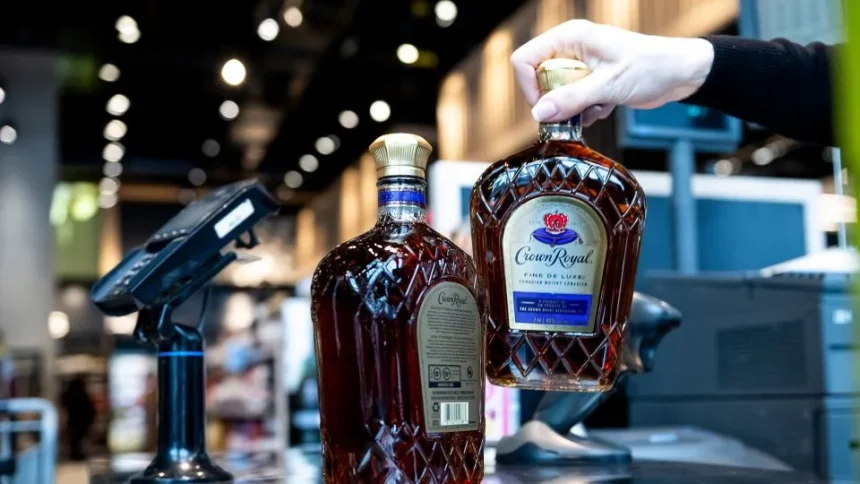
The ban affects about $800 million worth of Canadian alcoholic beverages imported into the United States last year, raising concerns over business losses, higher costs and further tensions between the two countries.
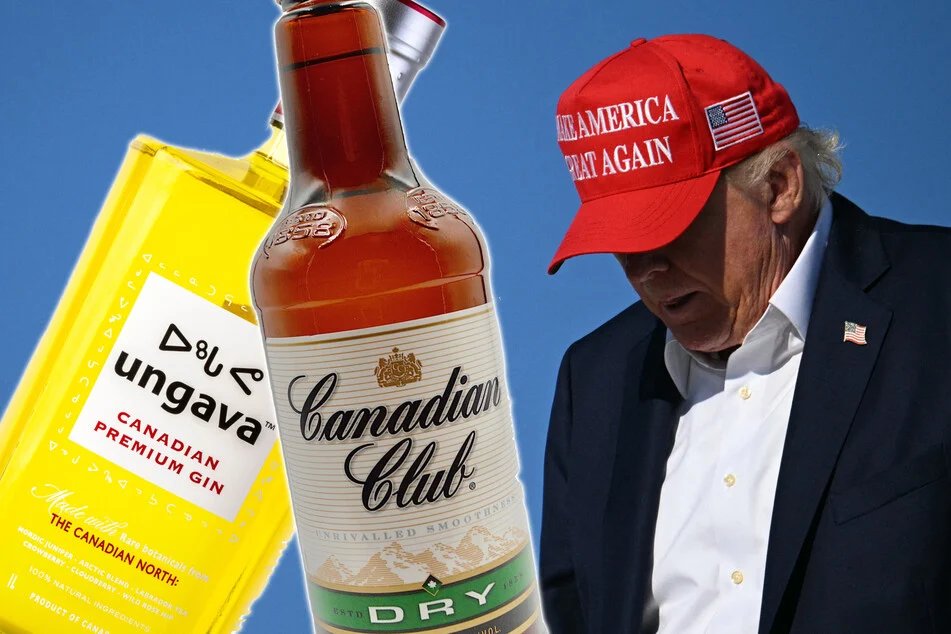
US President Donald Trump’s ban on Canadian alcoholic beverages took effect on Tuesday, September 29, 2026, marking a significant escalation in the growing trade dispute between the United States and Canada.
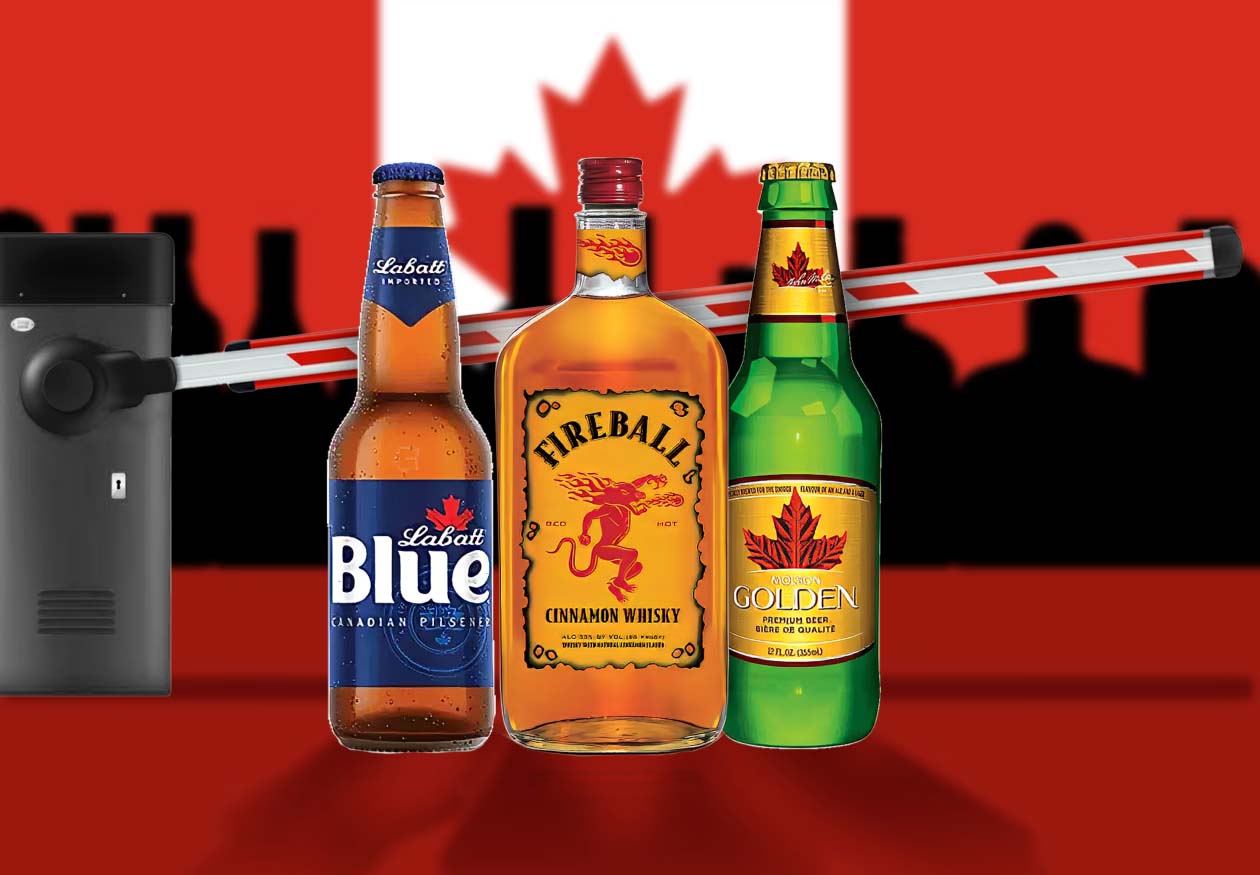
The unprecedented move targets hundreds of millions of dollars’ worth of Canadian alcohol imports and comes amid an intensifying series of retaliatory trade measures, including high tariffs and restrictions on American alcoholic beverages in several Canadian provinces.
According to the report, the United States imported approximately $800 million worth of Canadian alcoholic beverages last year. However, industry experts say American consumers may not immediately feel the impact of the ban, as businesses have had time to stockpile products ahead of its implementation, while certain exemptions and alternative supply arrangements could help limit disruptions.
The restrictions also come as Trump maintains that Canada will eventually seek a new trade agreement with Washington.
More Read

Speaking to reporters on Monday, Trump expressed confidence that the United States would emerge ahead in the dispute, predicting that Canadian officials would approach his administration within weeks to negotiate the removal of tariffs.
“They want to have a deal with us, they call us all the time. The problem is that they’ve treated the United States very unfairly,” Trump said.
He further predicted that Canada would propose removing all tariffs within the next three or four weeks. However, Canadian Prime Minister Mark Carney has not publicly indicated that his government intends to make such a proposal.
More Read

Exemptions offer limited relief to Canadian producers
Despite the broad scope of the ban, some Canadian alcoholic beverages may still enter the US market under specific conditions.
Canadian whisky and liqueurs, two of the country’s major alcohol exports to the United States, are exempt when shipped in containers larger than four litres. These bulk shipments will also avoid the applicable tariffs under the exemption.
However, the arrangement presents logistical and financial challenges for manufacturers that typically sell their products in smaller bottles.
Companies may need to obtain larger containers, establish new bulk-shipping arrangements or rebottle their products in the United States. Such changes could increase operational costs and potentially lead to higher prices for consumers.
Crown Royal, one of Canada’s best-known whisky brands, appears particularly well-positioned to take advantage of the exemption. The company already ships whisky in bulk to the United States, where its products are bottled for the domestic market.
More Read

Nevertheless, the exemptions cover only a limited portion of Canadian alcoholic beverages, leaving many producers facing uncertainty over their access to American customers.
Trade tensions threaten businesses on both sides
The latest restrictions have drawn criticism from trade experts and industry representatives, who warn that the escalating dispute could hurt businesses in both countries.
Inu Manak, a senior fellow at the Peterson Institute for International Economics, described the ban as an unusual departure from established American trade policy.
“Using import bans against an ally is unprecedented and a major deviation from US trade policy,” Manak said.
She argued that the restrictions were intended partly as a political signal to pressure Canadian negotiators into returning to the negotiating table.
However, she suggested that Carney was not necessarily under pressure to secure an agreement before the upcoming US midterm elections.
The escalating dispute has also prompted concerns from the American spirits industry, which relies on international trade both to sell its products abroad and to access imported beverages.
Chris Swonger, president and chief executive officer of the Distilled Spirits Council of the United States, expressed disappointment that the alcohol industry had become entangled in the broader political and economic confrontation.
“It’s really unfortunate our industry has gotten pulled into this,” Swonger said.
He added that American distillers prefer competing through product quality and consumer choice rather than tariffs and import restrictions.
Swonger also described the earlier Canadian provincial bans on American alcohol as an “unforced error” and expressed hope that the latest US restrictions would encourage both governments to resolve the dispute.
However, Manak offered a different perspective on the origins of the confrontation, noting that Canadian provinces introduced their restrictions in response to threatened US tariffs.
“In playground parlance, the United States started it. That was Canada responding,” she said.
The competing measures have created a cycle of retaliation that now threatens to disrupt established commercial relationships between the two neighbouring countries.
Liquor stores near border express concern
The impact of the ban is already a concern for liquor retailers operating near the US-Canada border, where Canadian products have long been popular with local consumers and cross-border shoppers.
A manager at a liquor store in Niagara Falls, New York, located less than five miles from the Canadian border, told CNN that the restrictions could create significant difficulties for the business.
The manager, who requested anonymity, said the store stocks a substantial quantity of Canadian alcohol and serves many Canadian customers.
“We have a lot of Canadian customers and a lot of Canadian liquor. This is not good for business,” the manager said, expressing concern about the restrictions and their implications for consumer choice.
In Port Huron, Michigan, another liquor store employee reported that Canadian whisky brands, including Crown Royal, Black Velvet and Rich and Rare, remain popular among customers.
However, the employee said the number of Canadian shoppers visiting the store had already fallen considerably over the past year.
The decline in cross-border shopping, combined with the new restrictions, could further complicate business operations for retailers in communities that traditionally benefit from trade and tourism between the two countries.
Trump invokes decades-old trade law
The Trump administration is relying on Section 338 of the Smoot-Hawley Tariff Act of 1930 to implement the import restrictions.
The legislation, enacted during the Great Depression era, gives the US president authority to impose tariffs of up to 50% or prohibit certain imports when another country is found to discriminate against American commerce.
The law has attracted renewed attention because no previous US president has used it in the same manner, leaving important questions about its interpretation and application unresolved by the courts.
The Trump administration alleges that Canadian policies have unfairly disadvantaged American businesses, providing grounds for the restrictions.
Beyond alcoholic beverages, the measures also affect certain Canadian dairy products, including whey, as well as motorcycles.
According to federal trade data cited in the report, the various bans collectively cover nearly $1 billion worth of goods imported from Canada in the previous year.
The administration’s reliance on the decades-old statute could lead to further legal and trade disputes, particularly if affected businesses or Canadian officials challenge the measures.
Canadian producers face significant export risks
While American retailers and distillers are concerned about the consequences of the trade dispute, Canadian alcohol manufacturers face substantial exposure to the US market.
According to the Distilled Spirits Council of the United States, approximately 93% of Canadian spirits exports went to the United States in 2025.
That dependence makes access to American consumers particularly important for Canadian distillers, many of whom could struggle to find alternative markets capable of absorbing their products.
Swonger warned that the ban could have devastating consequences for Canadian spirits producers.
“It’s going to be absolutely devastating for Canada and Canadian distillers,” he said.
Meanwhile, American distillers have already experienced significant losses from the retaliatory measures introduced by Canadian provinces in March 2025.
DISCUS reported that US spirits exports to Canada plunged by approximately 70% after provincial governments began removing American wine and spirits from store shelves.
The latest US restrictions threaten to deepen those losses, potentially affecting producers, distributors, retailers and workers throughout the cross-border alcohol industry.
Uncertainty over possible trade negotiations
Despite the implementation of the ban, the future of US-Canada trade relations remains uncertain.
Trump’s prediction that Canada will seek a deal in the coming weeks has raised the possibility of renewed negotiations, but no agreement has been announced.
The dispute highlights the growing economic consequences of retaliatory trade measures between two countries with deeply interconnected markets.
For now, American consumers may continue to find some Canadian alcoholic beverages on store shelves because of existing inventories, exemptions and alternative supply arrangements. However, prolonged restrictions could eventually reduce product availability and increase costs.
With both governments maintaining their positions and businesses facing mounting uncertainty, the dispute over alcoholic beverages has become another significant flashpoint in the wider US-Canada trade conflict.