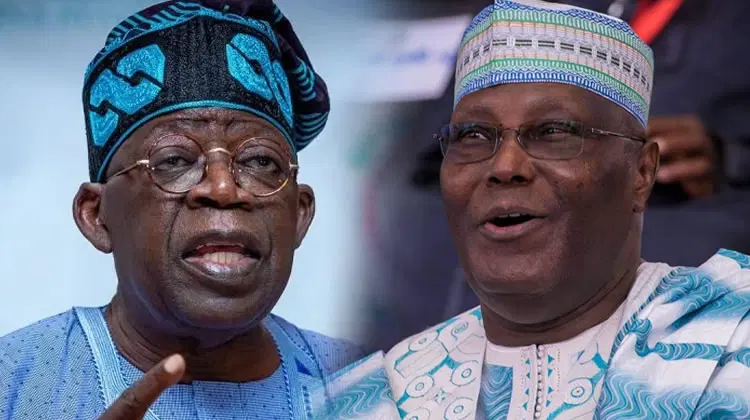
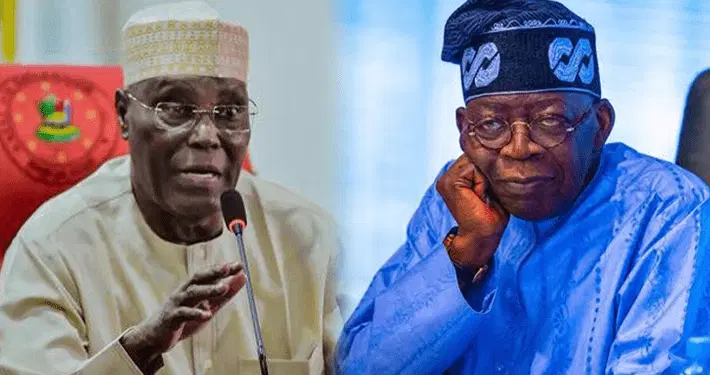
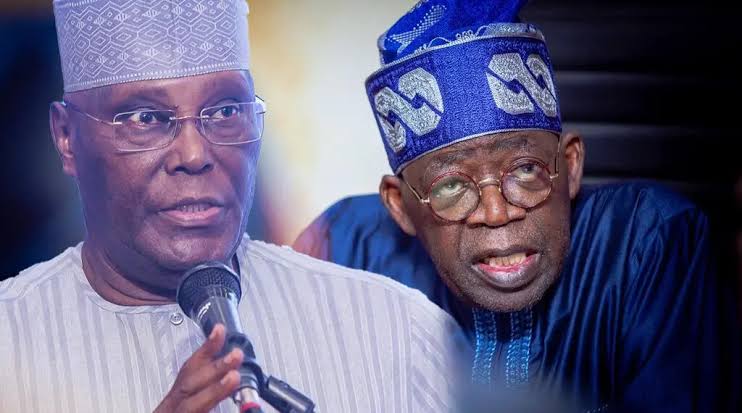
Abuja – African Democratic Congress (ADC) presidential candidate, Atiku Abubakar, has criticized the Tinubu administration’s defence of its economic policies, describing comments by the Chairman of the Presidential Committee on Fiscal Policy and Tax Reforms, Taiwo Oyedele, as an attempt to rewrite the country’s economic realities.
In a statement issued on Sunday through his Senior Special Assistant on Public Communication, Phrank Shaibu, Atiku questioned the government’s claims regarding improved workers’ welfare, debt management, subsidy savings, and fiscal reforms.
On workers’ welfare, Atiku argued that the Federal Government has yet to fully implement the new minimum wage, noting that the 40% peculiar allowance expected to take effect from May 1, 2026, remains unpaid.
Addressing public debt, he cited Central Bank of Nigeria (CBN) figures, claiming that the Federal Government’s debt exposure to the apex bank increased from about ₦26.9 trillion when President Bola Tinubu assumed office in May 2023 to over ₦40.38 trillion. According to Atiku, this indicates that government debt has been restructured rather than reduced.
He also challenged the government’s assertion that savings from fuel subsidy removal are funding the Nigerian Education Loan Fund (NELFUND), pointing to an earlier statement by the fund’s Chief Executive Officer that the scheme received a ₦50 billion allocation from funds recovered by the Economic and Financial Crimes Commission (EFCC).
On debt servicing, Atiku argued that the administration’s borrowing strategy, rather than high interest rates alone, has significantly increased debt servicing costs and limited access to credit for businesses.
He further cited rising food prices, persistent inflation, business closures, unemployment, naira depreciation, and increasing poverty as evidence that Nigerians continue to face severe economic hardship.
Atiku concluded by urging government officials to focus on addressing the country’s economic challenges with transparency and accountability instead of relying on what he described as media spin.