The Federal Government has approved more than ₦208 billion in housing and mortgage loans, with over ₦120 billion disbursed to support housing construction, mortgage financing, home renovation, co-operative housing and rent-to-own initiatives, as part of efforts to address Nigeria’s housing deficit.
The Federal Government has intensified efforts to bridge Nigeria’s housing gap by expanding access to affordable housing finance, with the Federal Mortgage Bank of Nigeria (FMBN) approving billions of naira in loans to help Nigerians secure decent homes.
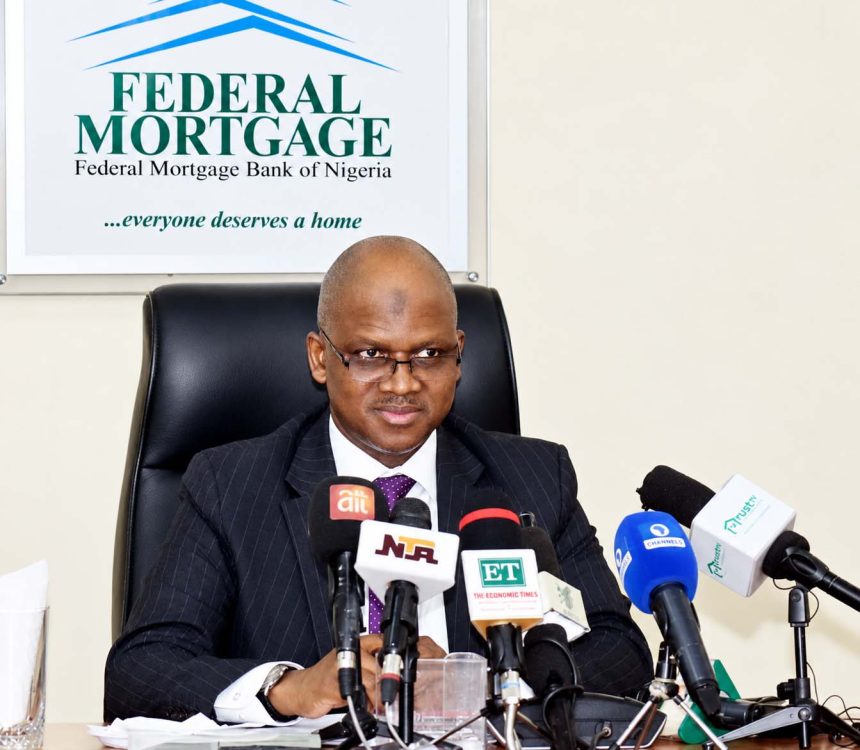
Managing Director and Chief Executive Officer of FMBN, Shehu Usman Osidi, disclosed this during the commemoration of the 2026 World Habitat Day and World Cities Day in Abuja.
Osidi explained that the housing finance interventions were designed to broaden the opportunities available to Nigerians seeking affordable and decent accommodation, particularly amid the country’s housing challenges.
According to him, the bank recorded significant progress under the 2025 Presidential and Ministerial Deliverables, financing 6,911 affordable housing units, representing 96 per cent of its annual target of 7,200 units.
More Read

He said the achievements demonstrated FMBN’s continued commitment to providing reliable, transparent and inclusive housing finance solutions to Nigerians.
As part of efforts to extend housing opportunities to Nigerians living abroad, Osidi announced that the bank had formally launched the Diaspora National Housing Fund (NHF) Mortgage Loan.
The initiative is expected to enable Nigerians in the diaspora to invest in affordable housing in their home country, providing another pathway towards homeownership.
More Read

Osidi also disclosed that the bank would commence the implementation of a non-interest mortgage product before the end of October 2026. The initiative is designed to accommodate NHF contributors who prefer ethical financing options.
He added that the bank would also introduce a rent assistance product aimed at easing the burden of rental payments for Nigerian federal civil servants while providing a pathway towards eventual homeownership.
“As we commemorate World Habitat Day and World Cities Day, FMBN will continue to work with the Federal Ministry of Housing and Urban Development (FMHUD), and other stakeholders to expand access to housing finance and support the delivery of affordable homes,” Osidi said.
He urged stakeholders to renew their commitment to building resilient, inclusive and sustainable cities, stressing that access to adequate housing should be considered a right rather than a privilege.
FG Introduces Housing Reforms to Reduce Construction Costs
In his remarks, the Minister of Housing and Urban Development, Engineer Muttagha Darma, said the Federal Government was implementing reforms to strengthen housing institutions, improve service delivery and create a more favourable environment for investment in the housing sector.
Darma explained that the reforms included improved coordination among federal housing agencies, strengthened land administration, more effective physical planning and better alignment of housing delivery with national urban development priorities.
More Read

He further disclosed that the ministry was promoting local building materials manufacturing hubs to reduce construction costs, stimulate domestic production and create employment opportunities.
The initiative is expected to support the development of the local construction industry while reducing reliance on imported building materials and improving the affordability of housing projects.
UN Calls for Greater Investment in Adequate Housing
Also speaking at the event, the United Nations Secretary-General, António Guterres, represented by Anacláudia Rossbach, highlighted the importance of adequate housing as a foundation for human dignity, security and opportunity.
She expressed concern that more than three billion people globally were denied access to adequate housing, despite housing being recognised as a universal human right.
Rossbach noted that over one billion people live in informal settlements and slums, while millions more experience homelessness or have been displaced by conflicts, natural disasters and climate change.
She emphasised that investment in adequate housing and the transformation of informal settlements could help reduce poverty, tackle inequality, strengthen climate resilience and promote peaceful and inclusive societies.
According to her, addressing the global housing challenge requires coordinated action at all levels of government, with national and local authorities developing effective policies and building strong partnerships.
Housing Affordability Remains a National Priority
Nigeria’s housing deficit, estimated at more than 15 million units, remains a major development challenge, with access to affordable homes constrained by financing difficulties, rising construction costs, land administration challenges and limited housing supply.
The Federal Government’s latest housing finance interventions, alongside planned reforms and new mortgage products, are intended to expand access to homeownership and improve housing affordability for different categories of Nigerians.
However, the impact of these measures will depend on effective implementation, sustained funding and the ability of eligible Nigerians to access the available financing.
As the country joins the global community to commemorate World Habitat Day and World Cities Day, stakeholders have reiterated the need for inclusive housing policies, sustainable urban planning and stronger partnerships to ensure that more Nigerians can access safe, decent and affordable homes.