China’s economy grew by 4.5% in the third quarter of the year, recovering from a three-year low as surging exports of high-tech products and rising global demand for artificial intelligence (AI) infrastructure helped support growth in the world’s second-largest economy.
Official data released by China’s National Bureau of Statistics showed that economic growth improved from the previous quarter, although it remained below the 5% expansion recorded between January and March.
The latest figures place China’s economic performance at the lower end of Beijing’s annual growth target of 4.5% to 5%, highlighting the challenges facing policymakers as they seek to strengthen domestic demand and sustain economic momentum.
Despite the improvement, analysts have warned that the country’s reliance on exports, persistent weakness in consumer spending and uncertainty surrounding global trade could complicate its economic outlook.

More Read

AI Boom and High-Tech Exports Support Growth
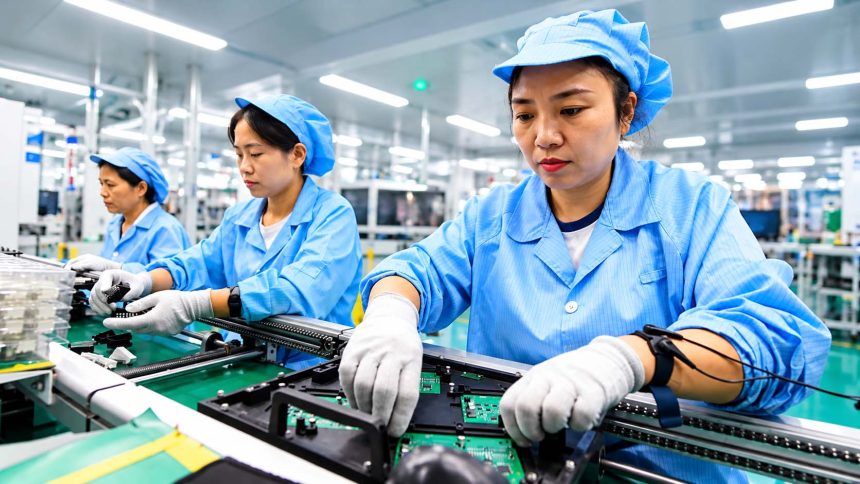
China’s technology industry has emerged as a major driver of economic growth, with international demand for computer chips and other components used in the construction of AI data centres helping to cushion the impact of sluggish domestic consumption.
Official figures showed that sales of high-tech goods increased by 14.3%, while production of batteries and industrial robots grew by more than 29%.
The strong performance of these industries has helped Chinese manufacturers maintain growth despite weak investment and subdued spending at home.
More Read

Sheana Yue, a researcher at Oxford Economics, said manufacturing and high-tech exports had provided significant support to the economy, even as domestic demand remained under pressure.
The growing appetite for AI-related technology has also helped Chinese businesses offset some of the economic difficulties arising from the prolonged downturn in the property sector.
China’s trade surplus, which measures the difference between the value of goods and services it sells abroad and what it purchases from other countries, is also on course to surpass the record $1.2 trillion recorded last year.
However, the growing export surplus has intensified concerns among Western economies, particularly the United States and the European Union, where manufacturers have raised concerns about competition from large volumes of relatively inexpensive Chinese products.
Property Crisis Continues to Weigh on the Economy
While exports and technology manufacturing have supported growth, China’s property sector remains a significant source of economic weakness.
Official data showed that property investment fell by more than 20% in the first nine months of the year compared with the same period a year earlier.
More Read

The sector has struggled to recover from a prolonged downturn caused by years of excessive borrowing, overbuilding and financial difficulties among private property developers.
The crisis has weakened confidence among households and businesses, while uncertainty over the future of the housing market continues to discourage investment.
Yue warned that there were still no clear signs that the property downturn would end soon, suggesting that the sector could remain a drag on economic activity.
The prolonged slump has also affected consumer confidence, alongside weak wage growth and high youth unemployment, leaving households more cautious about spending.
Trade tensions and geopolitical uncertainty have further contributed to consumer pessimism, making it more difficult for policymakers to stimulate demand through conventional economic support measures.
Beijing Introduces Measures to Stimulate Demand
In September, Chinese authorities announced a series of targeted support measures aimed at strengthening economic activity.
The initiatives included lower interest rates for some businesses and subsidies for property buyers, as Beijing sought to encourage investment, support the housing market and improve confidence.
However, the full effects of these measures have yet to become clear.
Dave Chia, an economist at Moody’s Analytics, said the impact of Beijing’s targeted business support policies was still uncertain.
Chia also highlighted the risks associated with China’s growing dependence on exports, warning that relying on a “single external engine” could leave the economy vulnerable to changes in international demand and global trade conditions.
The concern is particularly significant as governments increasingly reassess trade relationships and introduce measures to protect domestic industries from foreign competition.
Global Trade Tensions Cloud Economic Outlook
China’s export-led recovery comes amid growing trade tensions with major Western economies.
The United States and the European Union have expressed concerns about the competitiveness of Chinese manufacturers, particularly in industries where domestic production has expanded rapidly and prices remain relatively low.
Any escalation in trade restrictions or geopolitical disputes could affect Chinese exporters and weaken one of the economy’s most important sources of growth.
At the same time, uncertainty surrounding investment in AI infrastructure presents another potential risk.
Although demand for chips, batteries and other technology components has supported Chinese manufacturing, questions remain about whether the enormous sums being invested in AI infrastructure will ultimately generate the profits expected by companies.
A slowdown in AI-related spending could reduce demand for some of the products currently supporting China’s export performance.
China Faces Challenge of Balancing Growth
The latest figures underscore the uneven nature of China’s economic recovery. While high-tech manufacturing and overseas sales have helped sustain growth, weak household spending, declining property investment and uncertain business confidence continue to limit the strength of the domestic economy.
Beijing’s challenge will be to translate export-driven growth into a more balanced recovery that also benefits households, businesses and the property sector.
The government’s annual growth target remains within reach based on the latest reported figures, but sustaining that momentum may depend on the effectiveness of its support measures and the resilience of global demand.
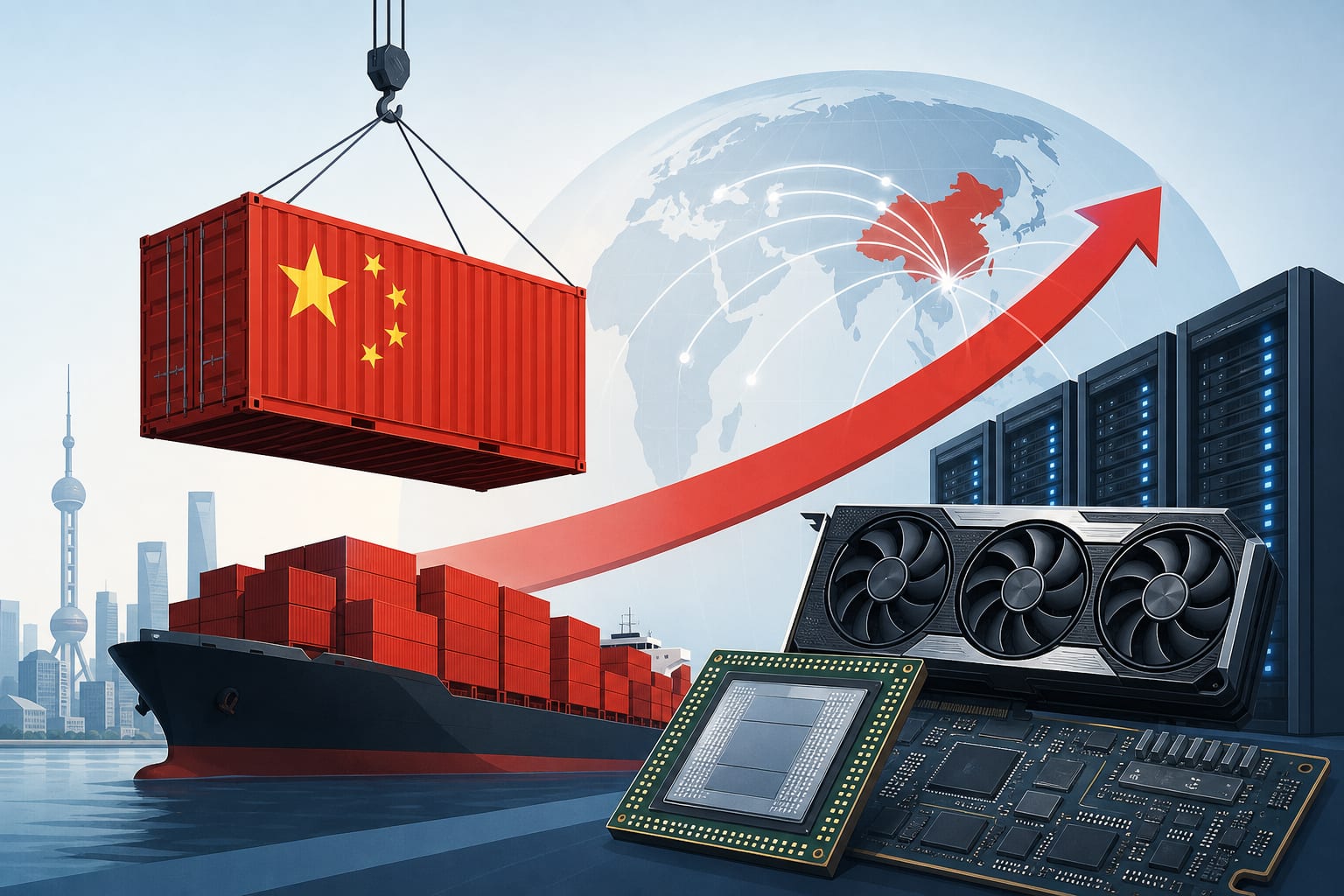
For now, China’s AI-related export boom is providing an important economic cushion. However, whether that momentum can be maintained will depend on developments in global trade, the future of AI investment and the government’s ability to restore confidence at home.