Masked Israeli settlers have attacked Palestinian farmers during the annual olive harvest in the occupied West Bank, setting olive trees ablaze, throwing stones and injuring civilians and journalists, amid growing concerns over escalating violence and threats to Palestinian livelihoods.
Abu Falah Attack Leaves Farmers and Journalist Injured
The latest incident occurred on Friday, October 16, 2026, in Abu Falah, a Palestinian village near Ramallah. According to Reuters, approximately 80 masked Israeli settlers entered an olive grove where Palestinian villagers had gathered to harvest olives. Some reportedly carried gas canisters, while others threw stones at the farmers. Witnesses also reported that olive trees were set on fire during the attack.
The violence forced Palestinian farmers to flee from parts of the grove as stones were thrown in their direction. Some villagers reportedly threw stones back in an attempt to defend themselves, further escalating the confrontation.
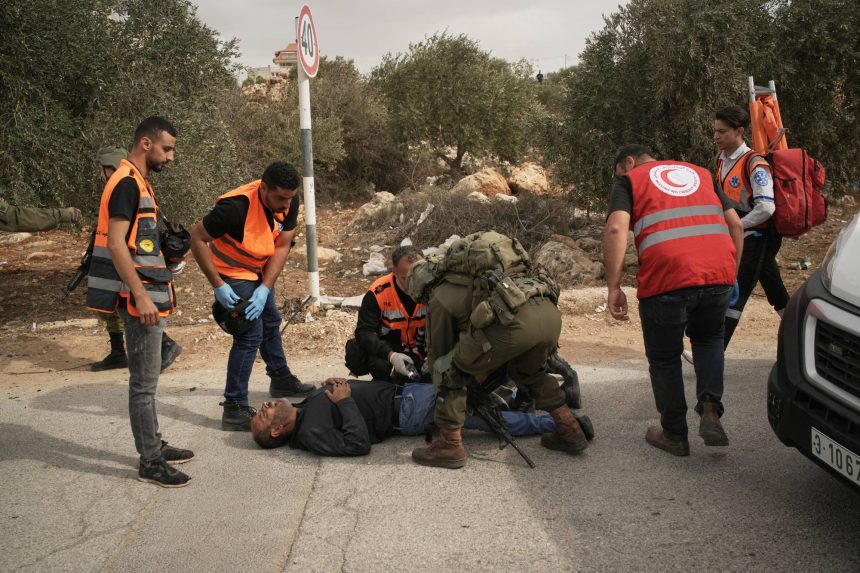
Palestinian medical personnel said at least two people were injured and taken to hospitals in the Ramallah area. Among those injured was Heidi Levine, a veteran photojournalist working for The Washington Post, who was covering the incident when she was attacked.
Levine said she was pushed to the ground and repeatedly kicked by the attackers. She later received medical treatment and was reported to be in stable condition. The Washington Post condemned the assault and called for a thorough investigation into the incident.
More Read


Israeli Military Responds as Violence Continues
Israeli military vehicles arrived at the scene while the confrontation was ongoing. According to Reuters, soldiers fired tear gas towards Palestinians in the area, while gunfire was also heard. The Israeli military said its forces and border police had fired warning shots and that violence against innocent civilians was unacceptable.
However, the incident has renewed concerns over the safety of Palestinian farmers during the annual olive harvest, a period of considerable economic and cultural importance for communities across the occupied West Bank.
More Read

A separate attack was also reported on Friday near Turmus Ayya, where settlers allegedly assaulted farmers and set three vehicles on fire. The incidents underscore the wider security challenges facing Palestinian agricultural communities during the harvest season.
Olive Harvest Becomes a Season of Fear for Palestinian Farmers
Olive cultivation is an important source of income for many Palestinian families, supporting household livelihoods and local agricultural businesses. The harvest also carries deep cultural significance, with families often gathering across generations to collect olives and produce olive oil.
However, farmers have increasingly faced reported assaults, intimidation, damage to olive trees, theft of crops and restrictions on access to agricultural land.
According to the Israeli rights organization Yesh Din, at least 170 incidents of settler violence had been recorded since September 27, around the beginning of the annual harvest period. The incidents have intensified concerns among rights advocates about the protection of Palestinian civilians and the need for accountability.
The Associated Press also reported that Palestinian officials said at least four Palestinians had been killed and more than 100 injured since the harvest season began earlier in October. Officials further warned that damage to thousands of olive trees had caused substantial financial losses for farmers.

More Read
Calls for Accountability Grow
The latest attacks have intensified calls for Israeli authorities to protect Palestinian civilians, investigate allegations of violence and ensure that farmers can access their land safely.
The assault on Levine has also highlighted the dangers journalists face while documenting violence in conflict-affected areas. Media organizations have repeatedly stressed that journalists must be able to report on events without being subjected to physical attacks or intimidation.
The West Bank remains a major flashpoint in the Israeli-Palestinian conflict, with disputes over land, settlement expansion, security and Palestinian freedom of movement continuing to fuel tensions.
As the olive harvest progresses, Palestinian farmers face the prospect of losing not only valuable crops but also access to agricultural land that has sustained their families for generations. The latest incidents have renewed questions about civilian protection, freedom of the press and the prospects for accountability amid continuing violence in the occupied territory.