In March 2003, millions marched through London to oppose the 2003 invasion of Iraq—a war sold on false claims and blind loyalty to Washington. Those protesters warned of chaos, instability and human suffering. They were right.
More than two decades later, Britain stands on the edge of repeating the same historic mistake.
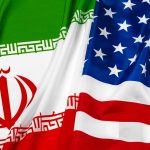
Today, under Keir Starmer, the United Kingdom is once again aligning itself with a US-led military campaign in the Middle East—this time against Iran. And once again, the language is hauntingly familiar: “defensive action”, “protecting allies”, “eliminating threats.”
But behind these carefully chosen words lies a far more dangerous truth.
The Illusion of “Defensive” War
The British government insists it is not directly involved in the war. It claims that allowing the United States to use UK bases is merely a “limited” and “defensive” measure.
More Read


This is political fiction.
If American bombers take off from British soil and strike targets in Iran, Britain is involved—full stop. There is no moral or legal loophole that transforms participation into neutrality simply by outsourcing the trigger.
Recent reports confirm that the UK has authorised US forces to launch strikes from bases such as RAF Fairford and Diego Garcia, framed as part of “collective self-defence.”
But words like “defensive” do not change the reality on the ground. Missiles do not distinguish between semantics and consequences. Civilians do not experience bombardment as “limited.”
A Dangerous Escalation
What makes this policy even more alarming is how quickly it is escalating.
The UK initially resisted deeper involvement. But under mounting pressure—and amid growing tensions in the Strait of Hormuz—it has expanded its support for US operations.
Iran has already responded with threats and strikes against Western-linked targets, warning that Britain’s actions are putting its own citizens at risk.
This is how wars spiral:
One “limited” intervention
One retaliatory strike
One escalation after another
Until a regional conflict becomes something far more dangerous.
Even Starmer himself has acknowledged that this war may not end quickly.
The Iraq War Lesson—Ignored
We have seen this pattern before.
In 2003, the UK followed George W. Bush into Iraq, based on claims that later collapsed under scrutiny. The consequences were catastrophic:
Hundreds of thousands killed
A region destabilised
Extremism fuelled for a generation
The Chilcot Report later exposed the failures of judgment, planning and legality behind that decision.
And yet, here we are again—being told that this time, it’s different.

No Mandate, No Debate
Perhaps most troubling is how this decision has been made.
There has been no meaningful parliamentary vote. No full national debate. No democratic mandate for involvement in yet another Middle Eastern conflict.
Instead, a decision of enormous consequence has been taken behind closed doors—presented to the public as a technical necessity rather than a political choice.
This is not how a democracy should decide questions of war and peace.
The Cost Will Not Be Theirs
History teaches us a brutal truth: the people who pay for these decisions are rarely the ones who make them.
It will not be politicians who suffer the consequences of escalation. It will be:
Civilians in the region
Soldiers sent into harm’s way
Ordinary people at home facing economic fallout
Already, the conflict is driving up global energy prices and threatening economic stability.
War abroad always finds its way back home.
A Choice Britain Still Can Make
Britain is not powerless. It still has a choice.
It can continue down this path—drifting deeper into a conflict it did not start, cannot control, and will struggle to escape.
Or it can step back:
Refuse further military involvement
Demand diplomatic solutions
Reassert a foreign policy grounded in international law
In 2003, millions of people in Britain understood where blind alignment with war would lead.
The tragedy is not that we were once misled.
The tragedy is that, this time, we know—and are choosing to go anyway.
Because if history has taught us anything, it is this:
There is no such thing as a “limited” war once it begins.
The views expressed in this article do not necessarily reflect Cruise TV’s editorial stance.