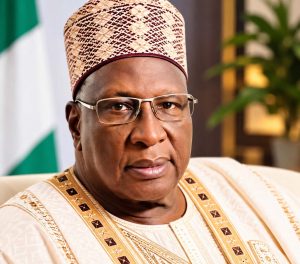
Human rights lawyer and Senior Advocate of Nigeria, Femi Falana, has called on the Federal Government to take legal action against South Africa over the alleged killing, torture and mistreatment of Nigerians living in the country.
Falana said Nigeria must move beyond diplomatic protests and pursue available legal remedies under regional and international human rights frameworks to secure justice for victims and their families.
The call followed the reported killing of a Nigerian cleric, Bishop Michael Taiwo Fakunle, who was allegedly shot dead by unidentified gunmen at his residence in Johannesburg on September 4, 2026.
According to Falana, the cleric had reportedly received threats before he was killed.

More Read
The human rights lawyer also raised concerns over the reported death of another Nigerian, James Uchechukwu Nwankwo, who allegedly died less than 24 hours later following an interrogation by officers of the South African Police Service.
Falana, citing remarks attributed to Nigeria’s High Commissioner to South Africa, Femi Fani-Kayode, said the two incidents had reportedly raised the number of Nigerians allegedly killed in South Africa in 2026 to eight.
He further claimed that four of the reported deaths were allegedly linked to South African security personnel.
The SAN expressed concern over what he described as a disturbing pattern of alleged killings and human rights violations involving Nigerians in South Africa.

According to Falana, more than 100 Nigerians have allegedly been killed in South Africa between 2022 and 2026, with more than 30 of those deaths reportedly involving officers of the South African Police Service and the South African Defence Force.
He questioned the level of accountability in the reported cases, saying victims and their families were yet to see sufficient arrests, prosecutions or other meaningful forms of justice despite repeated complaints.
Falana argued that the Federal Government has both a constitutional and international responsibility to protect Nigerian citizens and seek justice whenever their fundamental rights are allegedly violated outside the country.
He therefore urged the Nigerian government to institute an interstate case against South Africa before the African Court on Human and Peoples’ Rights.
More Read
The legal practitioner cited the African Court’s decision involving the family of Norbert Zongo, the Burkinabè journalist who was assassinated while investigating allegations of corruption.
According to Falana, the African Court found Burkina Faso responsible for failing to properly investigate the killing and ordered reparations for the victims.
He also referred to the Apo Six case before the ECOWAS Court, in which Nigeria was held responsible for human rights violations arising from the killing and ill-treatment of citizens during a security operation in Abuja.
Falana said the cases demonstrated that states could be held accountable when their authorities fail to properly investigate serious human rights violations, particularly allegations involving unlawful killings.
He noted that Nigeria and South Africa are both parties to the African Charter on Human and Peoples’ Rights and have ratified the protocol establishing the African Court.
The SAN recalled that he had, in July 2026, urged Nigeria, Ghana and other African countries affected by xenophobic attacks to consider taking legal action against South Africa before the African Court.
He also disclosed that he had separately petitioned the African Commission on Human and Peoples’ Rights in May over alleged xenophobic attacks and other violations targeting Nigerians and other African nationals in South Africa.
Falana further called on the Federal Government to make the declaration required under Article 34(6) of the African Court Protocol, which would allow individuals and eligible non-governmental organisations to approach the African Court directly.
Beyond litigation, he proposed the establishment of a coordinated mechanism involving the Ministry of Foreign Affairs, Nigeria’s diplomatic mission in South Africa and the Federal Ministry of Justice.
Such a mechanism, he said, should document reported cases of killings, torture and other serious abuses against Nigerians, while monitoring investigations and prosecutions by South African authorities.

Falana maintained that South Africa has an obligation to protect Nigerians and other African nationals residing within its territory.
He urged the Federal Government to demand accountability from the South African authorities, exhaust available regional legal remedies and pursue justice and compensation for victims of alleged abuses and their families.
The call comes amid renewed concerns over the safety of Nigerians in South Africa and the broader issue of xenophobia and alleged human rights violations against foreign nationals in the country.
The Federal Government and South African authorities are expected to respond to the latest allegations and concerns raised by the senior lawyer.