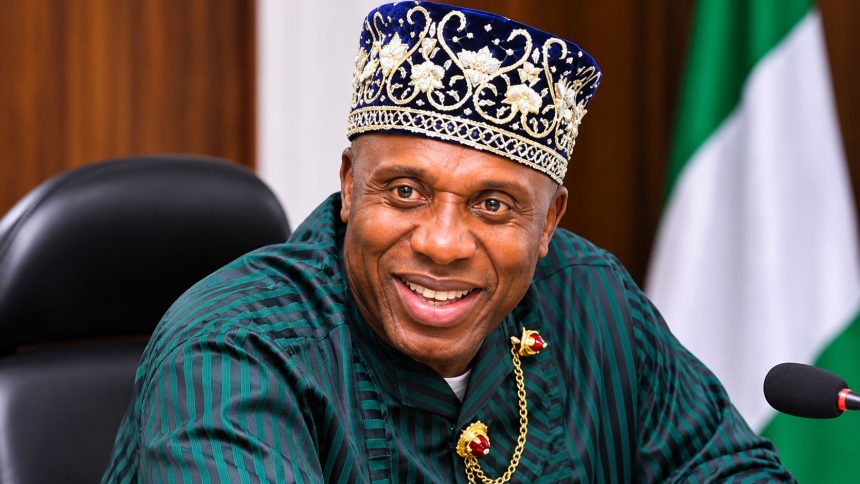
Former Minister of Transportation and African Democratic Congress (ADC) vice-presidential candidate, Rotimi Amaechi, has warned that the recent Federal High Court judgment nullifying key decisions of the party’s leadership could trigger widespread unrest if not properly managed.
Amaechi raised the concern while speaking during an interview on Mainland 98.3 FM, where he called for restraint among party members and urged political stakeholders to avoid actions capable of escalating tensions ahead of the 2027 general elections.
The Federal High Court in Abuja had, last Thursday, nullified the National Working Committee led by former Senate President, David Mark, in a ruling that also affected the process that produced former Vice-President Atiku Abubakar as the ADC’s presidential candidate for the 2027 elections.
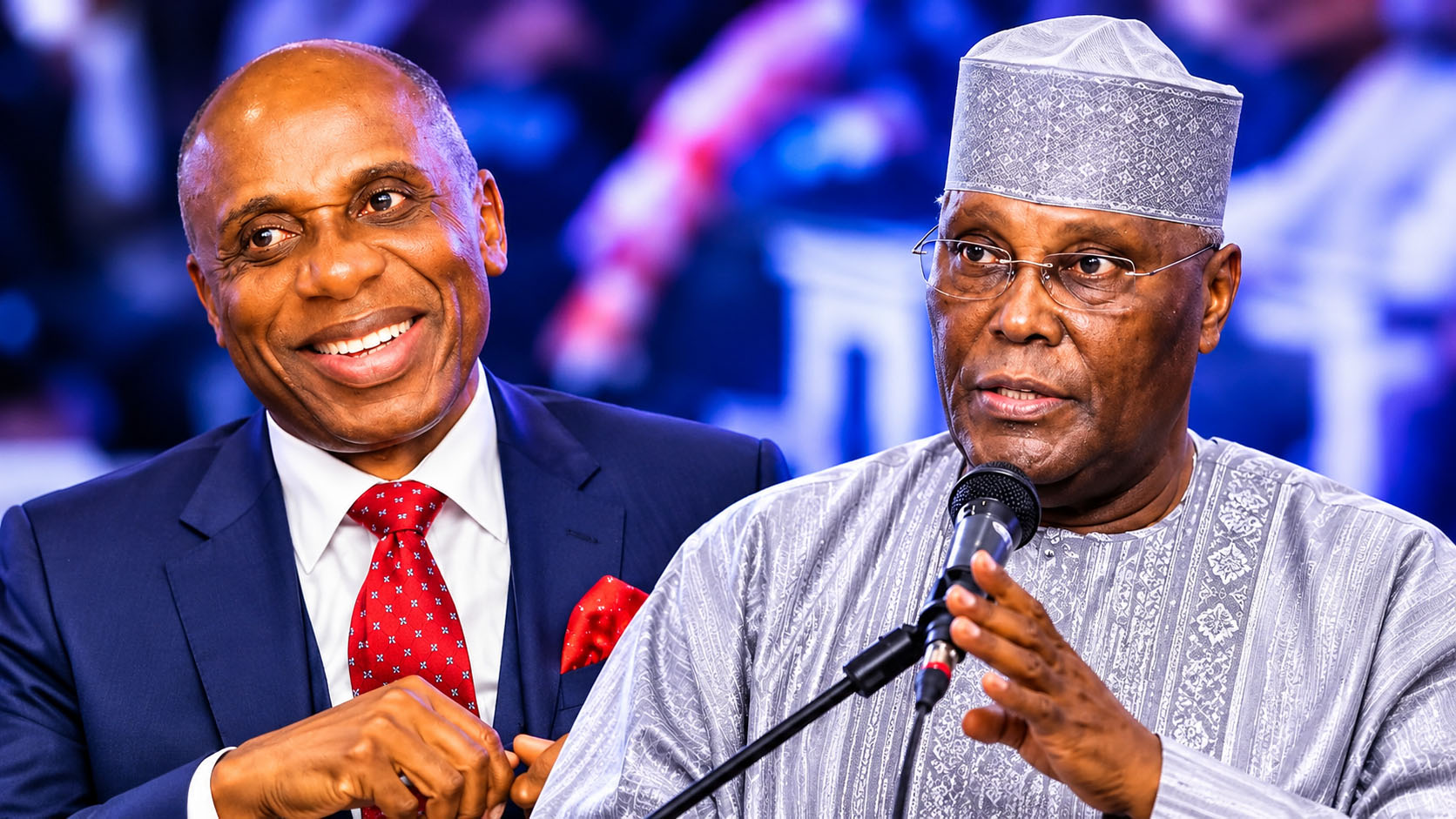
The judgment, delivered by Justice Peter Lifu, also invalidated the emergence of former Minister of Interior, Rauf Aregbesola, as National Secretary, alongside other decisions taken by the Mark-led leadership, including the nomination of candidates for elective positions.
More Read

The court further directed the Independent National Electoral Commission (INEC) not to recognize or act on decisions taken at the party’s 99th National Executive Committee meeting held on July 27, 2025.
The suit, marked FHC/ABJ/CS/1819/2025, was instituted by Nafiu Gombe, a former ADC Deputy National Chairman (North-East), who challenged the process through which Mark and other members of the caretaker committee assumed control of the party.
Reacting to the ruling, Amaechi described the development as potentially dangerous, warning that failure to manage the situation carefully could lead to serious political instability.
More Read

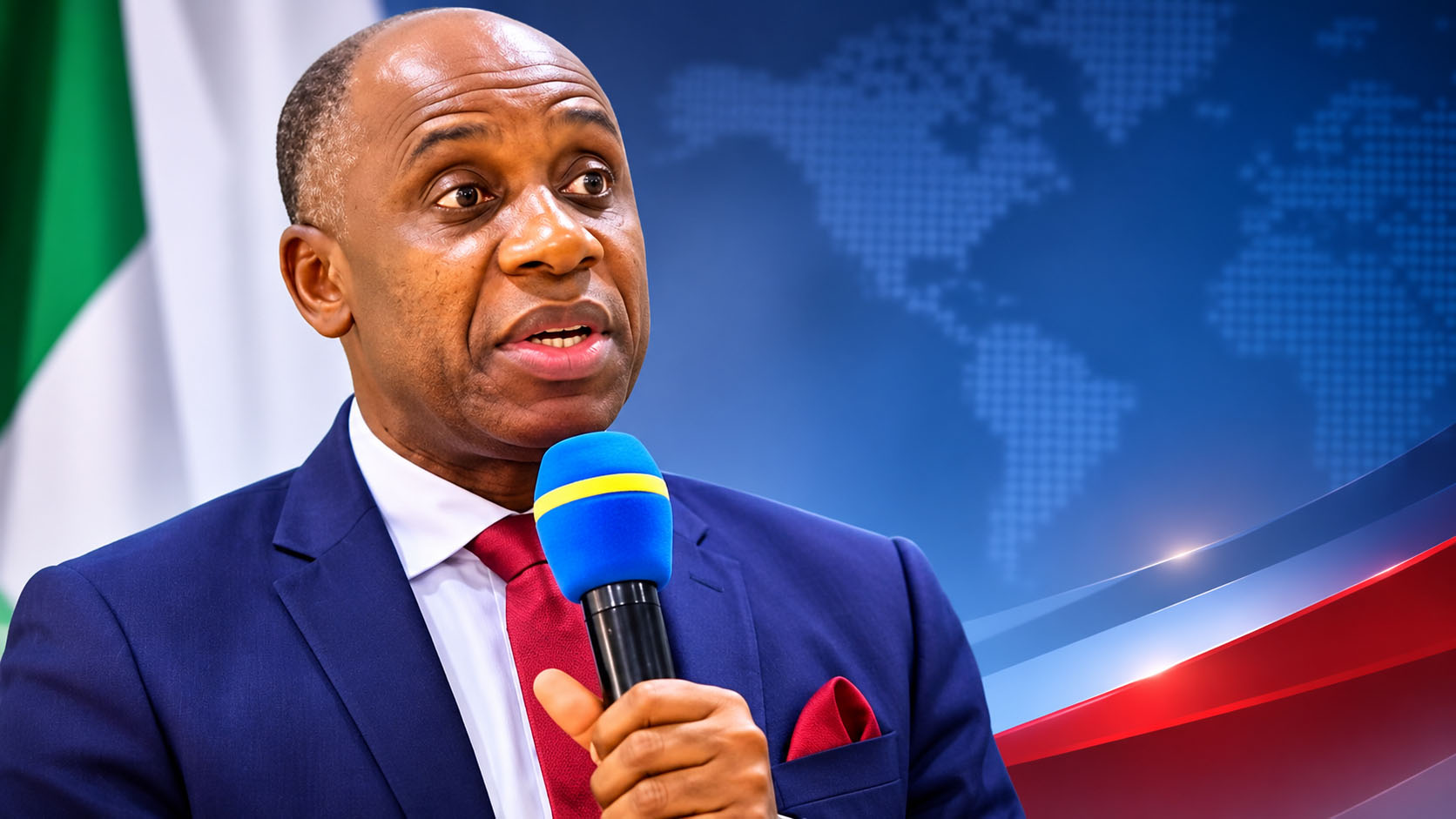
He disclosed that following the announcement of the judgment, he, Atiku Abubakar and David Mark held an urgent meeting to discourage inflammatory reactions and prevent the situation from degenerating.
According to him, there was no internal division within the ADC, insisting that the crisis was being deliberately encouraged by political opponents.
Amaechi alleged that the ruling was part of efforts by the ruling All Progressives Congress (APC) to weaken the ADC because of its growing opposition influence.
He also questioned the credibility of the legal challenge, claiming that Gombe had previously resigned alongside former ADC National Chairman, Ralph Nwosu, and had participated in the formal handover of the party’s leadership to David Mark.
“There is no internal rift in our party, none. It is just the fear of the All Progressives Congress, APC,” Amaechi said.
More Read

The former Rivers State governor further argued that the ADC was emerging as a major opposition platform capable of challenging President Bola Tinubu and the APC in the 2027 presidential election.
He pointed to the political dynamics across the country’s six geopolitical zones, particularly the South, where he believes multiple presidential contenders could affect the ruling party’s electoral prospects.
Amaechi noted that President Tinubu would face competition from several candidates in the South-West, including himself, Oyo State Governor Seyi Makinde and other political figures.
He also highlighted the potential impact of former Anambra State Governor Peter Obi in the South-East, arguing that his popularity could significantly influence voting patterns in the region.
On the North-South political equation, Amaechi expressed confidence in the ADC’s prospects, describing himself as a son of the South-South and noting that Atiku Abubakar would be a major contender in the North.
Amaechi Revisits 2023 APC Presidential Primaries
Beyond the ADC leadership crisis, Amaechi also revisited his unsuccessful attempt to secure the APC presidential ticket ahead of the 2023 general elections.
He blamed his loss in the party’s presidential primaries partly on his decision to follow the advice of the late President Muhammadu Buhari, who allegedly assured him that he would be announced as his preferred successor.
According to Amaechi, Buhari advised him against campaigning, promising that he would eventually endorse him as the party’s presidential candidate.
Amaechi said he obeyed the former president because he considered him his boss and believed that the assurance would give him an advantage during the primaries.
He, however, admitted that his decision not to actively campaign may have contributed to his eventual defeat, adding that he believed he had the support of several state governors at the time.
The ADC vice-presidential candidate also accused President Tinubu of using political negotiations and religious considerations to secure support during the 2023 APC presidential primaries.
Amaechi maintained that he would never deploy religion as a political strategy to win an election, warning that such an approach could deepen divisions in the country.
He recalled how a delegation of Southern Muslims allegedly appealed to Northern governors to support Tinubu on religious grounds, describing the development as an approach capable of creating unnecessary tension between religious communities.
Amaechi further argued that religious mobilization for political power could create confusion and division, stressing that he would not pursue the presidency at the expense of national unity.
He cited Nigeria’s Catholic population as an example, arguing that mobilizing voters exclusively along religious lines could generate similar divisions.
As political activities gradually gather momentum ahead of the 2027 general elections, Amaechi’s comments have added another dimension to the unfolding political contest, particularly as the ADC faces legal challenges over its leadership structure and candidate selection process.