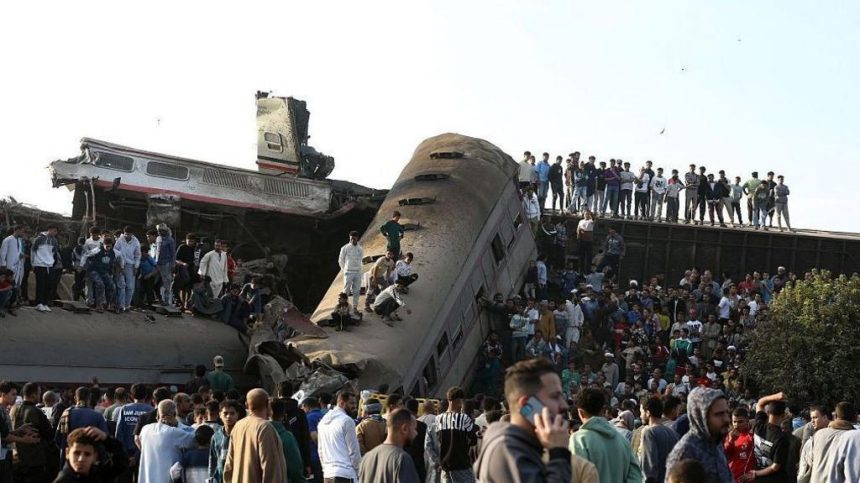
At least seven people have been killed and more than 100 others injured after two passenger trains collided near Giza, south of the Egyptian capital, Cairo, triggering a major emergency response.
The crash occurred in the Al-Ayyat area, between Kafr Ammar and Al-Raqqa railway stations, when a train travelling from Giza to Fayoum reportedly struck the rear of another passenger train heading from Cairo to Aswan, which was stationary on the tracks.
The collision caused several carriages to derail and plunge down an embankment, leaving some coaches overturned and severely damaged.
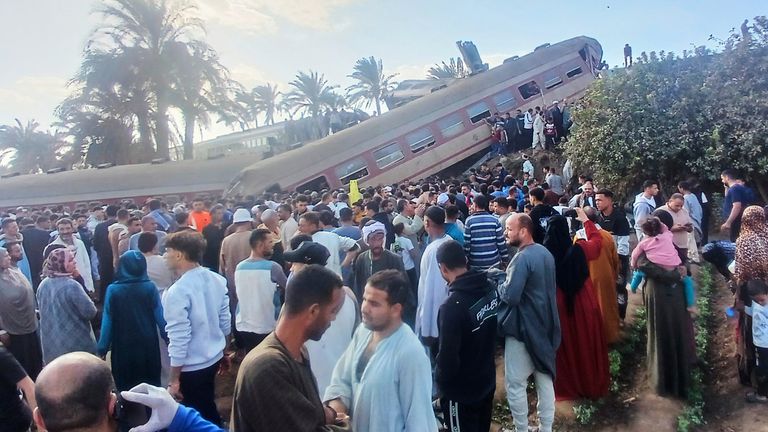
Emergency responders, medical personnel and rescue teams were deployed to the scene as efforts continued to search for survivors and evacuate injured passengers trapped inside the wreckage.
More Read

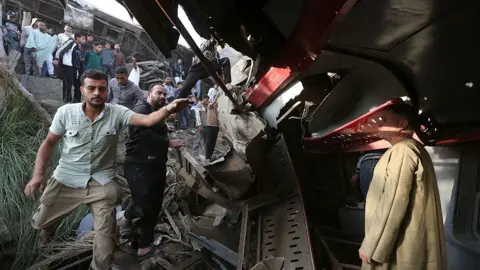
Images from the accident site showed rescuers and members of the public examining overturned carriages in search of passengers who might still be trapped.
Egypt’s Public Prosecution Service warned that the death toll could rise as rescue and recovery operations continued. The driver of one of the trains was among those confirmed dead, according to the country’s health ministry.
President Abdel Fattah al-Sisi said he had directed relevant state authorities to investigate the circumstances surrounding the accident and ensure that anyone found responsible for negligence was held accountable.
More Read

In response to the disaster, the Egyptian government announced that hospitals in the affected area had been placed on heightened alert to cope with the influx of casualties.
Health Minister Dr Khaled Abdel Ghaffar disclosed that several injured victims were receiving medical attention for broken bones and head injuries.
The Egyptian Red Crescent also mobilised its personnel to provide emergency assistance and psychological support to survivors and the families of those affected by the tragedy.
Meanwhile, railway services between Giza and Egypt’s Upper Egypt region were suspended following the collision. Cranes and heavy-duty equipment were deployed to remove the wrecked trains from the tracks, although railway authorities had yet to announce when normal services would resume.
The latest accident has renewed concerns about railway safety in Egypt, particularly given the country’s history of deadly train disasters.
The collision occurred close to the location of Egypt’s deadliest railway tragedy, which happened in February 2002 when a fire engulfed a passenger train travelling from Cairo to Luxor, killing more than 370 people, according to official figures.
More Read

The area has also witnessed other fatal railway accidents, including two major crashes in 2009 that claimed dozens of lives.
Following the latest disaster, calls reportedly emerged on Sunday for Egypt’s Transport Minister to resign over the recurring railway safety concerns.
International reactions have also followed, with foreign governments and diplomatic representatives expressing sympathy and solidarity with Egypt.
Saudi Arabia’s Ministry of Foreign Affairs conveyed its solidarity with the Egyptian government and people, while wishing those injured a speedy recovery.
Turkey’s Ambassador to Egypt also expressed heartfelt condolences and sympathy to the victims, their families and the Egyptian people in a message shared on X.
As investigations begin and rescue operations continue, authorities are expected to establish the circumstances that led to the collision and determine whether any operational or safety failures contributed to the tragedy.